Rural Landowners Watch a Neighbor Turn Forty Feet of Their Twenty-Two Acres Into a Semi-Truck Parking Lot — Then Realize He’s Never Once Acknowledged It Isn’t His Land
Photo credit: AI-generated image created using ChatGPT. Illustrative only.
The line between “we all get along out here” and “you’re using my property like it’s yours” can be as thin as a hedge. For one rural couple on a 22-acre parcel, that line turned into a full-blown semi-truck parking area—complete with family gathering overflow, kids’ play structures, and a worn-out patch of grass that keeps getting bigger.
In the original post, the homeowner explained that their land is the largest in a small cluster of acreages. Their surrounding neighbors sit on 8–9 acres, close enough that “country living” still comes with front-yard sightlines and unspoken expectations. The problem: a roughly 40-foot section at the front of their property that the neighbor has been treating as his own for so long that nobody’s even acknowledging it’s not.
The “front edge” became someone else’s yard
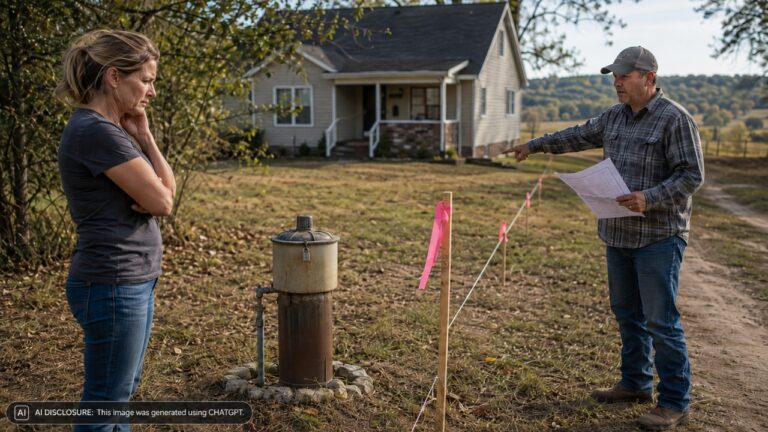
The way the property is laid out is part of what let this grow legs. At the front of the acreage, there’s a hedge that runs between two tree lines, and then the disputed area extends about 40 feet in front of that. Visually, it apparently reads like “their side,” even though it isn’t.
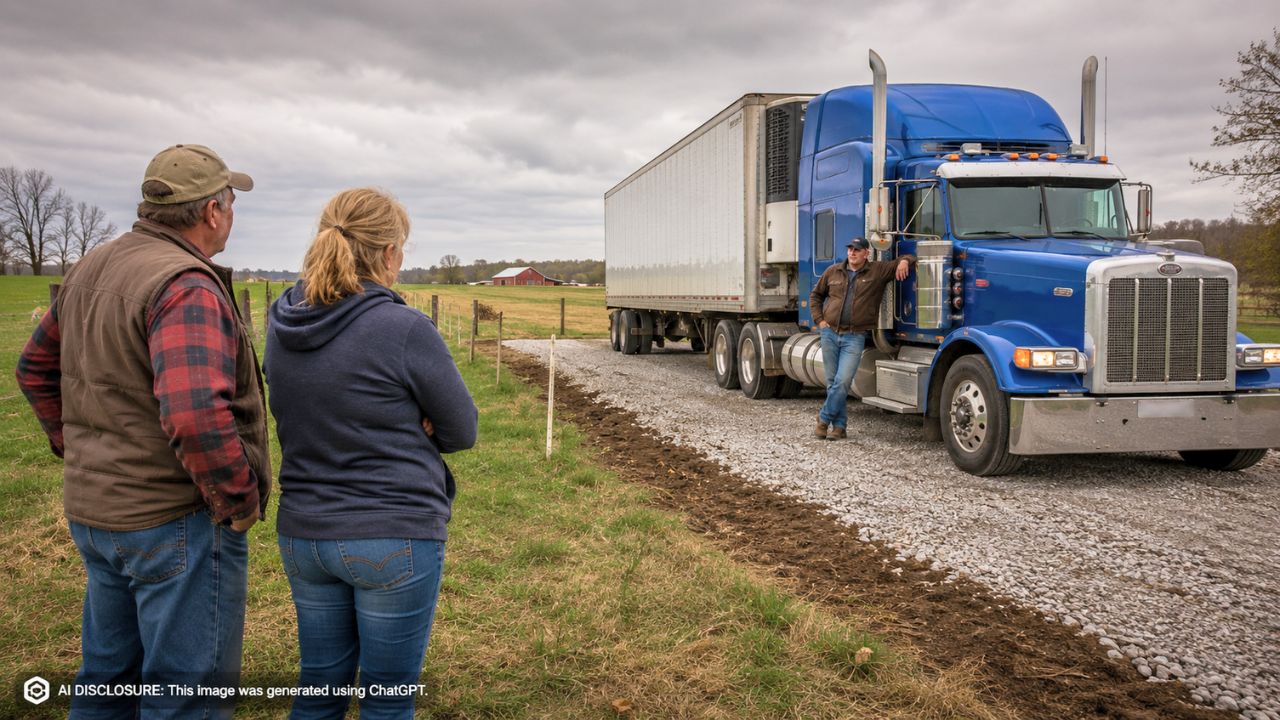
That illusion matters, because the neighbor didn’t just wander over once or twice. He moved in like it was his frontage: parking semis there, using it as a lot for family get-togethers, and setting up children’s toys and play structures. Over time, the homeowner estimated the total area being used could be close to an acre.
That’s not “my kid’s ball rolled over there.” That’s a pattern. And once a pattern is established, it starts to feel permanent—especially when the people doing it never pause to say, “Hey, do you mind?”
The damage made it harder to keep shrugging it off
At first, rural neighbors often let things slide because nobody wants a property-line war. But the homeowner said it started to irritate them as the grass got wrecked on one side and “is beginning to ruin more.” The view from their window changed too: instead of looking out onto their own land, they’re looking at a parking lot of cars.
That’s the part that turns mild annoyance into a real gut-knot. Land is expensive, acreage even more so, and the couple didn’t buy 22 acres to have the front portion function as someone else’s driveway and event space.
There’s also the nagging mental math that comes with repeated heavy parking—especially semi-trucks. Even if the homeowner didn’t list specific soil or drainage problems, most rural landowners know what repeated compaction can do: ruts, dead grass, mud patches that spread, and a front area that becomes harder to restore the longer it’s treated like a gravel lot without the gravel.
The most frustrating part: nobody ever asked
The homeowner made a point that hits a nerve in any neighbor dispute: they actually like the family. “They have sweet kids,” the post said. This isn’t a story about a nightmare household screaming over the fence line at 2 a.m.
It’s messier than that. It’s a family that seems comfortable, possibly overwhelmed, and operating as if the space is theirs—without so much as a comment acknowledging it’s not. That silence is what makes the whole thing feel disrespectful, even if the neighbor would insist he “didn’t mean anything by it.”
And the homeowner admitted the awkward truth: if the roles were reversed, they doubt the neighbor would tolerate it. That’s often how these disputes crystallize. You don’t need a survey to recognize a double standard when you see one playing out on your own grass.
When you wait too long, it starts feeling like you allowed it
One of the real tensions in this kind of rural boundary creep is time. The longer something goes on, the harder it feels to bring up—because it begins to sound like you’re changing the rules, even if the rules were always the same.
The homeowner wrestled with that directly, asking if it would be wrong to say something and how to go about it. They described the hedge line as making the conversation “awkward,” because the area looks like it could be the neighbor’s yard even though it isn’t. That’s how small design features become big problems: a hedge becomes a visual boundary, and someone starts treating that visual cue like a deed.
In an edit, the homeowner also showed a mix of frustration and accountability. They pushed back on the idea that they’d been timid, but admitted it’s their fault for letting it go on as long as it has—and said they’re going to put an end to it.
Most reactions centered on drawing a real line in the real world
Even without seeing pages of back-and-forth, the tone of the homeowner’s update makes it clear what kind of feedback they were getting: stop waiting, stop hinting, and establish the boundary in a way that can’t be ignored.
In these disputes, people tend to focus on practical steps first because a friendly conversation without a clear marker often just resets the clock. When the space already looks like the other person’s yard, “Hey, just so you know…” can get swallowed by the next family get-together or the next truck that needs a spot.
The most common fix in the real world is something visible: a marked line, a barrier, or some change that makes the behavior physically harder to continue. It’s not about being dramatic; it’s about making it impossible for anyone to pretend they didn’t realize where they were parking.
The repair isn’t just grass—it’s the neighbor relationship
Once the homeowner decides to stop the use, there are two fixes happening at once. One is the physical land: the grass that’s been wrecked, the area that’s started to look and behave like a parking lot, and the view from the window that no longer feels like their own property.
The second fix is emotional, and it can be tougher. They like this family, and the kids are sweet. But the land use has quietly crossed into something that feels entitled, especially with semis involved and no acknowledgment at all.
Now comes the hard part: setting a boundary clearly enough that it sticks, without turning the whole neighborhood into a cold-shoulder zone. Out on acreage, you can’t avoid your neighbors the way you can in a city. You see the same driveways, the same roadside ditches, the same front edges of land—every season, every year.
For this couple, the frustration finally outweighed the awkwardness. They paid for the land, and they want it to look like their land again. The next move will decide whether that front 40 feet becomes a restored stretch of yard—or a permanent reminder of how quickly “it’s probably fine” turns into “how did this ever become normal?”
Like Fix It Homestead’s content? Be sure to follow us.