Homeowner’s Site Plan Confirms the Property Line Sits Twenty Feet Behind the House — Then the Neighbor Points a Fence Installer to a Spot Four Feet Onto Their Yard Instead
Photo credit: AI-generated image created using ChatGPT. Illustrative only.
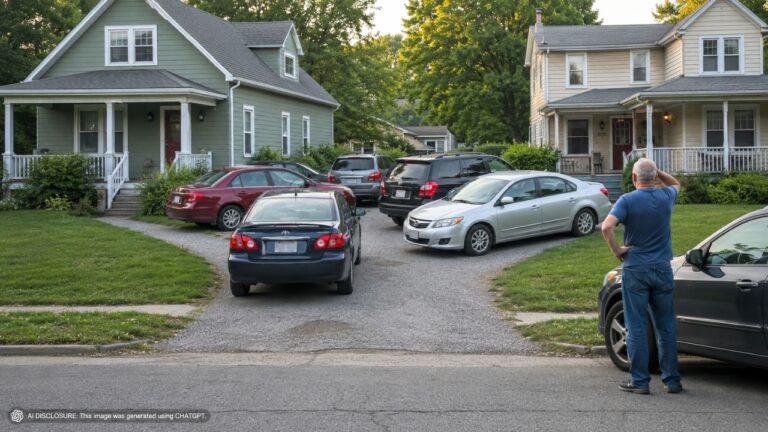
At first, it looked almost neighborly: a guy next door running his mower a little wider than usual, trimming a strip of grass that technically wasn’t his. But it didn’t stop. It escalated into something that felt less like “helping out” and more like testing boundaries—literally.
In the original post, a homeowner described a months-long frustration with a neighbor who kept using part of their front yard and slope, despite repeated requests to stay on his own side. And when a fence conversation finally happened, the neighbor reportedly pointed the installer to a “property line” that would have pushed the boundary several feet into the homeowner’s yard.
The first sign was easy to brush off
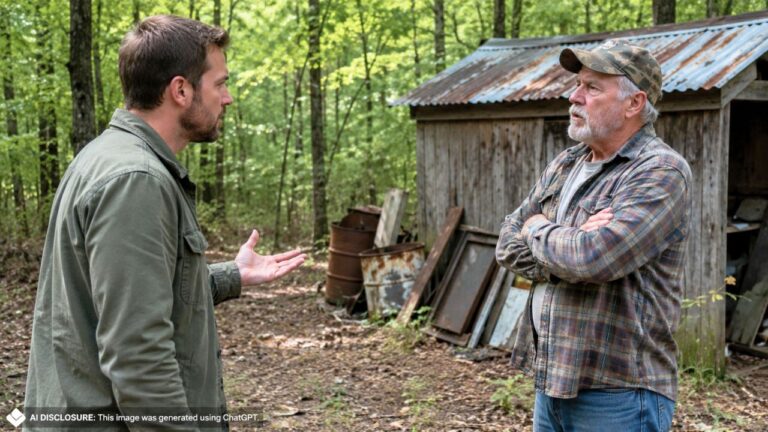
The homeowner said they asked nicely, more than once, for the neighbor to keep “his stuff on his side of the property,” even temporarily. The request wasn’t framed as hostility—more like a basic boundary. They didn’t want their yard treated like overflow space, even for a day or two.
But the neighbor kept crossing over. The most visible example was the mowing: multiple times a week, the neighbor would cut only a portion of the homeowner’s front yard or just a small section of a slope. Instead of making the lawn look tidier, the homeowner said it left the grass uneven—like someone had taken a half-pass and called it good.
It’s a small thing until it isn’t. A few feet of mowing becomes a routine. Routine becomes a habit. And habits around property lines have a way of turning into arguments no one wants.
Uneven mowing wasn’t the real problem
The homeowner wasn’t only annoyed by the patchy look. They were reading the behavior differently: if the mowing was genuinely meant to help, why do it in a way that makes the yard look worse? Why focus on random sections instead of just leaving it alone?
That’s where the tension starts to thicken. When one neighbor keeps entering the other’s yard—after being told not to—it stops feeling like landscaping and starts feeling like a quiet power move. The homeowner said they clearly stated they didn’t want the grass cut “half-assed,” and even that didn’t stop it.
No fence was in place, and the homeowner said a fence wasn’t an option “at the moment.” That left them stuck in the worst in-between: a boundary that exists on paper, but not on the ground where daily life happens.
Then the survey stakes disappeared
If mowing was the irritant, the next detail was the red flag. The homeowner said they found out survey stakes—driven into the ground—had been pulled out. They didn’t say who removed them, but the timing and context made the whole thing feel less accidental.
Survey stakes are one of those unglamorous homeowner details you don’t think about until they’re gone. They’re physical proof. They’re a visual reminder that the line isn’t negotiable just because someone wishes it were somewhere else.
Once those markers disappear, it’s easier for a neighbor to “remember” the property line differently. And it’s easier for a contractor to follow whoever is standing closest, pointing confidently at the grass.
The fence talk turned into a boundary grab
The neighbor eventually offered to split the cost of a fence—but with a catch: he wanted “some guy he found at a gas station” to install it, according to the homeowner. Even without the property line dispute, that alone would make many homeowners pause.
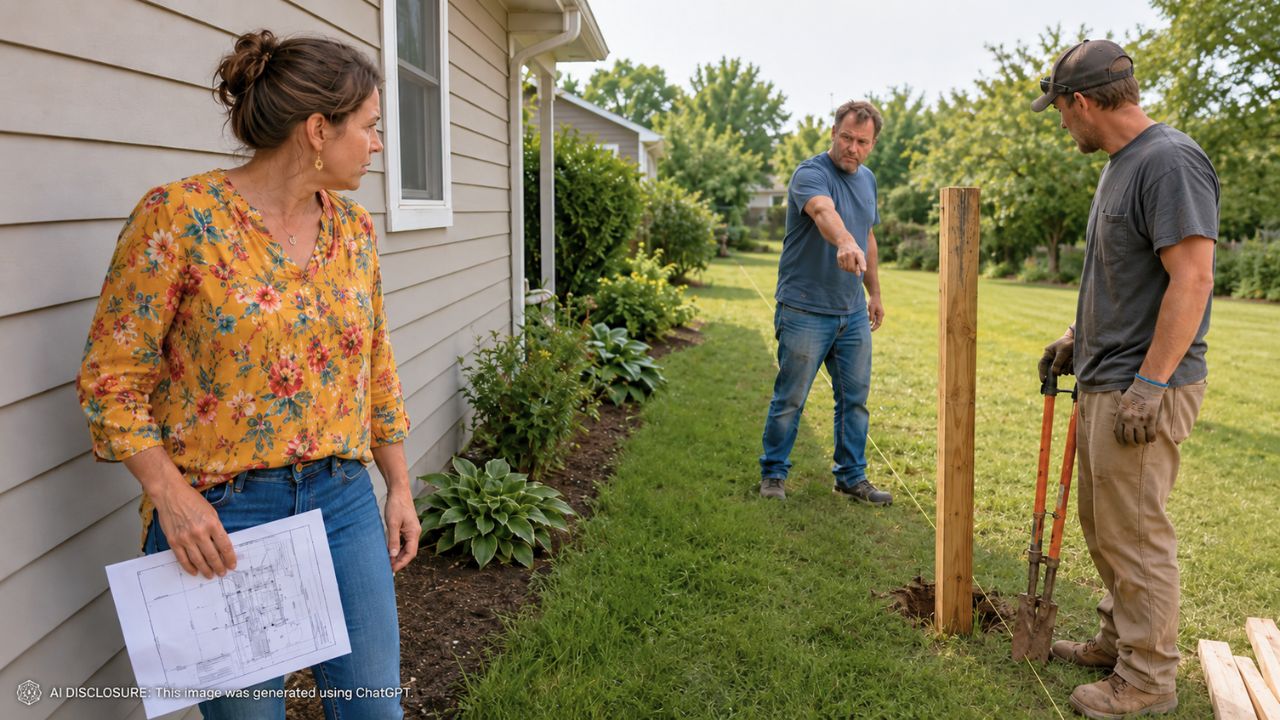
Then came the moment that changed the whole tone. When the installer showed up, the neighbor pointed out where he claimed the boundary was. The homeowner said the spot would have put the fence at least four feet into their property.
Four feet doesn’t sound like much until you imagine it running the length of a front yard. Four feet can swallow landscaping, change drainage, and shrink usable space. It can also set a new “normal” that’s hard to undo once posts go in and everyone gets used to it being there.
The homeowner had a counterpunch ready: a recent site plan showing the property line running parallel to the house—about 20 feet away, behind it. In other words, the neighbor’s version wasn’t a harmless misunderstanding. It was wildly off.
The easement and drainage swale made everything harder
As if the boundary dispute wasn’t enough, there was another complicating factor: an easement. The homeowner said there is a six-foot easement on each side of the property, and that area includes a small swale used for rainwater drainage.
That matters because people often assume they can solve a neighbor problem with a quick row of shrubs, a decorative berm, or a garden border. But drainage areas and easements can limit what you’re allowed to plant or build, especially if the city needs that swale to stay clear and functional.
So the homeowner was stuck between two realities. On paper, they have a clear line and documentation. On the ground, they have an open yard, a drainage feature, and a neighbor acting like the invisible boundary is optional.
And because fencing wasn’t currently feasible, the homeowner was looking for the next-best tool: paperwork.
People urged documentation first, then city involvement
The homeowner’s instinct was to send a written notice—certified or otherwise tracked—stating what they had already said in person: stay off their property, stop mowing parts of their yard, and stop treating the property line like it’s up for debate.
That’s the point where many homeowners go when a polite request fails. A conversation can be denied or reinterpreted later. A letter with delivery confirmation is harder to brush off, and it creates a timeline if the issue keeps escalating.
The homeowner also mentioned calling the city. That tracks with the way these disputes often turn: once someone tries to place a fence in the wrong location—or once easements and drainage come into play—homeowners start looking for an authority that can force the issue back onto facts. Not feelings. Not “I’ve always done it this way.” Just the documented line and the rules around what can be built near a swale.
In the meantime, the tension remains in that uncomfortable daily space: a neighbor who keeps crossing over, and a homeowner who now has to think about their front yard like it’s a contested border. The site plan may have shut down a bad fence placement this time, but without a physical barrier, the homeowner is still left watching the mower creep over the line—waiting to see whether a letter and a call to the city will finally make “no” stick.
Like Fix It Homestead’s content? Be sure to follow us.