Semi-Rural Homeowner Spots a Fresh Survey Ribbon With a Boundary Stake Set Closer to Her House Than the Town Map Allows — Then a Town Investigation Finds Every One of the Neighbor’s Stakes Was Off
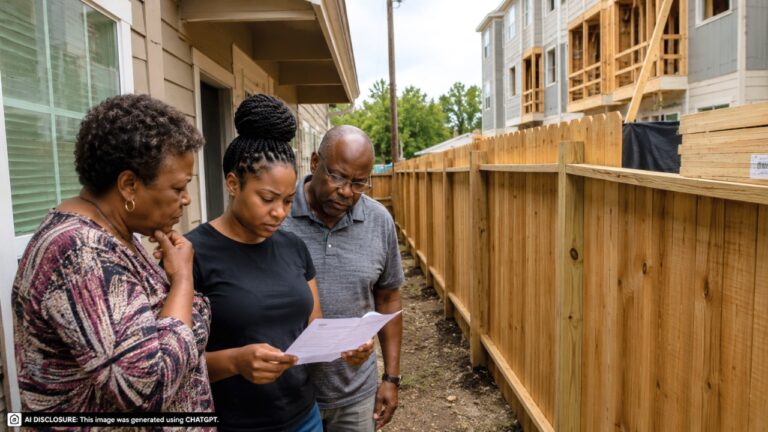
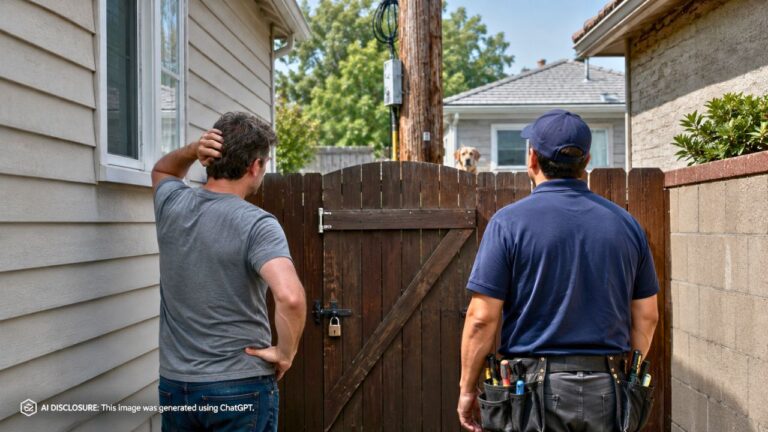
Photo credit: AI-generated image created using ChatGPT. Illustrative only.
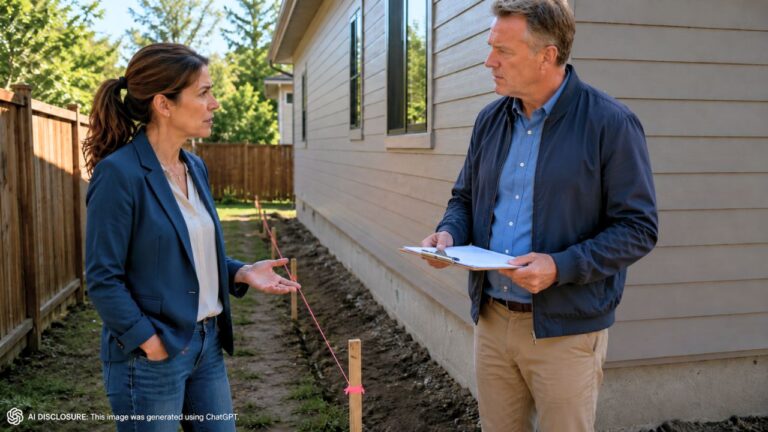
It started with a strip of bright pink ribbon tied around a tree—one of those little markers you don’t notice until you do. A semi-rural homeowner said she spotted the tape on what she’d always believed was her side of the line, and when she followed it, she found a boundary stake that seemed uncomfortably close to her house.
Digging into it led her to the original post about what happened next: the neighbor down the road had recently had a survey done, and the new marker didn’t match the homeowner’s understanding of the property line—or what the town’s own mapping suggested.
The first sign was easy to brush off—until it wasn’t
The homeowner lives in a semi-rural area, with neighbors roughly a hundred yards down the road. That kind of spacing usually buys you peace and quiet, and it also means property boundaries can fade into the background for years.
But the pink marking tape changed the feel of the place overnight. It wasn’t just a ribbon on a tree; it was evidence that someone had been out there, measuring and marking, making decisions about where the line “really” sits.
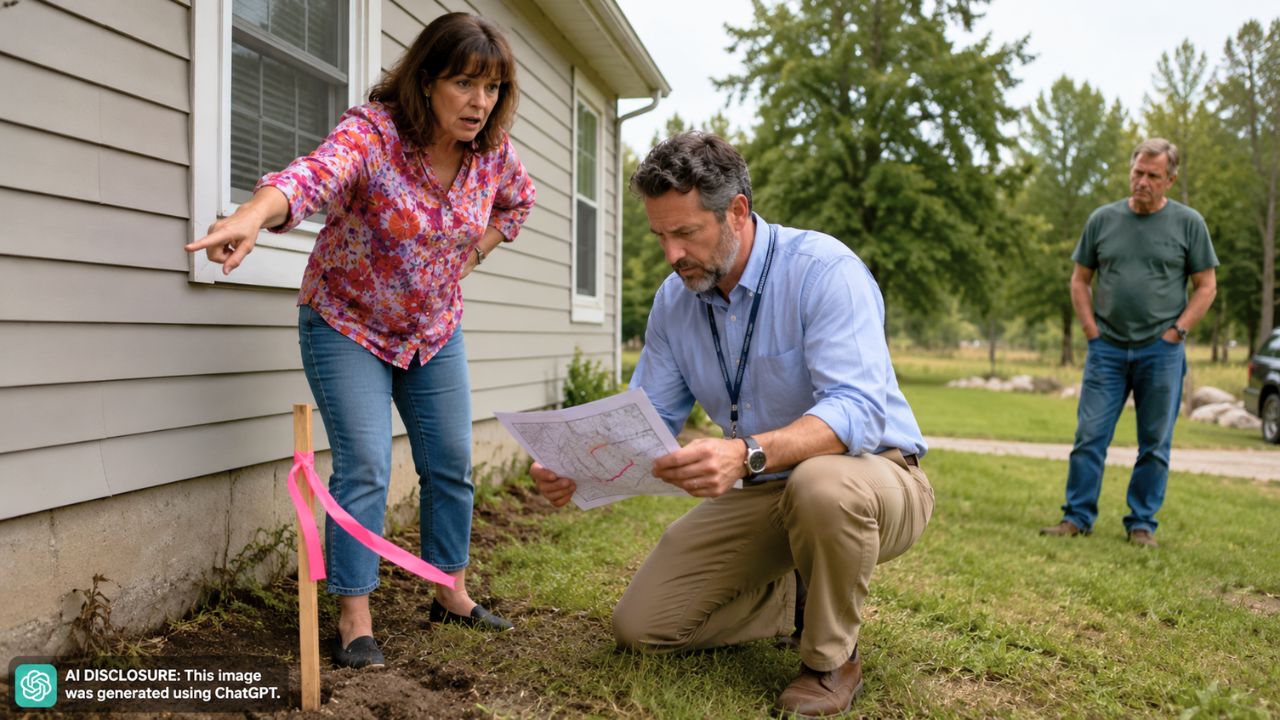
When she checked the stake tied to that ribbon, she saw it placed far closer to her house than she expected. The difference wasn’t minor in her mind—close enough to raise a bigger worry: if the stake was right, had she been paying taxes on land that wasn’t actually hers?
Town maps said one thing; the new stake said another
Instead of marching down the road to argue, she did what a lot of practical homeowners do first: she looked for paperwork. The next day she pulled up the zoning map for her street through the town website, and the map showed the boundary should be several yards closer to the neighbor, not closer to her.
That mismatch is where these disputes get dangerous. If you ignore it, you risk losing ground in the literal sense—fences, driveways, tree lines, and “who maintains what” can all slide out of your control. If you confront it too fast, you can inflame a neighbor who’s already acting territorial.
The homeowner was clear that she didn’t particularly care which way the line fell, as long as it was accurate. What bothered her was the possibility that official records and what was happening on the ground no longer matched.
She asked for a formal assessment—and got a very telling reaction
She contacted the town office and requested a formal assessment. The moment she provided both addresses—hers and the neighbor’s—she said the tone on the other end of the phone changed.
The town employee shifted from routine to exhausted, the kind of tired that suggests a file you’ve seen before. It turned out the neighbor had already been in touch with the town about a boundary dispute, and the town was apparently not hearing about this for the first time.
That detail matters because it suggests this wasn’t a one-off misunderstanding over a tree or a tape line. It hinted at a pattern—at least enough of one that the town office recognized the names immediately.
The investigation got thorough—and the stakes didn’t match where they should be
Instead of a quick look and a shrug, the town launched what the homeowner described as a “very thorough investigation.” And the results weren’t limited to a single questionable marker near one tree.
The town’s review found that every one of the neighbor’s boundary stakes wasn’t where it was supposed to be. Not one or two, but all of them. That kind of across-the-board error doesn’t read like an innocent misread of a single corner point; it reads like something systematic went wrong.
The homeowner noted she couldn’t prove the neighbor physically moved the stakes. Still, she said it felt “damn suspicious,” especially given that the stakes were repeatedly off in ways that would benefit the neighbor if accepted as true.
In a semi-rural setting, a few yards can be a lot. It’s room for a shed pad, a garden expansion, a driveway edge, a future fence line, or just the psychological comfort of “my land goes to here.” When those yards creep closer to someone else’s home, it stops being theoretical fast.
After the survey, the neighbor’s behavior changed
Once the town survey happened, the homeowner noticed a shift in the neighbor’s demeanor. This was already someone described as antisocial—nobody knew him well, and he kept to himself.
But now he was outside more. Walking his yard. Watching cars. Staring at any vehicle that drove past.
It’s the kind of detail that makes a property-line dispute feel less like a paperwork error and more like a cold standoff. Even if nothing else happens, it changes how you use your own space—whether you feel comfortable doing chores out front, letting pets out, or simply taking out the trash without feeling watched.
And that’s part of why boundary fights are so draining. The actual “fix” might be a map and a stake. The lived reality is tension every time you step outside.
What readers focused on: documentation before confrontation
While the post itself is a vent, the thread reflects a common homeowner instinct in these moments: don’t rely on assumptions, and don’t rely on a neighbor’s version of events. People tend to emphasize proof—official surveys, town records, and keeping a clean paper trail—because once someone starts “marking” land, it can snowball into fences, mowing patterns, and claims about what’s always been where.
Even in places without close-set houses, those lines determine practical stuff: who trims which trees, where utility work can happen, whether you can put in a structure, and what you’re insuring and paying taxes on. The homeowner’s first concern—taxes—rang true because it’s one of the few ways a quiet boundary problem can quietly cost you money for years.
The other unspoken theme is timing. The homeowner caught it early, at the ribbon-and-stake stage, before the dispute turned into something harder to undo like grading, fencing, or construction.
For now, the clearest “fix” in this story wasn’t a tool or a repair—it was getting the town involved while the evidence was still fresh.
The homeowner ended up with confirmation that the stakes weren’t right, but she also ended up with a neighbor who seems newly alert to being challenged. In semi-rural life, sometimes the hardest part isn’t finding the true line. It’s living next to someone who wanted it moved.
Like Fix It Homestead’s content? Be sure to follow us.