Landowner Watches the Neighbor’s New House Rise Just Over a Meter From the Agreed Setback Line — Then He Asks Her to Sign Off on It Anyway
Photo credit: AI-generated image created using ChatGPT. Illustrative only.
When you give a neighbor permission to build a little closer than the rules usually allow, you expect the final result to at least match what you signed. That’s what one landowner thought, after agreeing—years ago—to a clear setback: 5 meters from the shared border.
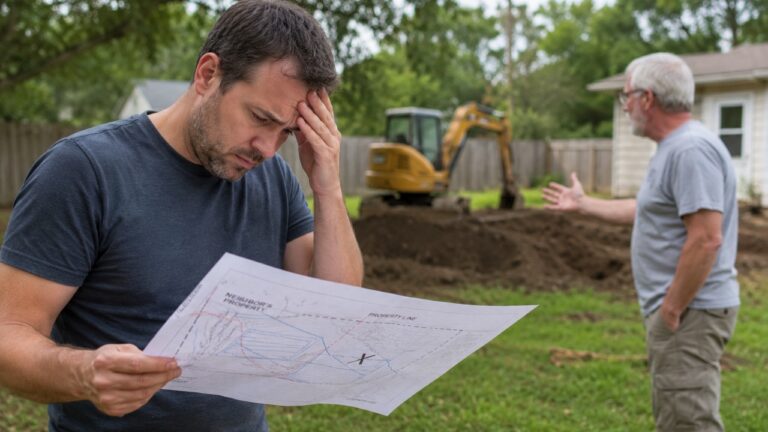
Instead, when the new house finally went up, it wasn’t “near the edge.” It was about 1.3 meters from the property line. And now, after the concrete’s cured and the walls are finished, the neighbor is back at the door with a new ask: sign off on the as-built placement so the house can be legalized and officially put into use. The landowner laid it all out in the original post, including the part that makes this feel less like a simple paperwork favor and more like a high-stakes property chess match.
A friendly accommodation turned into a measuring-tape problem
The backstory is the kind of neighbor-to-neighbor deal that happens all the time, especially where lots are narrow and every meter matters. The neighbor wanted to build close to the edge, and the landowner wasn’t planning to build right there anyway. So they agreed, in writing, to a 5-meter setback from the border.
That detail matters because setbacks aren’t vibes—they’re numbers. They affect fire separation, drainage patterns, access for maintenance, privacy, and even where snow slides or roof runoff ends up. When you agree to one measurement and get another, it’s not just “a little off.” It can change what you can do with your own property later.
The house went up… and the “oops” came after
The real gut-punch wasn’t a stake in the ground or a contractor asking a question mid-project. It was the timing. The home is already built.
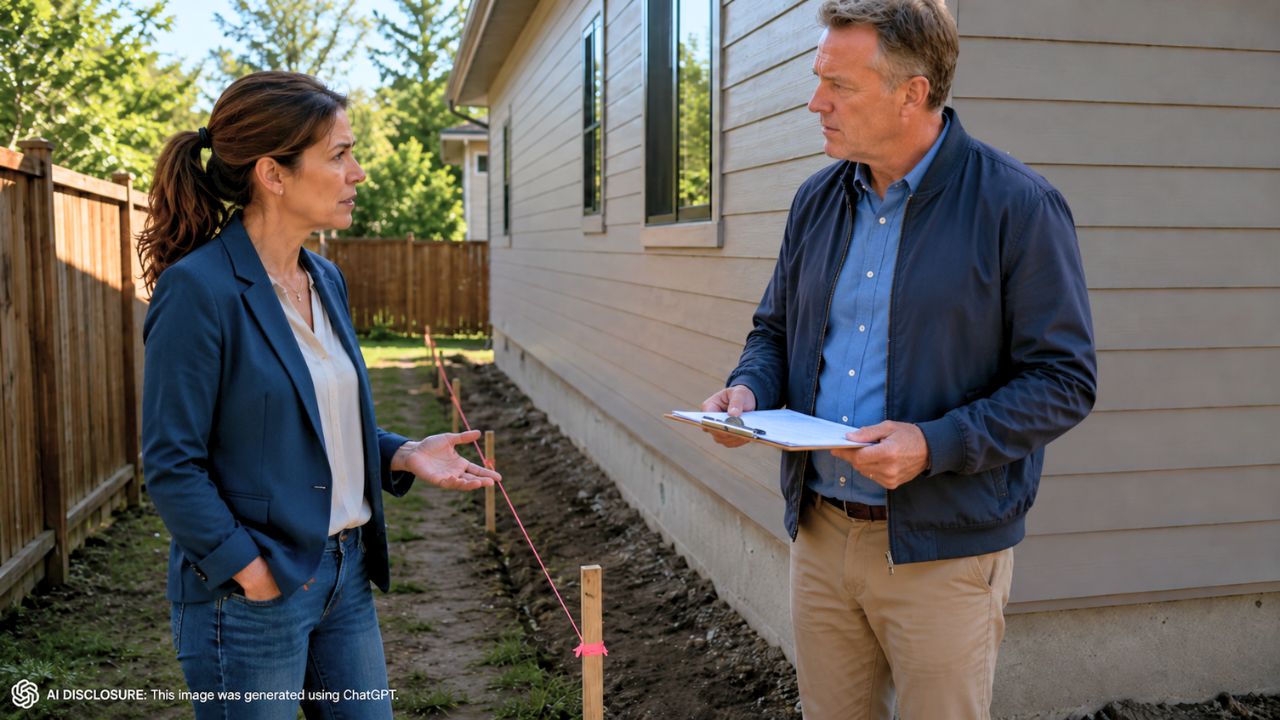
Only after construction did the neighbor come back and say they need the landowner’s consent to legalize it—permission after the fact so the building can be commissioned/put into use and get the equivalent of an occupancy certificate. And that’s when the landowner learned the actual distance wasn’t the agreed 5 meters. It was roughly 1.3 meters.
That’s not a rounding error. That’s the difference between “close but fine” and “so close it might never be approved without a neighboring signature.”
Paperwork isn’t the drama—money and leverage are
If this were just a bad neighbor moment, the story might end with a cold shoulder and a fence. But the landowner suspects the signature is a chokepoint: without it, the neighbor may not be able to properly register the house or sell it cleanly. The house is already listed for sale, but the landowner believes financing could be a problem if the property can’t be legally finalized in its current form.
That’s where the question turns sharp. The landowner doesn’t just want to refuse out of principle. They’re considering a move that would flip the whole mess into an opportunity: buying the house themselves.
They were already planning to build in the area, and owning this house would save time and hassle. But the ask price is €300,000, which they call unrealistic, saying similar homes nearby sell for about €200,000 at most. So the landowner is wondering whether withholding consent could push the neighbor to cut the price—significantly. They floated a potential 30–40% discount.
In their mind, the neighbor’s options look like this: pay for the signature, sell at a more realistic price, or face rebuilding/modifying the structure to comply. And because the house is already standing, every option is expensive in a different way.
This kind of close-build can create everyday headaches for the neighbor too
Even if nobody ever goes to court, a too-close house can cause small, grinding problems that show up over years. When a wall is near a line, basic maintenance turns into a negotiation. Cleaning gutters, painting siding, fixing windows, repairing a foundation crack—suddenly you’re asking permission to step near a border, or you’re doing awkward work from one side only.
Water is another big one. Roof runoff, downspouts, and grading don’t care about intentions. If the structure is squeezed into a tight strip, drainage solutions can be limited, and the “easy fix” choices can send water toward the neighboring lot. If that creates pooling, erosion, or a wet edge where you didn’t have one before, it becomes a slow-motion property dispute that’s hard to unring.
Then there’s the human factor. A house that close changes sightlines. It changes where outdoor spaces feel private. It can make a future fence or hedge feel like a defensive wall instead of a boundary. And if the original agreement was 5 meters, the landowner may be thinking about what they gave up—and what they didn’t agree to give up.
Reactions focused on documentation, not handshake deals
The landowner’s post drew a wave of practical reactions, and the theme was consistent: don’t treat this like a casual neighbor favor, because the house is already built and the signature could carry long-term consequences.
People pushed the idea of getting advice before signing anything—especially from a lawyer—because a “consent” document might do more than acknowledge a distance. It could waive rights, limit future claims, or lock the landowner into tolerating the encroachment-like placement permanently.
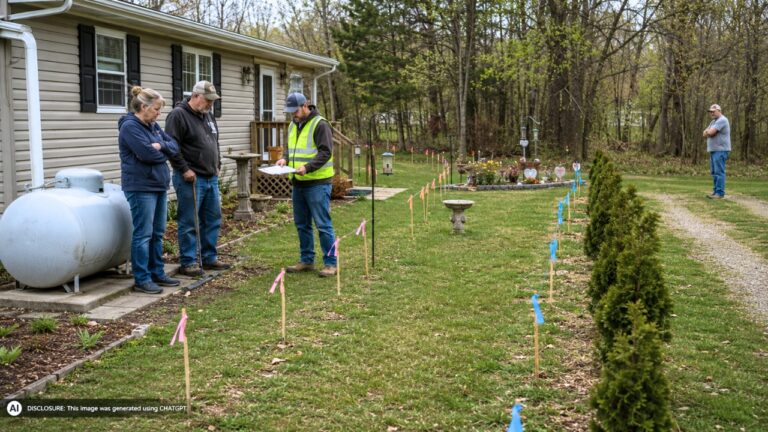
Commenters also emphasized verification. Not a rough eyeball measurement. Not “the contractor said.” A proper boundary check, and clear proof of where the house sits relative to the line and what exactly was agreed to in writing. Once signatures happen, it’s harder to go back and argue what was promised versus what was delivered.
The landowner seemed to take that tone seriously. In an update, they said they reached out to a lawyer and plan to follow that advice before choosing a path forward.
Signing could end the hassle—or cement it forever
The hardest part of this story is that both choices can feel risky. If the landowner signs, the neighbor’s house likely becomes legal and easier to sell, and the landowner might get a payment or goodwill—or a discounted sale price if they negotiate hard enough. But signing could also mean living with a too-close structure next door, possibly reducing the landowner’s flexibility later if they decide to build, expand, or sell.
If the landowner refuses, they keep their leverage, but they also invite a longer standoff. The neighbor may try to pressure them, renegotiate, or find another route to approval. And if it escalates, it could poison the day-to-day relationship that makes rural and semi-rural living bearable.
For now, the house stands where it stands—about 1.3 meters from a line that was supposed to have 5 meters of breathing room. The landowner hasn’t tipped their hand yet, but they’re no longer treating the request like a simple signature. They’re treating it like what it is: the last missing piece in a very expensive mistake.
Like Fix It Homestead’s content? Be sure to follow us.