95-Year-Old Homeowner Has Lived Behind the Same Fence for Sixty Years — Then a New Survey Prompts the Neighbor to Sue and Demand $10,000 for “Use of the Land”
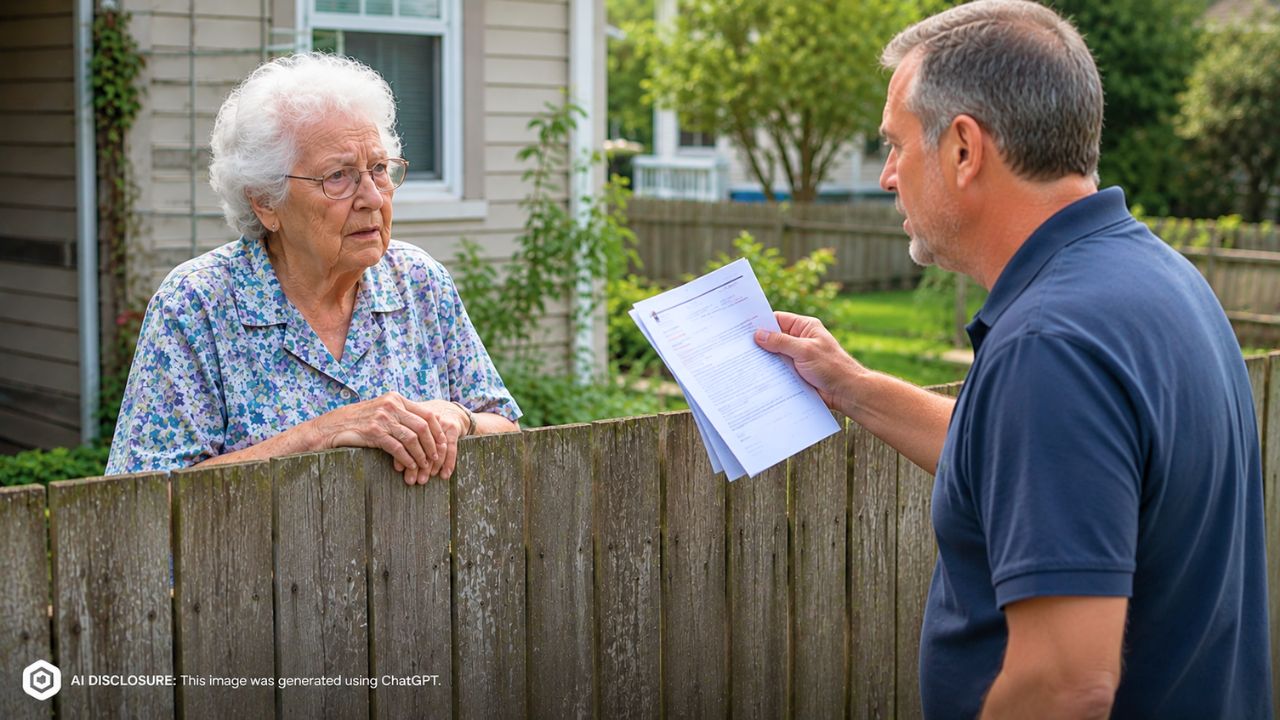
Photo credit: AI-generated image created using ChatGPT. Illustrative only.
A fence can feel like a promise. It’s the line you mow to, the boundary you trust when you plant shrubs, the quiet agreement that keeps neighbors from watching each other too closely.
But for one family, a fence that’s been “good enough” for decades suddenly turned into a $10,000 problem after a new survey. The dilemma was laid out in the original post: a 95-year-old aunt has owned her home for 60 years, the backyard fence was already there when she bought it, and now the neighbor behind her says the property line actually extends past the fence into what she’s treated as her yard.
A fence that predates the owner can still define daily life
When the aunt purchased the property, the fence was already up. That detail matters because it explains how this kind of dispute happens without anyone “doing” anything. She didn’t install it, didn’t choose its placement, and doesn’t even know who put it in.
Yet for 60 years, the fence still acted like the practical boundary. It’s where you stop raking leaves. It’s where you let a dog out. It’s where you assume your responsibility ends and the neighbor’s begins.
That kind of long-term normal can harden into something that feels permanent, even if it doesn’t match what’s written on paper.
Then one survey changed the temperature overnight
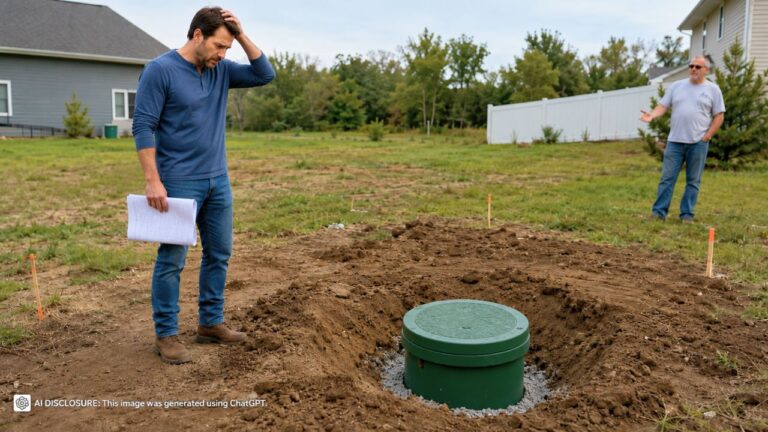
The neighbor behind her had a land survey done and came back with a claim: his property goes beyond the fence and into her backyard. Surveys have a way of turning vague beliefs into hard lines—stakes in the ground, measured angles, a map that looks official enough to end arguments.
And once one neighbor has that document in hand, the next move often isn’t a conversation. It’s a demand.
In this case, the neighbor is taking legal action and wants the aunt to pay $10,000 for “use of the land.” That’s not a minor request meant to “clear things up.” That’s a number designed to hurt.
The real pressure point: a fixed income and a ticking clock
The family member who posted described the aunt as “right on money,” which is a polite way of saying there isn’t room for surprises. For a homeowner in her mid-90s, even routine expenses can feel sharp—property taxes, insurance, roof patches, the constant maintenance that comes with an older home.
Now add the emotional weight: a neighbor dispute isn’t just paperwork. It’s a constant low-grade stressor. It can affect how safe someone feels in their own backyard, how comfortable they are checking the mail, whether they feel watched or accused.
And it’s not just the $10,000 demand. Legal action itself can become the punishment, even before anyone “wins” anything—letters, deadlines, calls, and the fear of making one wrong move.
“Is this legal?” is the question people ask when the paperwork doesn’t match the yard
The family’s main question was simple: can a neighbor do this when she didn’t put up the fence and has lived with it for decades?
That’s the gut-level unfairness of property line fights. A fence can be wrong for generations. People can build sheds, gardens, patios, and routines around it. Then, in one afternoon, a survey redraws reality and somebody decides it’s payday.
The trouble is that property ownership is part practical and part legal. The yard you’ve maintained and the yard you legally own aren’t always the same thing, and different places treat long-term use differently. That’s where homeowners get stuck: common sense says “we’ve always used it,” but the neighbor is waving a survey and talking about court.
Even without knowing the exact location or local rules, the shape of this dispute is familiar: an older fence, a new survey, and a demand for money rather than a straightforward request to relocate the boundary marker or negotiate.
What people tend to focus on in disputes like this: proof, timelines, and paperwork
When stories like this circulate among homeowners, the immediate reaction is rarely about the fence boards themselves. It’s about documentation and time. People want to know: how long has the fence been there, what do the deeds say, what does the county map show, and who has been maintaining the strip of land in question?
In a long-running boundary disagreement, the small details become big. Who repaired the fence over the years? Who planted trees along it? Who mowed up to it, put up lights, or treated it as part of their yard? If there were ever conversations with past neighbors—friendly or tense—those memories can suddenly matter.
And when the neighbor jumps straight to “pay me $10,000,” the advice people often give is to slow everything down and get eyes on the documents before agreeing to anything out loud. Not because it’s fun to fight, but because paying or admitting fault can sometimes be treated like acceptance of the other side’s story.
No one wants a 95-year-old homeowner negotiating on the back porch with someone threatening legal action. This is the point where families usually step in, not to escalate, but to keep the process from becoming a pressure tactic.
A fence line fight doesn’t stay in the backyard
Once a neighbor claims part of your yard is actually theirs, the dispute tends to spread into everyday life. It can affect future sale plans, refinancing, or even just the ability to hire a contractor—because any work near the boundary becomes risky.
It can also turn ordinary maintenance into an accusation. Trim the bushes and it’s “trespassing.” Fix a leaning fence panel and it’s “altering the boundary.” Even if nothing changes physically, the feeling of being watched can be enough to make someone stop using their own space.
And for an elderly owner, the stakes are painfully concrete: a demand like $10,000 isn’t just an argument. It’s the kind of figure that can threaten the cushion that pays for in-home help, medical needs, or basic repairs that keep a house livable.
For now, the fence is still there, and the neighbor is still pushing. The hardest part of disputes like this is that they don’t start with a broken board or a fallen tree—you can’t just fix it with a weekend project. It starts with a line someone insists is real, and a long life lived on the other side of it.
Like Fix It Homestead’s content? Be sure to follow us.