New Landowner Buys a Vacant Lot to Build On — Then Finds the Neighbor Quietly Installed a Septic Tank on the Land
Photo credit: AI-generated image created using ChatGPT. Illustrative only.
Buying a vacant lot is supposed to be the calm part of building a house. Pay the closing costs, pick a builder, and let the planning happen from a safe distance. For one new landowner in Nebraska, that calm broke the moment he visited the property and realized the neighbor’s “repair project” had crossed the line—literally.
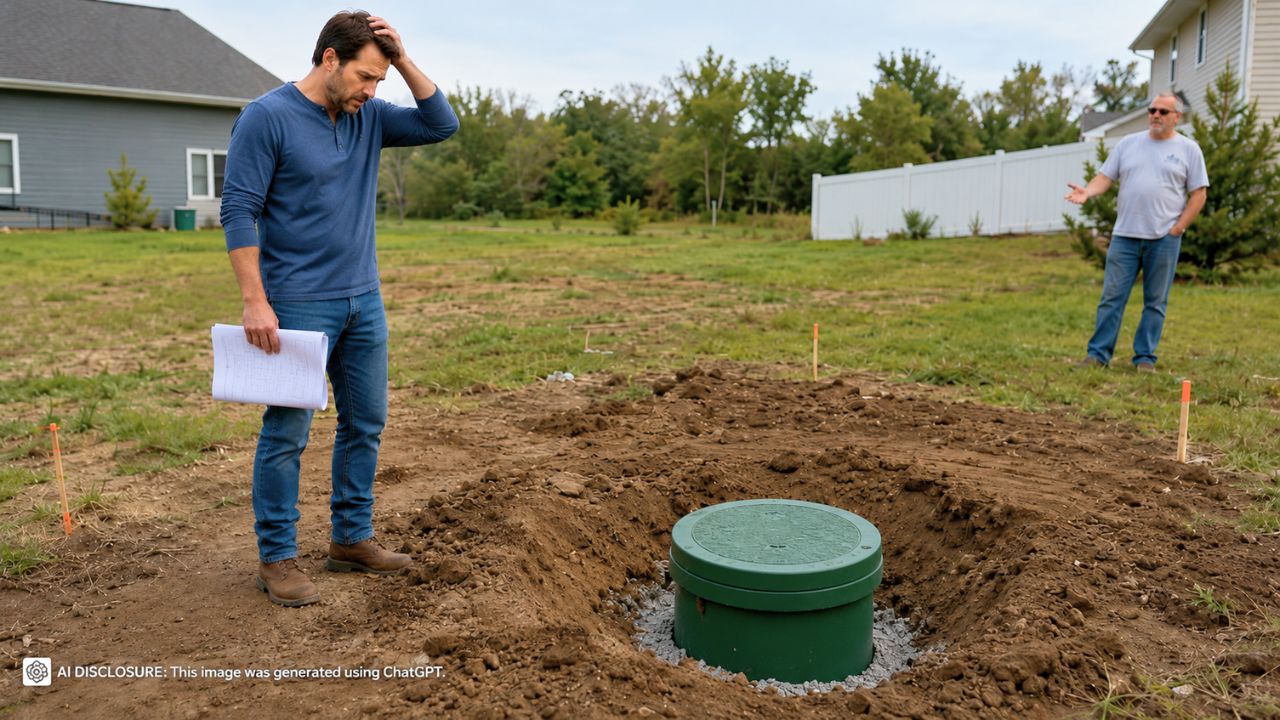
In the original post, the buyer explained that he and his wife purchased a plot about six months earlier, intending to start construction in roughly two months. They were living out of state, so the land sat unattended most of the time. When he came to meet a contractor, he discovered the neighbor had recently installed a new septic tank system—part of it appearing to be on the buyer’s land.
The land was empty, but the clock was already running
This wasn’t a case of moving into a finished house and slowly noticing problems. The couple hadn’t even broken ground. They had a timeline, a contractor visit, and a plan to connect to the town sewer system rather than rely on septic.
That detail matters, because it meant the “improvement” next door wasn’t something they wanted, needed, or budgeted for. It was also happening while they were hundreds of miles away, with no daily eyes on the property to catch anything early.
In small towns where septic systems are common, a replacement job might not raise eyebrows—until it’s on the wrong side of a boundary stake.
Fresh dirt near the line turned into a full-blown property fight
The owner didn’t even claim he knew the exact location of the tank itself. What he could see was the beginning of the disturbed soil: roughly 25 feet from the property line. The neighbor told him the work had been finished for more than a month.
That’s the kind of timing that makes your stomach drop. A month is long enough for paperwork to be filed, contractors to be paid, trenches to settle, grass to be reseeded, and everyone involved to mentally move on—except the person whose land may have been used.
To the buyer, it also raised the obvious question: how did a major excavation and installation happen without anyone confirming where the property line actually was?
The neighbor didn’t deny it—he wanted a deal
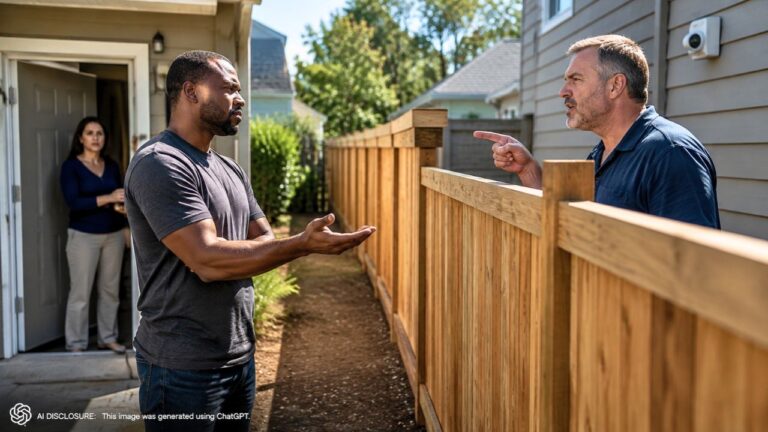
When confronted, the neighbor acted surprised and insisted the property line was farther out. The buyer responded by showing him the marker locations from the survey done six months earlier by a reputable company.
Instead of backing down, the neighbor pushed for a new survey “by his own guy,” scheduled for the following week. That move can sound reasonable on paper—double-check the lines before anyone starts talking about ripping out buried infrastructure—but it also has a familiar feel to anyone who’s dealt with boundary disputes. If you can muddy the certainty, you buy time.
Then came the neighbor’s proposed “solutions,” and this is where the tone shifts from misunderstanding to negotiation. Assuming the buyer’s markers were right, the neighbor said the “only viable solution” was for the buyer to buy the septic system from him. He claimed it cost $9,000 and offered it for $7,000, describing it as “fair and square.”
For a couple planning to connect to the town system, it wasn’t a solution—it was an invoice.
“I can’t afford to undo it” is not the same as “it can’t be undone”
The landowner’s preference was simple: reverse what was done and restore the lot. The neighbor’s response was just as blunt—he said that wasn’t possible because he didn’t have the money, and the buyer would have to pay for it himself.
That’s the part that tends to send property disputes from tense to explosive. It reframes the whole problem: a neighbor uses your land without permission, then tells you the only way forward is to pay—either by buying the system, selling off a chunk, or granting an easement.
In real-world terms, an easement isn’t just a line on paper. It can affect where a house can be placed, where a driveway runs, what future landscaping is possible, and how the property is valued when it’s time to refinance or sell. Even if the disturbed area looks small, the “keep-out” zone around a septic system and its components can stretch wider than most people think.
And because construction was set to begin in two months, this wasn’t a long, slow argument that could simmer quietly for years. The buyer was staring down a deadline where a builder might need clear answers about setbacks, utilities, excavation, and where heavy equipment can safely operate.
Commenters zeroed in on proof, paper trails, and stopping the bleeding
Although the post itself reads like a stunned homeowner asking what to expect, the practical reaction in these cases tends to be consistent: confirm the boundary, document everything, and don’t treat a “friendly” offer as a harmless shortcut.
The neighbor wanting “his own” survey is one of those moments where people urge caution. Surveys can be legitimate, but they also can be used to stall or create a dispute where one didn’t need to exist. The buyer already had a recent survey, and he had markers he could point to on the ground. That’s not a vague guess—it’s a professional snapshot of where the line is supposed to be.
Another point people often raise in disputes like this is the chain of responsibility. A septic installation usually involves contractors, permits, and some form of review. If the work landed on the wrong property, it’s not only a neighbor problem—it may involve whoever designed it, installed it, or signed off on it. Even without getting into legal strategy, it’s the difference between “two neighbors arguing” and “a regulated project installed in the wrong place.”
And there’s a common-sense piece here too: once you know something is wrong, you want to avoid accidentally accepting it. Negotiating to buy it, paying for part of it, or casually agreeing to “leave it for now” can be the kind of thing that later gets remembered very differently by each side.
The worst part is the timing: building a home while your lot is in limbo
Vacant land feels simple until it becomes contested land. The buyer wasn’t dealing with a messy fence line or a tree that leaned over the yard. This was underground infrastructure—expensive, disruptive, and tied to health and environmental rules—installed before the new owner even had a chance to put up a “no trespassing” sign.
There’s also the practical anxiety of not knowing exactly what’s where. The owner said he didn’t know the exact location of the tank, only where the digging started. That means uncertainty about what else might be present: lines, drain field components, disturbed soil, and areas that could complicate foundation work or utility hookups.
For anyone about to build, that uncertainty is poison. Builders want clean lots and clear plans. Lenders and inspectors don’t like surprises. And neighbors who start with “you should pay me $7,000” don’t usually de-escalate on their own.
The landowner went into this thinking he was two months away from starting a house. Now he’s waiting on a second survey, staring at a fresh scar of dirt near his boundary markers, and trying to figure out how to protect his lot without getting bullied into paying for someone else’s mistake.
Like Fix It Homestead’s content? Be sure to follow us.