New York Buyer Closes on 30 Acres With a Clear Title Search, Title Insurance, and a Confirming Survey — Then a Neighbor Shows Up Claiming Twenty of the Thirty Acres Are His
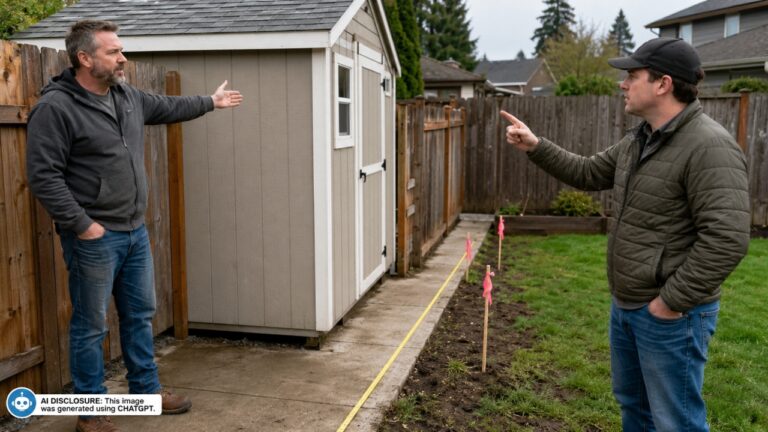
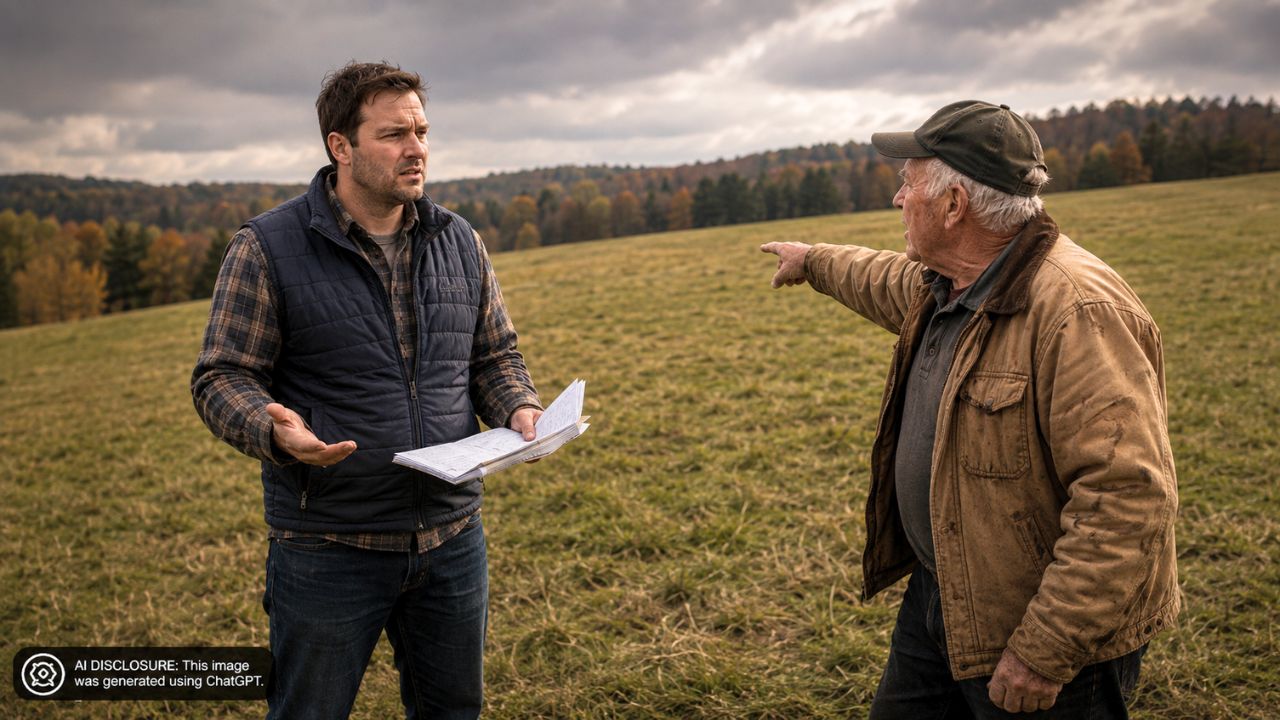
Photo credit: AI-generated image created using ChatGPT. Illustrative only.
Buying raw land is supposed to be the simple kind of real estate. No leaky roof, no mystery plumbing, no seller-painted-over-the-problem surprises. Just trees, quiet, and a plan.
That’s what one upstate New York buyer thought after closing on 30 vacant acres in August 2020—complete with a clear title search, title insurance, and a survey showing the full acreage. Then, after months of clearing the property for a future home site, a neighbor walked up and dropped a bomb: he said 20 of those 30 acres were actually his. The buyer shared the details in the original post, trying to figure out how something so basic could suddenly feel so shaky.
Thirty acres on paper, but a neighbor on the ground
On the buyer’s side, the paperwork seemed as locked down as it gets. A title search came back clear. Title insurance was purchased. The land had been surveyed in the past and came out to 30 acres, and the title listed 30 acres as well.
Even the town tax map matched: the parcel was shown as 30 acres. So when the neighbor claimed ownership of two-thirds of it—and said he’d been paying taxes on that portion for years—it didn’t sound like a normal boundary-line misunderstanding. It sounded like the kind of thing that makes you stop running the brush hog and start digging through closing documents.
The detail that made it feel messier: two parcels on one deed
The buyer noticed something that added to the unease: the title described the land as 20 acres and 10 acres as separate parcels, but both were on the same title. He’d been told that can happen when land is acquired at different times and later combined.
That detail matters because it’s exactly the sort of “wait, what?” detail a hostile neighbor can latch onto. To someone looking for leverage, “two parcels” can sound like “two stories,” even if it’s completely normal for how the property was assembled decades earlier.
Still, the buyer’s bigger fear wasn’t the formatting of the deed. It was the possibility—however slim—that there could be overlapping claims buried in older records.
Paying taxes doesn’t feel like proof, but it’s still unnerving
The neighbor’s main talking point wasn’t a deed he could immediately produce. It was taxes. He claimed he’d been paying taxes on those 20 acres for “many years” and said he was now doing his own title search to locate paperwork supporting his claim.
Anyone who’s dealt with rural property knows how these arguments usually sound in real life: “My family’s always used that back section,” “that line’s wrong,” “I’ve been paying for it,” “everyone knows it’s mine.” It’s the kind of statement that can be completely incorrect and still create real stress—because stress is the point. The buyer described the encounter as “the shock of a lifetime,” even while acknowledging the neighbor likely didn’t have much of a leg to stand on.
The practical problem is that land disputes don’t stay theoretical for long. The buyer was actively clearing. He planned to build. And now, every tree cut or driveway stake could become “evidence” in the neighbor’s mind that he needs to escalate.
The real fear was the future house: what if this pops up later?
Clearing land is one thing. Pouring a foundation is another. The buyer’s questions quickly moved from “can this be real?” to “what happens if I build?”
He worried about the nightmare scenario: you finance construction, you build a home, and then five years later someone turns up with a document that throws the boundary into question. Even if you’ve got a survey and a construction lender was satisfied at the time, the emotional math changes once a house is involved. A disputed back corner of 30 wooded acres is stressful; a disputed homesite, septic location, well placement, or access route can be life-altering.
That’s where the title insurance question came in. The buyer understood that coverage depends on the policy, but wanted to know how it typically plays out if someone later claims ownership and can actually produce a title document. It’s not just about money—it’s about whether you can keep using the land you bought to live on, not just to look at on a tax map.
What people pushed him to do next: go deeper than the digital records
After reading responses, the buyer added an update: his agent contacted the sellers, and they described the neighbor as a “PITA.” That didn’t solve anything, but it did confirm this may not have been a one-time misunderstanding. It may be a pattern.
The buyer also started pulling the chain of title himself. He was able to go back as far as the late 1990s and didn’t see the neighbor’s name. The neighbor had mentioned a possible previous property owner—someone far enough back that records might not be fully digitized, which raised a new concern: what if a modern title search didn’t reach far enough into older physical documents?
So the buyer’s next step wasn’t to argue on the property line. It was to verify the history in a way that can’t be waved off: checking older records through the county clerk’s office, or having his lawyer or title company do it, to extend that chain of title further back.
How this kind of standoff changes life on rural land
There’s a special frustration to buying acreage for peace and getting a dispute instead. The buyer wasn’t describing an active lawsuit, a police visit, or a dramatic shouting match. It was more realistic than that: a neighbor showing up, making a big claim, and forcing every future step to feel like it might trigger something.
That’s what makes these problems so draining. You can have a clean closing, a survey, a tax map, and insurance—and still feel like you’re standing on shifting ground when someone insists you’re on “their” land. And because it’s rural acreage, it’s not like a suburban fence line where everyone can see the boundary every day. The disputed area could be deep woods, old logging paths, or back corners no one’s looked at in years. That’s where rumors and misunderstandings thrive.
For now, the buyer’s plan was simple: keep everything documentation-based, push the research further back than the easy online search, and try to find out whether the sellers had dealt with this claim before. It’s not the kind of “fix” you can buy at a hardware store, but it’s the homestead version of fixing a foundation crack—slow, methodical, and better handled early than after you’ve built on top of it.
Like Fix It Homestead’s content? Be sure to follow us.