North Carolina Buyer Orders a Survey Before Installing a New Fence — Then Finds the Neighbor’s Existing Fence Runs Over the Line by Up to Five and a Half Feet Along a Hundred-Foot Stretch, With a Shed Partly Onto the Property Too
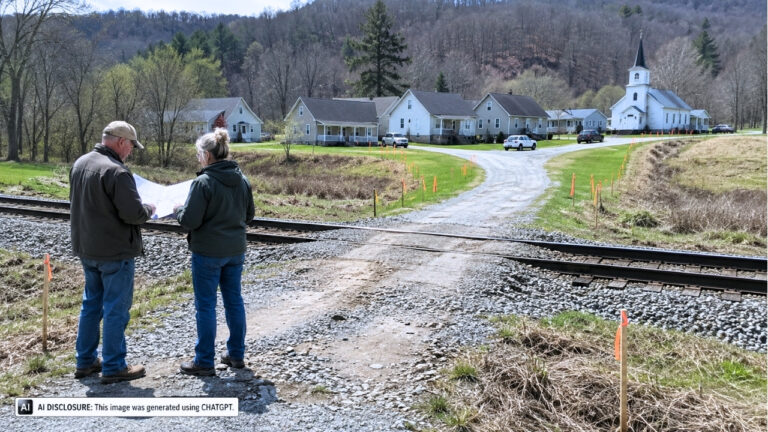
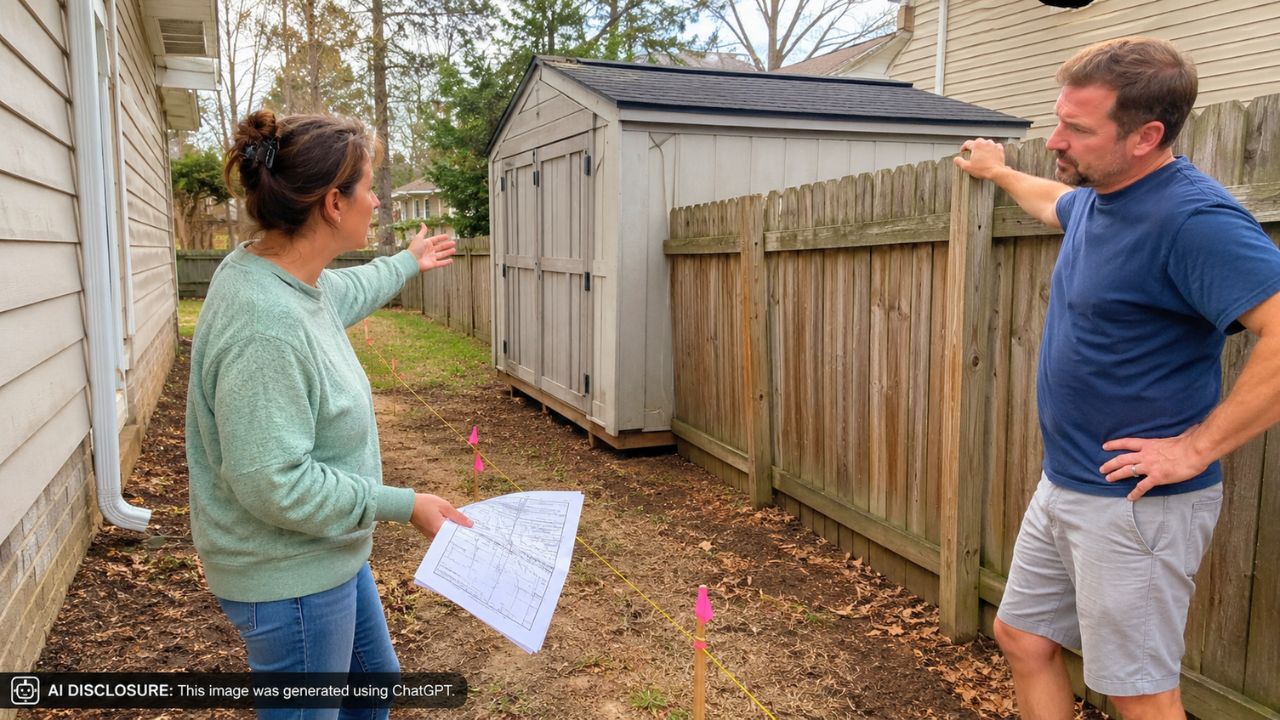
Photo credit: AI-generated image created using ChatGPT. Illustrative only.
The plan was simple: get a clean survey, build a new fence, and avoid the awkwardness of tying into the neighbor’s mismatched privacy panels. The buyer had just purchased a home in North Carolina and wanted to do it the “right” way before setting posts.
Then the survey came back. And suddenly the project wasn’t about aesthetics or where the gate should go—it was about discovering that a neighbor’s existing fence line appears to be sitting well inside the new owner’s property, plus a shed that’s partially over the line too, as described in the original post.
The first sign was easy to brush off
At first, the neighbor’s fence didn’t seem like a crisis. It was already there when the home was purchased, and it wasn’t even a consistent build—more like a patchwork of different pre-built privacy panels mixed with individual pickets.
The new homeowner noticed the little details that make a fence feel temporary: varying styles, cobbled-together sections, and even panels facing different directions. Some parts had the “finished” side facing in, other parts had it facing out. Not pretty, but still not worth a fight—until the new owner decided to install their own fence and wanted clarity on where, exactly, “their side” started.
A survey turned a fence project into a property-line fight
The house had been bought without a survey. That’s not uncommon—sometimes buyers rely on existing markers, old listings, or the general assumption that visible fences match the legal boundary. But when you’re about to spend real money digging holes and setting posts, assumptions stop being good enough.
So the homeowner ordered a survey specifically so they could build a fence without connecting to the neighbor’s. That’s the moment everything shifted. The survey map reportedly showed the neighbor’s fence as far as 5.5 feet over the property line at the front.
It wasn’t just a corner nick, either. The homeowner described a run of about 100 feet where the fence stays on the wrong side of the line, eventually ending near the back corner where it still overhangs by about 3.5 feet. In the process, the fenced-in area also “encompasses some of our trees,” turning this into more than a simple strip of grass.
It wasn’t only the fence—there was a shed problem too
As if a long section of fence wasn’t enough, the survey also showed a structure issue. In the front corner, the neighbors have a lean-to shed, and the homeowner estimated that roughly three-quarters of it sits on their property.
That’s the kind of detail that makes your stomach drop, because fences can sometimes be moved without too much drama. A shed—even a lean-to—feels more permanent. It usually comes with a foundation of some kind, footings, skids, or at least a long history of “it’s always been there.”
And because the shed is in the front corner, it’s not tucked away where nobody notices. It’s a visible, physical footprint that can affect future plans: landscaping, driveway extensions, drainage work, or even just the ability to sell cleanly later without answering uncomfortable questions.
The part that keeps new owners up at night: “Did we mess up by not surveying?”
The homeowner’s big question wasn’t just how to handle the neighbor. It was whether they were already behind the eight ball because they purchased the home without a survey—even though the fence was there at the time of purchase.
That’s the trap a lot of buyers fall into. You move in, you accept what the property “looks like,” and you start planning improvements based on what you can see. Then a survey shows that what you can see and what you legally own aren’t lining up at all.
Even if you’re calm and reasonable, it’s hard not to think ahead to worst-case scenarios: Will the neighbor claim that strip as theirs? Will this turn into a months-long standoff? Will it get nasty the moment you bring it up? And if you decide to let it slide, are you creating bigger problems for yourself down the road?
Commenters pushed proof and paperwork before any confrontation
In homeowner communities, boundary disputes tend to trigger the same immediate reaction: don’t guess, don’t eyeball it, and don’t start with a shouting match. The survey is the starting gun, not the finish line.
While the post itself was focused on the measurements and the fear of being disadvantaged, the typical practical drumbeat in these discussions is consistent: document everything, keep it polite, and let written records carry the weight. A fence line being off by inches is one thing. Being off by multiple feet across a long run—and having a shed encroaching—usually pushes people toward more formal steps.
Even without getting into courtroom talk, there’s an everyday reality behind that advice. Once you confront a neighbor, you can’t unring that bell. If the relationship turns sour, you still have to live next door. So homeowners tend to urge one another to move slowly, keep communications in writing when possible, and make sure the survey stakes and map are clear before anyone starts moving boards or making accusations.
Now the homeowner has to decide what “fixing it” really means
This is the part that makes these disputes feel so personal: there isn’t a simple “repair,” like replacing a water heater. Any path forward forces a choice between peace and precision, and sometimes you can’t keep both.
If the new owner plans to install their own fence, the encroaching fence and the shed complicate everything. Where do you build if the neighbor’s structure is sitting on your side? How do you protect your trees if they’re currently inside the neighbor’s fenced area? And if you ignore it, what happens when you want to sell and a future buyer orders the same survey?
For now, what’s clear is that a routine pre-fence survey didn’t just mark a boundary—it exposed one. And the homeowner is left staring at a map that says their yard is bigger than it looks, but only if they’re willing to do the hard part: turning lines on paper into a real-world change, with a neighbor watching from the other side of the fence.
Like Fix It Homestead’s content? Be sure to follow us.