Florida Buyer’s Survey Shows an Old Shared Fence Sits Three to Four Feet Inside Her Own Property Line — Then the Neighbor Refuses to Let Her Replace It Even Though She’s the One Who’d Pay
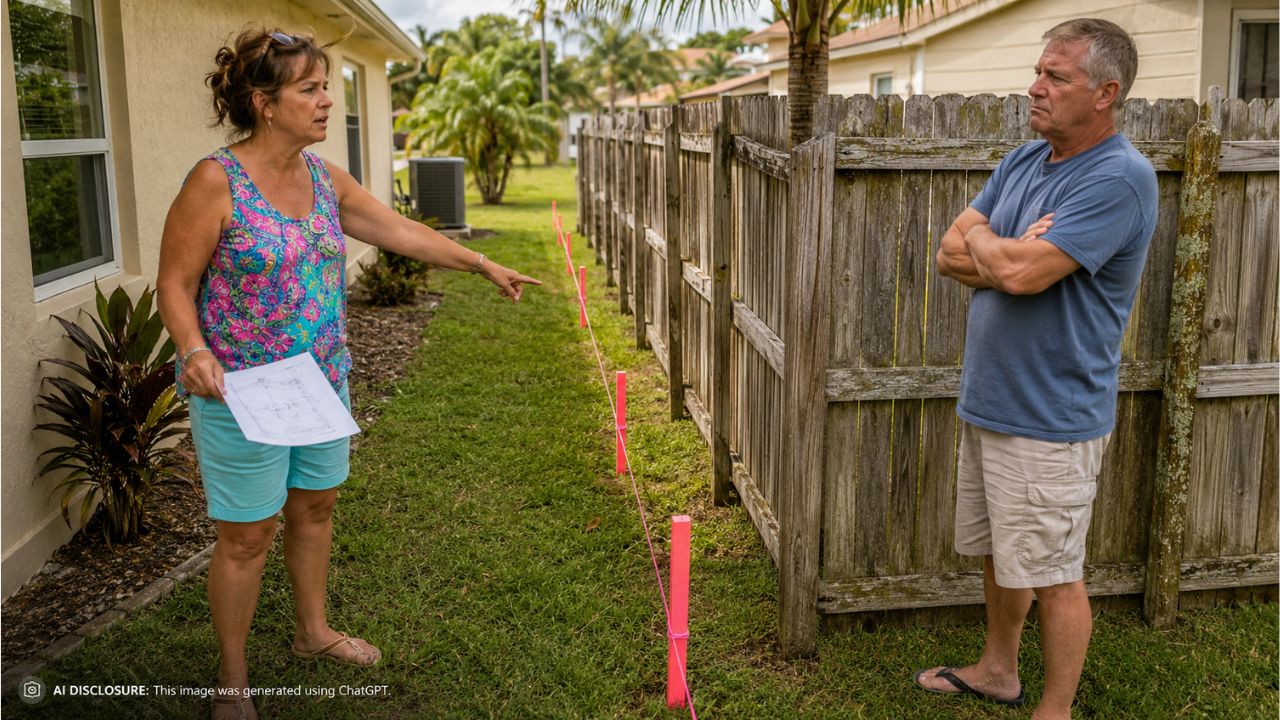
Photo credit: AI-generated image created using ChatGPT. Illustrative only.
When you buy an older home, you expect a few projects. Paint, outlets, maybe a leaky faucet. But one new Florida homeowner in Orlando walked straight into a backyard standoff: the fence that “looks shared” is falling apart, and the neighbor who uses it says it can’t be touched—even though a survey shows it’s not even on the neighbor’s land.
In the original post, the buyer explains that the fence is old and damaged, and it’s becoming the one part of the property she can’t ignore. The twist is that her survey shows the fence sits three to four feet inside her own property line, yet it’s functioning as the dividing fence for the rental next door.
The fence wasn’t just ugly—it was failing
The homeowner didn’t describe a minor cosmetic issue. This was a fence “in the process of breaking down,” the kind that leans a little more after each storm and starts shedding boards like toothpicks. It’s the type of backyard problem that quickly turns into a safety issue, especially if pieces start falling or if the fence becomes easy to push over.
And because the home is older, the fence likely has been “good enough” for years—until it wasn’t. That’s often how these things go: you don’t notice the slow rot until the structure starts visibly giving up.
The survey changed everything
Before making any big changes, the homeowner did what a lot of buyers are urged to do in Florida: she got a survey. That survey is what turned an annoying repair into a property-line drama. According to her, it clearly shows the fence isn’t on the boundary at all—it’s three to four feet inside her yard.
That detail matters because it reframes the whole idea of a “shared” fence. People call a lot of things shared simply because both households use them. But usage and ownership don’t always match, and a survey is one of the few things that can cut through the fog.
She also points to a small but telling clue: the inward-facing side of the fence faces her backyard. That doesn’t prove ownership by itself, but in the real world it’s the sort of thing neighbors latch onto when they’re trying to remember who built what and when.
She offered to pay—then got a flat no
Most fence disputes blow up over money. Not this one. The homeowner says she wants to take down the old fence and build a new one on the property line, and she’s willing to cover the cost. In her mind, that’s the cleanest fix: replace the failing structure, move it to the correct location, and stop losing three to four feet of usable yard.
But when she notified the owner of the property next door, she hit a wall. The neighbor refused to accept her taking down the fence at all. No negotiation, no “wait until next month,” no discussion about materials or timeline—just a refusal.
That’s where the stress kicks in for a new homeowner. You’re trying to invest in the property, do things properly, and start your life there. Instead, you’re stuck staring at a damaged fence you’re supposedly not “allowed” to replace.
The neighbor isn’t even the one living there
Another detail makes this feel even more like a modern housing headache: the “neighbor” in this dispute is a landlord, not the people living next door. The homeowner says she has a decent relationship with the actual residents, which is often the case—tenants just want peace and a secure yard, and they may not care where the surveyed line sits.
But landlords can be different. A fence that works as a boundary can feel like an asset, even if it’s not technically on their parcel. If it gets moved, the rental might suddenly have less perceived privacy, a different look from the street, or a yard line that doesn’t match what past tenants assumed.
And if the old fence has been “the fence” for a long time, the landlord may be reacting out of habit and fear: fear of losing something they’ve treated like theirs, and fear of the precedent that comes with letting the new owner make changes.
The real risk is what happens after the fence comes down
The homeowner’s question is straightforward: if the fence is entirely on her property, can she remove it without permission? People she’s talked to are split. Some say it’s technically hers and she can take it out. Others warn that doing it could invite a lawsuit.
That’s the part that makes fence fights so exhausting: you can be right on paper and still end up spending time, money, and emotional energy dealing with the aftermath. If she removes the fence and the landlord claims it was “shared,” claims damages, or tries to stop the new fence from going up, the repair project becomes a dispute project.
And then there’s the practical side. The moment the old fence is down, even temporarily, the properties are open to each other. That can mean dogs getting loose, privacy disappearing, or accusations about trespassing the second someone steps the wrong way while measuring or setting posts.
The homeowner is trying to avoid that spiral. She’s not asking how to “win” the argument—she’s asking what the safest next step is and whether this is serious enough to need a lawyer.
People focused on proof, paperwork, and avoiding a surprise war
Even without a long comment thread included in the source material, you can see the two schools of thought she’s reacting to: “It’s on your land, do it,” versus “Be careful, because being right doesn’t stop someone from suing.” That split is common in property-line disputes, especially when there’s a survey but the neighbor has years of assumptions.
In real homeowner terms, the advice usually starts with reducing ambiguity. A survey is step one, and she already has that. The next steps people tend to emphasize in these moments are written communication, clear notice, and making sure the new work is permitted and compliant—because a clean paper trail can matter as much as the fence itself once tempers flare.
It’s also telling that she tried talking to the landlord first. That’s often the neighborly move, but it can backfire when the other side hears “heads up” as “permission request” and decides they can veto work on someone else’s land by simply saying no.
Now she’s stuck choosing between living with a collapsing fence that eats into her yard, or moving forward and risking an escalation with a property owner who doesn’t even live there.
If you’ve ever stared at a failing fence and imagined it turning into a months-long feud, you understand the bind. She wants a clean replacement, on the line, on her dime. Instead she’s learning one of the hardest lessons of homeownership: the repair itself can be simple, but the neighbor math is never simple.
Like Fix It Homestead’s content? Be sure to follow us.