Landowner Finds Her Only Water Well Sits a Couple of Feet Onto the Neighbor’s Land — Then He Claims He Can ‘Do Anything He Wants With It’
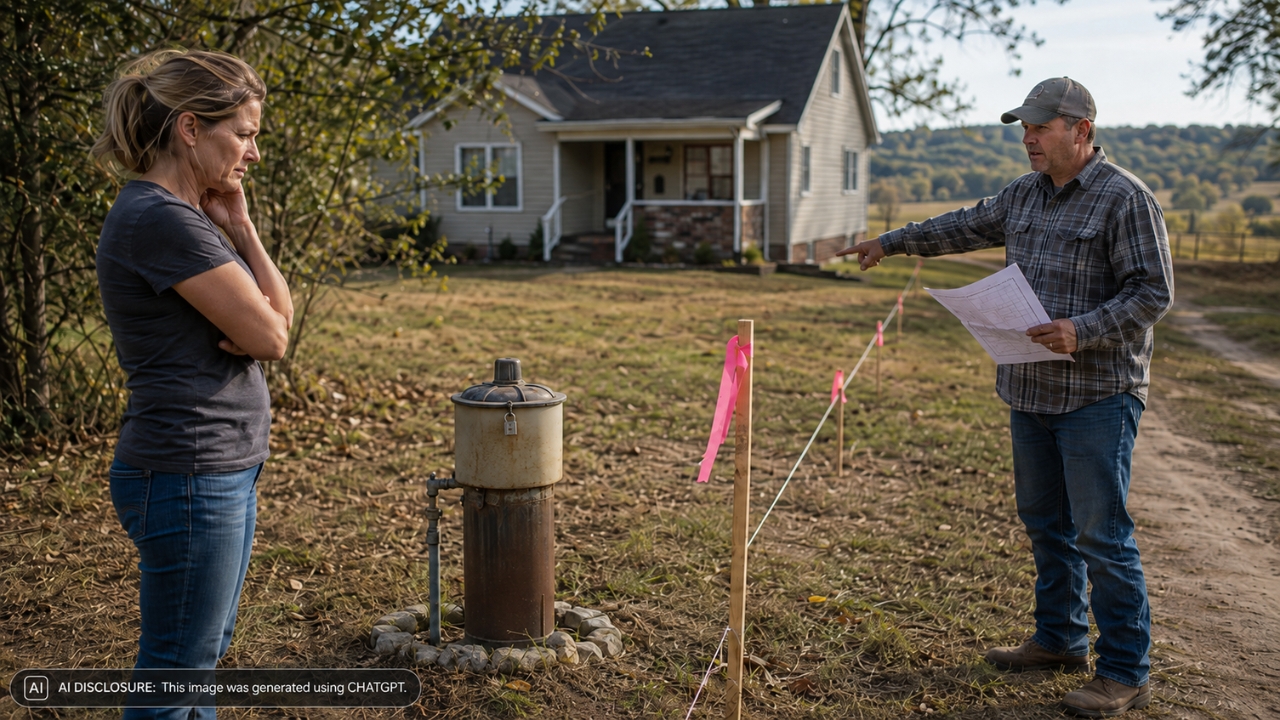
Photo credit: AI-generated image created using ChatGPT. Illustrative only.
One day you’re just living in your house, turning on the tap, not thinking twice about it. The next, your neighbor is standing there with a land survey in hand telling you your well is a couple feet over the line—and that he can cap it whenever he feels like it.
That’s the gut-punch scenario laid out in the original post, where a homeowner says the well in question is the only source of water to the home. The neighbor’s position, as described, isn’t subtle: the survey “essentially gives him the right” to the well, and he can “do anything he wants with it.”
The day the property line became a household emergency
Property line issues are usually slow-burn problems—fence posts, shrubs, a shed that’s been “fine for years.” A water well is different. You can’t just shrug and deal with it later when the thing in dispute is the literal lifeline for your kitchen sink, shower, and toilet.
The homeowner says the neighbor recently made them aware of the survey results, and immediately escalated to threats about capping the well. That word—cap—hits hard because it implies an instant shutoff, not a long back-and-forth disagreement.
And unlike a driveway scuff or an overhanging branch, the consequences show up fast. No water means no basic sanitation, no cooking, no laundry, and no normal life inside the home. It turns a boundary dispute into a day-to-day crisis.
A survey says one thing, the well paperwork says another
What makes this mess especially tense is that the homeowner says the well is permitted through the state engineer, and that permit shows it was installed on their lot. To them, that’s not just a scrap of paper—it’s the official record they’ve been living under.
Then comes the neighbor’s survey, placing the well a couple of feet onto the neighbor’s property. Two feet doesn’t sound like much until you remember how survey lines work: a couple feet can be the difference between “mine” and “trespass,” between “my infrastructure” and “an improvement built on someone else’s land.”
The homeowner’s central question is basic and urgent: does a neighbor get to declare ownership and take physical action against a well based on a single survey? Or is there a process that has to happen first?
“Do anything he wants” is where it gets scary
There’s a particular kind of intimidation that happens in neighbor disputes: someone speaks with absolute certainty, even if they’re bluffing. The homeowner describes the neighbor treating the survey like a deed to the well itself, as if the moment the survey exists, the well becomes his to control.
But a working well isn’t just a hole in the ground. It’s part of a system: the wellhead, electrical components, piping, pressure tank, filtration if any, and the line carrying water into the home. The homeowner isn’t describing a theoretical future problem—they’re describing a neighbor who is claiming immediate power over a critical utility.
Even if the neighbor truly believes he’s in the right, “I can cap it whenever I want” crosses from “let’s resolve a boundary issue” into “I’m going to force you to negotiate under threat.” That’s what makes it feel less like a paperwork dispute and more like a standoff.
The real-world stakes: water now, legal later
When a home’s only water source is on the line, every hour matters. It’s not just inconvenience; it can affect whether the home is livable at all. If the well were capped or disabled, the homeowner could be facing emergency costs just to restore basic water access—assuming there’s even an alternative available.
What complicates everything is that the homeowner isn’t only trying to “win” an argument. They’re trying to keep their home functioning while figuring out what’s true: is the survey correct, is the permit record correct, and what happens when those two don’t match?
That’s the hidden nightmare of boundary disputes involving utilities. A fence can be moved after a fight. A well can’t be casually relocated. If it truly sits on the wrong side of the line, the fix is rarely simple, and it’s almost never cheap.
And because this is a neighbor-to-neighbor problem, it comes with a social pressure cooker attached. The homeowner has to live next to the person making the threats, possibly while trying not to escalate things into something worse.
Reactions centered on proof, process, and preventing a surprise shutoff
Even without a long thread of back-and-forth included in the source material, the homeowner’s question telegraphs what practical minds tend to focus on in moments like this: documentation and the order of operations. The neighbor has a survey. The homeowner has a state engineer permit. Those two pieces of paper may not be talking about the same thing in the same way.
In these kinds of disputes, people often home in on a few immediate survival moves: don’t rely on verbal threats, don’t let the other party be the only one holding “the facts,” and don’t wait until the well is physically tampered with to start gathering records. The homeowner is already thinking in that direction by asking if a process exists before a neighbor can “claim” a well based on one survey.
There’s also a practical, day-to-day reality in the background: when someone says they can cap a well “immediately,” you start thinking about what they might do when you’re at work or asleep. That’s what turns paperwork into urgency—because even a short interruption to water service can force a household into emergency mode.
A couple feet that could change everything
What’s so brutal here is the scale of the alleged encroachment versus the scale of the consequences. The well is only described as being a couple of feet over the property line. But those feet are now being used as leverage over the homeowner’s entire water supply.
The homeowner isn’t asking for a loophole or a clever trick. They’re asking whether there’s any protected time to “look into this” before the neighbor can act, and whether a single survey is enough for the neighbor to legally take control of the well. It’s the kind of question you ask when you can feel the window closing.
For now, the story sits in that uncomfortable place so many property fights land: one neighbor holding a document and making big claims, the other holding different official paperwork and staring down the possibility of losing a basic necessity. And until the boundary, the well rights, and the permitting records are reconciled, every glass of water from that tap comes with a new edge to it.
Like Fix It Homestead’s content? Be sure to follow us.