Homeowner Finds the Neighbor’s Driveway and Three-Car Garage Sit Entirely on Their Land — Then the Neighbor Refuses to Buy It for Next to Nothing
Photo credit: AI-generated image created using ChatGPT. Illustrative only.
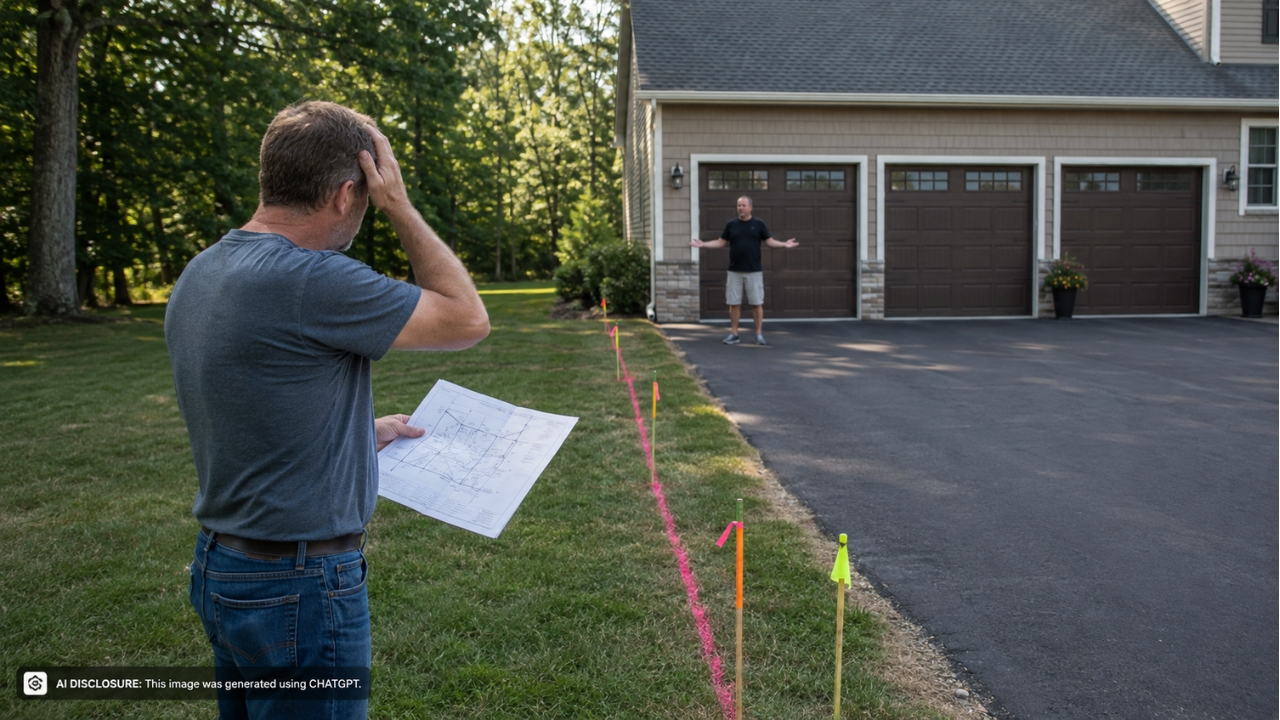
It started as a “wait… what?” moment that turned into a yearly bill. A homeowner in Ohio said they recently learned their next-door neighbor’s entire driveway and even a three-car garage sit on the homeowner’s land, not the neighbor’s. And the part that really stung wasn’t the awkwardness—it was the money.
In the original post, the homeowner explained they’re paying about $2,500 a year extra in property taxes because that paved driveway and garage are being counted as part of their property. They’re not looking to play villain or force a teardown. They just want the tax burden to stop.
A surprise property-line discovery nobody wants
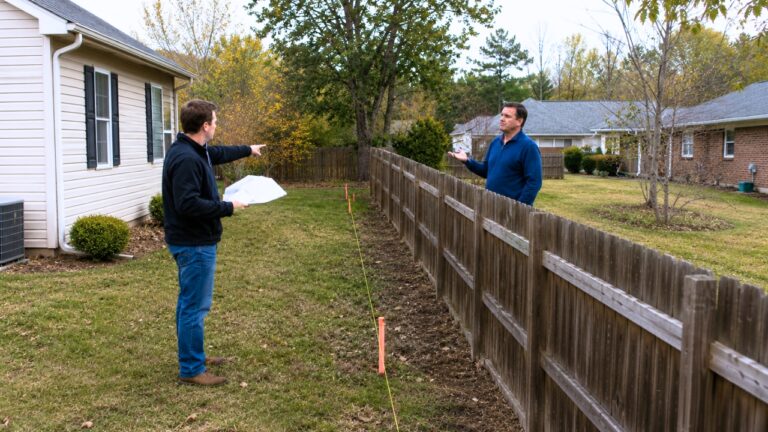
The homeowner said they only found out “last week” that the structures were over the line. Not a little bit, either—based on their description, the driveway and the full three-car garage were on their side.
They also made it clear they don’t want the nuclear option. No threats to bulldoze a garage, no demands to jackhammer a driveway. Their assumption was that the setup had been there for more than 20 years and might be “grandfathered in” somehow.
But the longer something sits in the wrong place, the more expensive it becomes to ignore—especially when the county still sends the tax bill to the person who owns the dirt underneath it.
The “easy fix” offer: sell the strip for $1
Once they realized what was happening, the homeowner tried the simplest, most neighborly path: offer to sell the land to the neighbor. They even offered to do it for $1.
The neighbor refused. The reason was blunt and practical: they didn’t want to pay the property taxes on the land. In other words, the neighbor wanted to keep using it, keep the garage, keep the driveway… but not take on the ongoing cost tied to the property line.
That’s where the tension lives. A garage isn’t a fence that can be shifted in a weekend. It’s a big, permanent structure with a roof, slab, and likely utilities and permitting history—something that affects value, resale, and insurance, even if nobody talks about it out loud.
When the county shrugs, the problem gets personal
The homeowner said they contacted the county, hoping there was a straightforward administrative fix. Instead, the response was basically: figure it out yourselves, because it’s on your property.
That kind of answer is maddening, but it’s also common in real-life property disputes. Counties assess and record; they don’t always referee neighbor-to-neighbor standoffs. So the homeowner was left holding the bag: a tax hike they say is tied to improvements that aren’t even theirs.
It also raises a scary question homeowners don’t like to say out loud: if the garage is on your land and something goes wrong—damage, injury, a fire—whose problem is it? Even without getting into legal technicalities, you can feel why the homeowner wanted clarity fast.
A finger-drawn map and the reality of “it’s been that way forever”
To help explain it, the homeowner added a rough drawing done with a finger. It wasn’t about artistry; it was about showing the footprint—where their property sits and how the neighbor’s driveway and garage overlap it.
That’s where the “it’s been there 20+ years” detail cuts both ways. On one hand, it suggests nobody acted in bad faith recently. On the other, time doesn’t automatically make the tax bill fair, and it doesn’t make the boundary issue disappear—especially when someone wants to refinance, sell, build a fence, add a shed, or do anything that requires permits or updated surveys.
Long-standing encroachments often stay quiet until a trigger event: a new survey, a sale, a tax reassessment, or a homeowner finally noticing that the numbers don’t make sense. Here, the trigger was financial—$2,500 a year is enough to make almost anyone start pulling paperwork.
What people pushed: paperwork, surveys, and not “winging it”
Even without the full comment thread included, you can guess the direction these discussions usually go once a garage is involved: stop assuming, start documenting. When the stakes are a permanent structure and annual taxes, “probably” and “I believe” don’t protect anyone.
In situations like this, homeowners are typically urged to get clean, professional boundaries on paper, not just a mental map of where things “should” be. The homeowner already had enough confidence to say the garage and driveway were on their land, but the next steps usually depend on what the recorded documents and any recent survey actually show.
And when the other side refuses even a symbolic $1 purchase, that’s usually the moment people stop trying to solve it with friendly conversations alone. Not because anyone wants a fight—but because a refusal makes it clear the neighbor is comfortable with the arrangement as-is, including who’s paying for it.
The real pressure: taxes now, resale later
The homeowner’s immediate complaint was simple: they don’t want to keep paying extra taxes for improvements that belong to someone else. Over time, that’s not just annoying—it can change what it costs to live in the house.
But the long-term pressure point is what happens when either property changes hands. A buyer’s inspection might not catch a boundary issue, but a lender, title company, or surveyor might. And once it’s in a report, it becomes a “fix it or disclose it” problem.
The homeowner asked the most practical question in the post: do they need a lawyer, and can the neighbor be forced to take over the taxes? No one wants to spend money on legal help after already paying extra every year. But at the same time, letting it ride isn’t free—it’s $2,500 a year, plus the risk of the problem hardening into something that’s even harder to unwind later.
For now, the homeowner is stuck in that familiar homeowner trap: trying to be reasonable while the numbers keep ticking upward. They don’t want to rip out a driveway or a garage. They just want the land, the taxes, and the reality on the ground to match—before the next bill shows up and the “we’ll deal with it later” option gets even more expensive.
Like Fix It Homestead’s content? Be sure to follow us.