Homeowner Wins a Trespass Judgment Over Curbing Installed in the Shared Easement — Then the Neighbors Argue Removing It Would Cost Too Much
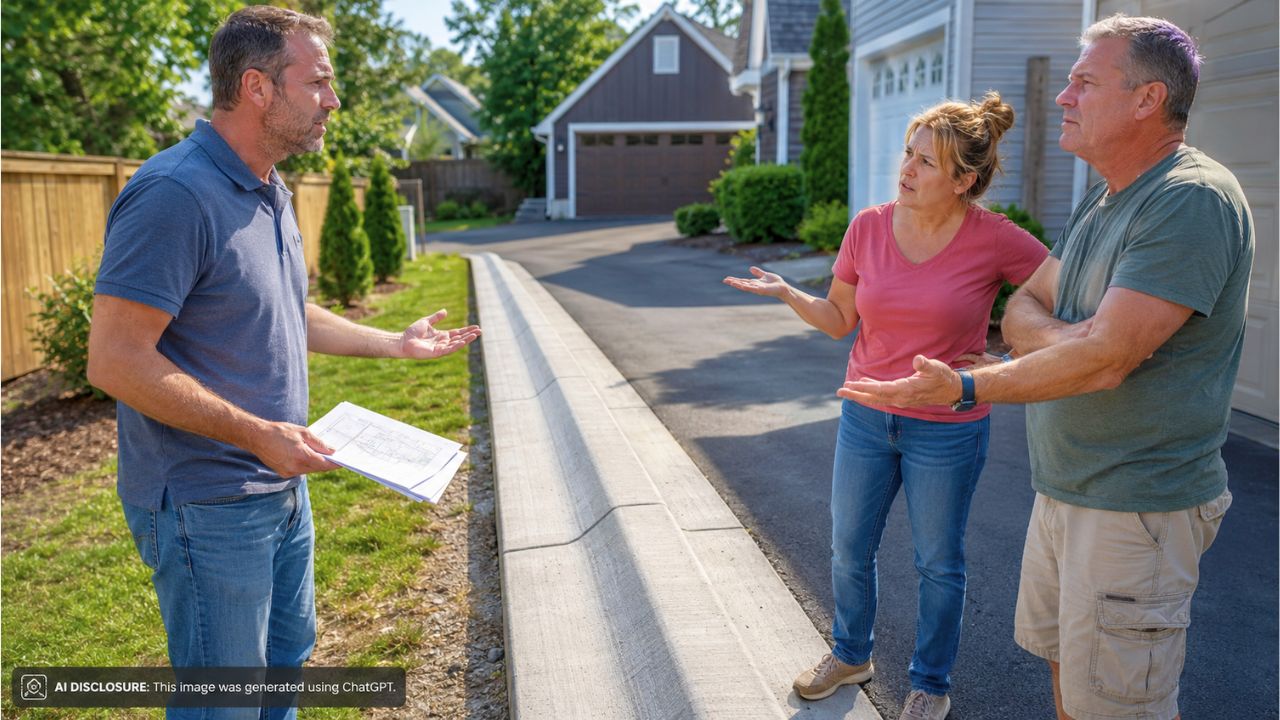
Photo credit: AI-generated image created using ChatGPT. Illustrative only
A shared driveway sounds simple until somebody decides it’s a blank canvas. In a Cheshire, Connecticut neighbor fight, one homeowner ended up with a trespass judgment after the next-door owners tore down part of his fence—then the same neighbors were ordered to remove curbing and stonework they’d installed in a shared easement, even after arguing that undoing it would be too expensive.
The details come out in the source post, which reads like the kind of property-line spiral every rural and semi-rural homeowner dreads: a recorded driveway agreement, a “that’s not where the line is” dispute, heavy equipment, police showing up, and then the long, grinding part—making a judge sort out what should have been handled with a survey and a phone call.
A shared driveway with rules on paper (and pressure in real life)
Mark Gancsos bought and moved into 780 Bethany Mountain Road in 2019. Lior and Perla Israel bought the adjoining property at 776 in 2022, and there’s a third property at 770 that uses the same driveway too.
The twist is that the driveway sits on the Israels’ property, but it’s burdened by a recorded easement and a private access-maintenance agreement. In plain homeowner terms: yes, one lot “owns” the pavement, but other lots have documented rights to use it and keep it usable.
That agreement mattered because it wasn’t vague. It granted ingress and egress, and it also covered utilities—installation, maintenance, repair, replacement. It also laid down a hard no: no building, structure, permanent improvement, or obstruction in the easement area.
And because shared driveways always come with disagreements about who pays for what and who gets to decide, the agreement included a voting mechanism. If the owners couldn’t agree on repairs like repaving or re-graveling, a majority vote would control.
The fence was there first — and it wasn’t slapped in randomly
Before the Israels purchased 776, Gancsos had already installed a fence near the shared boundary. This wasn’t a “I eyeballed it from the porch” fence job, either.
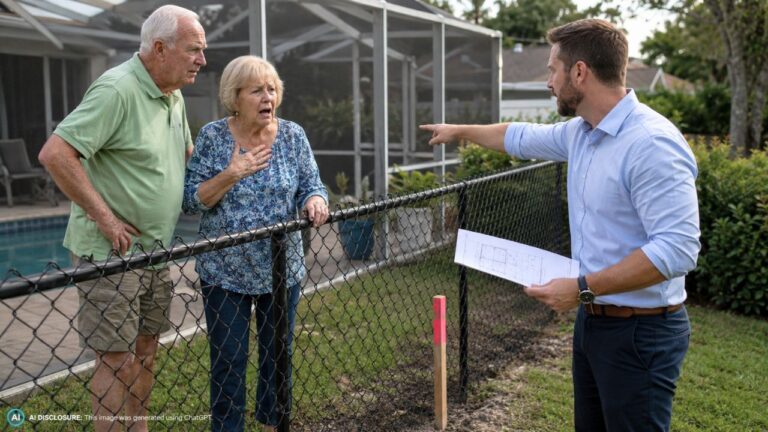
The prior owner of the Israel property had hired a licensed surveying firm in 2019 to stake the boundary before selling. Gancsos waited until those stakes were in place and then had his contractor build the fence inside his side of the marked line. The prior owner saw it and didn’t object.
That backstory became crucial later, because when a new neighbor moves in and immediately starts questioning a fence line, everyone’s first question is: did somebody actually confirm it, or did they just hope for the best?
Then came the “improvements” in the easement area
After buying the property in 2022, the Israels started discussing big changes to the shared easement area. They proposed projects that included stone walls and curbing, the kind of “make it look finished” upgrades that can be appealing—until they change how people can get in and out, or where utility lines can run.
The other owners didn’t consent. They warned that much of what the Israels wanted to build looked prohibited under the recorded agreement.
According to the court record summarized in the opinion, the Israels went ahead anyway during the winter and spring of 2023. They built stone walls, paved the driveway, and installed concrete curbing inside the easement area without approval from the other owners.
This is where shared-driveway conflicts often turn from awkward to dangerous. A strip of curbing isn’t just decorative when you’re trying to bring a propane truck back, get a septic contractor to the rear of the property, or access utility lines without ripping up someone’s new “hardscape.”
Power tools, an excavator, and a police warning that didn’t land
In February 2023, the Israels sent Gancsos a letter accusing him of putting his fence inside the easement and demanded he remove it within 15 days. Gancsos refused.
Instead of filing suit or getting a professional boundary survey first, Lior Israel directed employees of his excavation company to start dismantling the fence on March 17, 2023. The work involved power tools and an excavator—about as far from a calm neighbor-to-neighbor resolution as you can get.
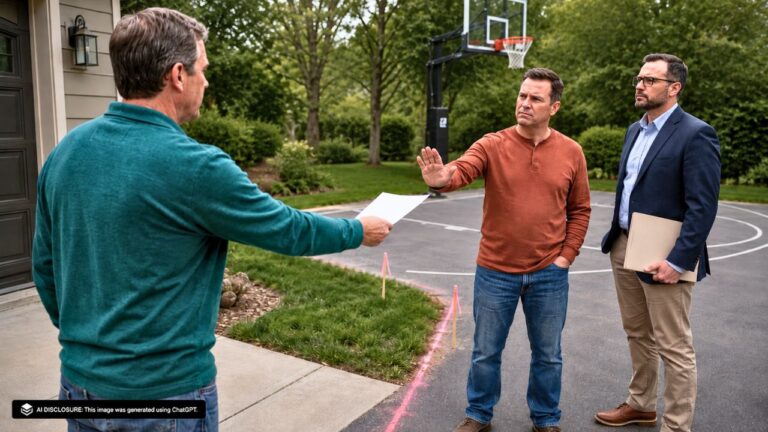
Gancsos told Israel the fence was on his property and asked him to stop. Police were called. One officer recommended stopping until a surveyor could determine the boundary and warned that if Israel was wrong, he could be required to put everything back.
Israel’s response, as quoted in the record: “I don’t care.” Another officer warned about liability for removing someone else’s property. Israel said he understood. Gancsos warned that he would sue if work continued without resolving the boundary through a survey. The fence still came down.
Two days after Gancsos filed suit, Israel returned with excavation equipment and covered the old fence-post holes with earth, making it impossible for Gancsos’ later-hired surveyor to precisely reconstruct the fence’s former location from the holes. The judge drew an adverse inference for spoliation of evidence—basically, that destroying and obscuring potential proof could be held against the party who did it.
The court said it was trespass — and “too expensive to undo” didn’t save the curbing
At trial, the judge didn’t accept Israel’s personal boundary call. The court described it as an “amateur attempt,” noting he had spoken with a licensed surveyor but didn’t hire one to perform a survey before removing the fence. The court found his testimony self-serving and not credible.
On the other side, the evidence supporting Gancsos included photos taken during construction showing posts inside his side of the professionally staked boundary, and the fact that the prior neighboring owner had repeatedly seen the fence without challenging it. The trial court found the Israels trespassed when they entered the disputed area and removed the fence, and the Connecticut Appellate Court upheld that finding.
Then there was the easement itself. The agreement barred permanent improvements or obstructions in the easement area, and even if some work could be labeled “repairs,” the agreement required majority approval when owners couldn’t agree. The Israels didn’t get that approval.
The trial court found stone walls and curbing near the rear of Gancsos’ property blocked access for him and for tradespeople and maintenance workers, and would force him to relocate propane lines if the curbing stayed. The judge ordered the Israels to remove those particular obstructions and restore the easement area within 45 days.
Notably, the order wasn’t “tear it all out.” The paved driveway could remain, and stone walls near the entrance could remain. The removal order focused on what interfered with the recorded easement rights near the rear of Gancsos’ property.
The money portion was brutal. The court awarded $45,400 in damages—$10,400 for property damage and $35,000 for annoyance and discomfort—plus reasonable attorney fees to be determined separately. On appeal, the judgment was affirmed in full.
The homeowner takeaway people keep repeating: paper trails beat promises
Homeowner reactions to cases like this tend to cluster around the same practical points: if you think a fence is over the line, you get a survey before you touch it; if an easement is recorded, you read it like it’s a set of instructions; and if you share access, “I’ll pay for it” doesn’t equal “I get to decide.”
The other recurring theme is documentation. Photos from the original fence build, the prior staked boundary, and written agreements mattered. So did the decision to use equipment and cover evidence—because courts notice that, and neighbors never forget it.
At the end of the day, this wasn’t a fight over aesthetics. It was a fight over access, utility rights, and the difference between improving your own frontage and interfering with someone else’s legally protected way to get home. And once concrete curbing and stone walls go in, the argument usually isn’t whether it should come out—it’s who’s going to pay to make it right.
Like Fix It Homestead’s content? Be sure to follow us.