Homeowner Finds a Neighbor Running Vehicle Repairs for Strangers Out of a Backyard Outbuilding — Then the Court Finds It Violates the Matching-Materials Covenant
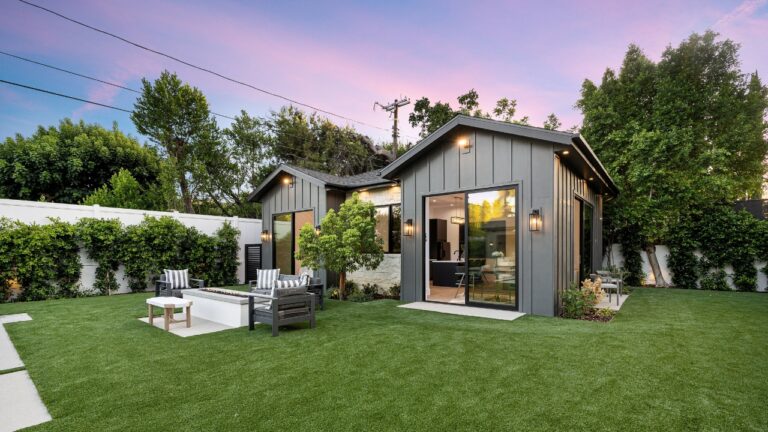
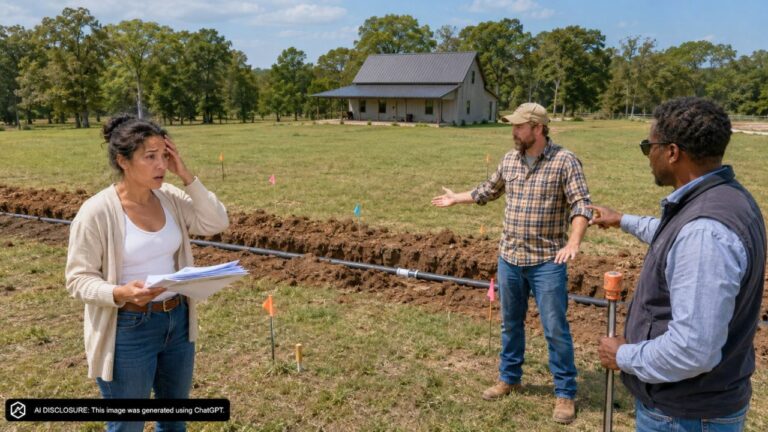
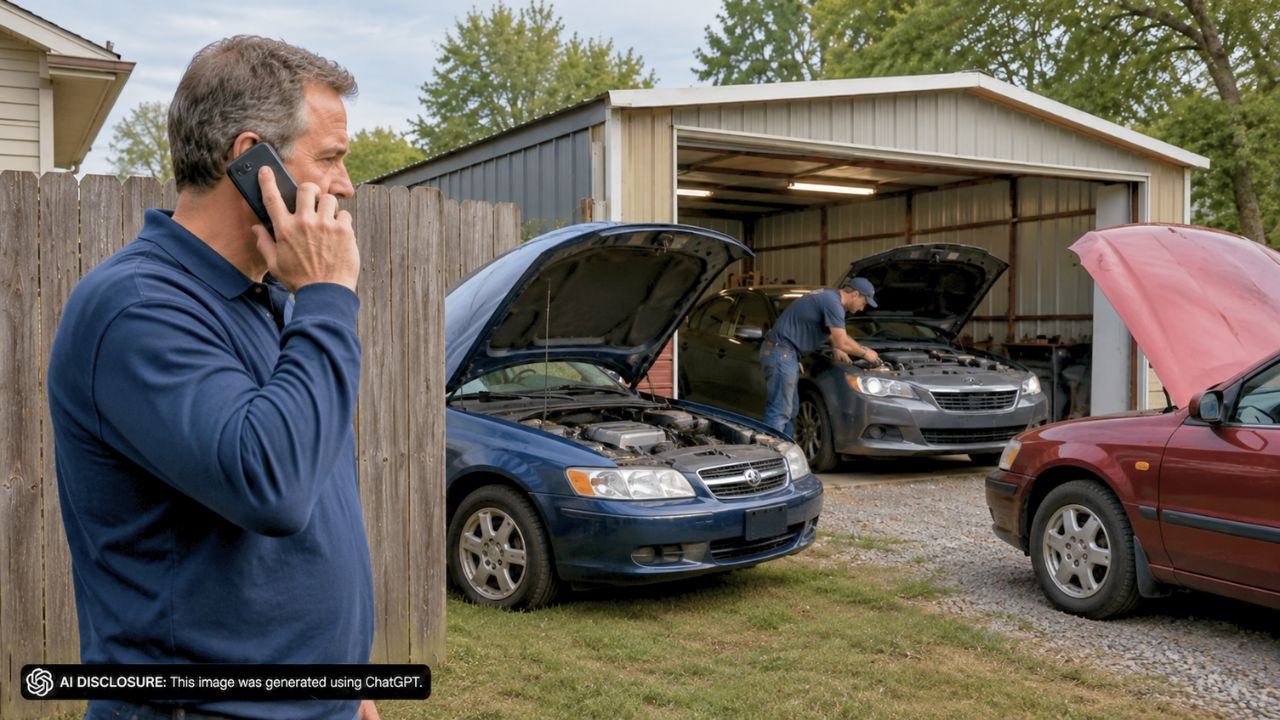
Photo credit: AI-generated image created using ChatGPT. Illustrative only
At first it looked like a neighbor doing a little tinkering—an extra vehicle in the drive, a bigger building in the back, maybe a project that got out of hand. But for one Cedar Park homeowner, the next-door “projects” started looking like a steady stream of strangers bringing in rigs to be worked on.
The dispute ended up in court, where the homeowner tried to use old neighborhood deed restrictions to shut the operation down and force changes to the outbuilding itself. The full opinion in the court record shows why that effort failed: the neighborhood had spent decades letting similar violations slide, and the judges said that history mattered more than the written rules.
The first change wasn’t the business—it was the building
Jacquelyn Morgan had lived on Shenandoah Drive for more than 45 years. So when the neighboring property owners, Joseph and Heather Stan, put up a large metal garage in 2018 (with a city building permit), it wasn’t just “new construction.” It changed her daily view.
She described the structure as a 25-foot-tall metal building that ran along the side of her property. In her telling, it blocked her backyard view and even the sunrise—one of those quality-of-life losses that doesn’t show up on a receipt, but you feel it every morning.
The deed restrictions in Shenandoah, Section Two dated back to 1971. They were supposed to regulate all the usual subdivision things: residential-only use, limits on businesses, requirements about garages and outbuildings, fences and signs, and a process for architectural-control approval before building.
Then the traffic started showing up
The bigger escalation came in late 2019. Joseph Stan leased about 5,000 square feet of the property to John Stefka, who owned Round 2 Offroad—an off-road vehicle customization business.
Morgan alleged it started operating almost immediately. She said a sign appeared near the front of the building, and the property began to look and feel less like a neighbor’s backyard and more like a small commercial yard.
Her complaints were practical, not abstract: a commercial dumpster, tall Jeeps parked near the road, delivery vehicles, wreckers, 18-wheelers, and more traffic squeezing through narrow residential streets. Another longtime resident backed her up, calling the business a “nightmare” and pointing to the vehicle volume, the dumpster, and the constant movement.
If you’ve ever lived on a street where kids ride bikes and people walk dogs, you know how quickly “more traffic” turns into tension. It’s noise, it’s headlights, it’s blocked sightlines pulling out of your own driveway, and it’s the nagging worry that you’re one distracted driver away from a real tragedy.
She went to court expecting the covenants to do the heavy lifting
Morgan sued in December 2021 and laid out a long list of alleged violations. She argued the garage was built in the wrong location and with improper materials, that the property was being used commercially, and that the fencing and signage weren’t allowed. She also claimed the activity was noxious or offensive—language that shows up in many deed restrictions for exactly this kind of neighbor-versus-neighbor dispute.
Her goal wasn’t subtle. She wanted a court order declaring the restrictions enforceable, forcing the Stans and Round 2 to bring the property into compliance, and issuing an injunction to stop the operation. She also sought attorney fees.
On paper, that can sound straightforward: there are written rules, someone breaks them, a judge tells them to stop. Real neighborhoods aren’t that clean, and this one came with decades of baggage.
The defense basically said: have you looked around?
The Stans and Round 2 didn’t just argue about their own property. They put the entire subdivision on trial.
Testimony described a neighborhood with a boat-related business, computer repair shop, photography studio, air-conditioning business, a BMW repair operation, an assisted-living facility, and other commercial activity—some reportedly running for around 15 years. Photos showed metal outbuildings that didn’t match homes, business signs, fences that didn’t meet the restrictions, rubbish and trash, heavy equipment, and inoperable vehicles.
One example hit especially close to the dispute: a vehicle-repair business known as “Chevy Mike” operating from a metal outbuilding and doing work for outside customers. The court considered that similar to what Morgan was complaining about next door.
Even the “good guys” had issues. One former architectural committee member testified he’d built two metal outbuildings without committee approval because neighbors didn’t object and he saw similar buildings throughout the subdivision. Morgan herself had an outbuilding that hadn’t been approved by the architectural committee, and photos showed it extended farther forward than the restrictions allowed. Her front-yard fence also didn’t comply with the chain-link requirement in the restrictions.
That last part is where a lot of homeowner cases get ugly. Once the spotlight is on, it doesn’t stay politely aimed at one yard.
The real problem was 50 years of non-enforcement
The deed restrictions were recorded in 1971, but the architectural control committee had effectively gone inactive since the late 1970s. The record showed no enforcement action against any lot for roughly 50 years before Morgan filed suit.
That mattered because Texas law allows a court to find restrictions “abandoned” or their enforcement “waived” when violations become so extensive and material that a reasonable person would conclude the rules aren’t being enforced anymore. Courts look at the number and seriousness of violations, whether anyone has tried to enforce the rules, and whether the original benefit of the restrictions can still be substantially achieved.
The trial court found “numerous extensive and material violations” across the subdivision, including several similar to Round 2’s use. Morgan also waited about two years after Round 2 began operating to sue, while neighbors discussed whether to pursue a group lawsuit. The court also noted she had already seen vehicles and a dumpster at the Stans’ property before the business started.
Joseph Stan testified that the neighborhood’s existing condition shaped his expectations. After driving through and seeing businesses and buildings, he concluded, “I thought this is a good place to put my shop.”
In the end, the trial judge ordered Morgan take nothing, relying on multiple legal theories (including abandonment and waiver, laches, unclean hands, and provisions within the restrictions themselves). On appeal, the court focused on just one issue: whether the restrictions had been abandoned and their enforcement waived. It said the evidence supported that finding—and once that point stood, the rest of Morgan’s arguments didn’t change the outcome.
The homeowner reactions were predictable: document, but expect blowback
This kind of case tends to split homeowners into two camps.
One camp hears “business next door” and thinks about immediate practical steps: take photos of signage and parking patterns, keep a log of heavy-truck visits, and check city permits. Not because you love conflict, but because the moment you start arguing from memory, you’re already losing.
The other camp hears “you’re suing over covenants” and thinks: be careful, because the neighborhood is rarely clean. If an area has tolerated metal buildings, noncompliant fences, and side-hustle businesses for years, the first person to run to court can end up having their own property dragged into evidence.
Morgan’s case shows the risk of staking everything on old restrictions without a real enforcement history behind them. The written covenant might say one thing, but the neighborhood’s long pattern of “everyone does it” can become the deciding fact.
By the time the appellate court affirmed the ruling, the main takeaway for everyone on that street was concrete: the Stans and Round 2 Offroad keep the building and the business, and the neighbor who tried to force compliance is left living next to the same operation—only now with a public court record explaining why the rules she counted on no longer have teeth.
Like Fix It Homestead’s content? Be sure to follow us.