Homeowners Hire a Surveyor to Settle the Boundary — Then He Quits Before Finishing and the Neighbors’ Guests Start Parking Across Their Hundred-Foot Frontage
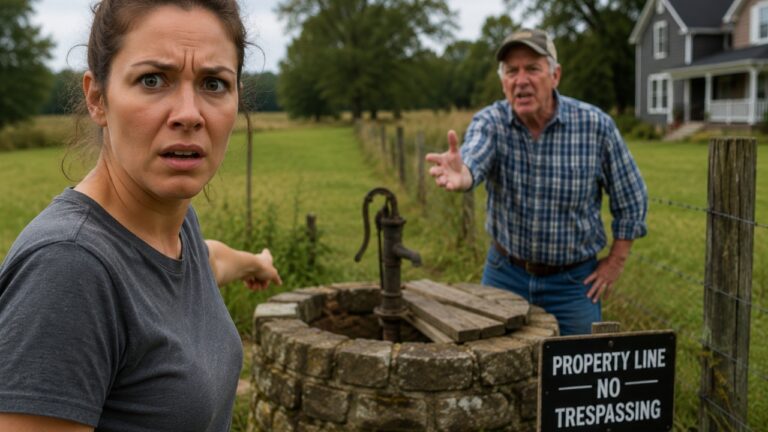
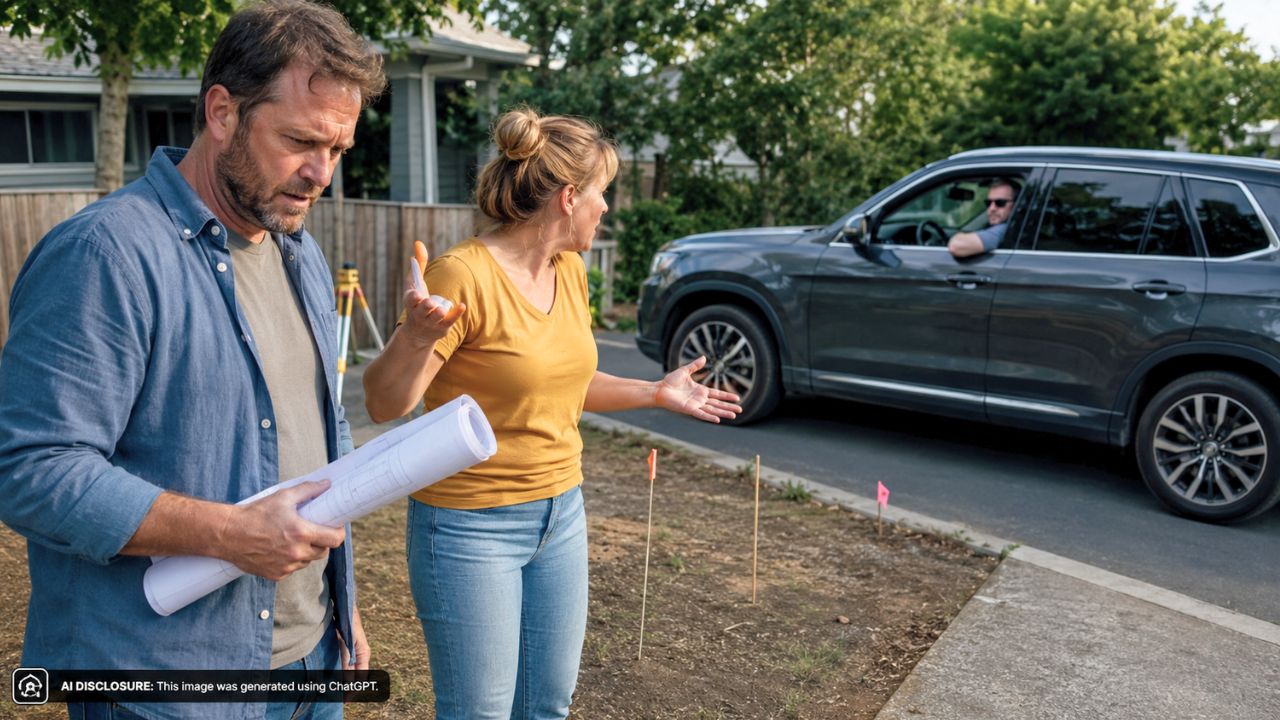
Photo credit: AI-generated image created using ChatGPT. Illustrative only
You know the kind of neighbor problem that starts as “just a little overlap” and ends with everyone measuring, filming, and staring each other down? That’s what played out on a stretch of lakefront in Coventry, Connecticut, after one couple tried to do the normal, responsible thing: hire a surveyor and settle the property line.
Instead, the surveying visit turned into a confrontation so ugly the surveyor walked away mid-job, and the homeowners say the next phase was just as relentless—guests parking across their roughly hundred feet of road frontage and people cutting across their land to reach the lake. The details come from the source post covering the appellate decision in Crossen v. Diehl.
The first “little” encroachment kept getting a little bigger
Thomas and Susan Crossen own a lakefront home at 231 Standish Road. Next door, Heidi Diehl and Michael Martin own the neighboring lakefront property. The trial court found the neighbors used parts of the Crossens’ property without permission, with the bad blood really taking off around 2018.
It wasn’t one clear, single structure that accidentally drifted over a line. The court described a mix of stuff: a paddleboard rack, a dock, banners, cement blocks, stone pavers, and even annual additions of sand and stones to a small wall that the judge said “crept” farther and farther onto the Crossens’ land over time.
There were also accusations of damage and use: Martin was found to have damaged vegetation and soil, and Diehl cleared snow in front of the Crossens’ waterfront to make an ice-skating area without permission. The kind of thing some neighbors might wave off once—until it becomes a pattern.
They hired a surveyor for clarity—then the job blew up
When property-line arguments turn into “he said, she said,” most homeowners eventually land in the same place: get it surveyed. The Crossens hired surveyor Andrew Bushnell in June 2018 to mark the boundary.
But the survey visit didn’t just produce stakes and measurements. The trial court credited testimony that Diehl heckled Bushnell and Thomas Crossen while the work was happening.
Then things went from tense to unsafe. The court found Martin drove a van onto the Crossens’ property and came close enough to Thomas that he had to jump out of the way, while the surveyor yelled a warning. Martin got out and screamed and cursed at Thomas.
That was the moment the “fix” failed. Bushnell abandoned the job, and the Crossens had to hire a different surveying company to finish.
Parking across a long frontage became the next pressure point
After the boundary fight, the day-to-day friction didn’t stay at the shoreline. Parking, access, and foot traffic came next—exactly the stuff that makes lake properties feel smaller than they are.
Martin allegedly parked his van in front of the Crossens’ shed even though a no-trespassing sign was up. The Crossens also said guests visiting the neighbors repeatedly parked on or crossed their approximately 100 feet of frontage along Standish Road.
When the Crossens posted signs to keep cars off their land, the behavior shifted rather than stopped. The guests began parking elsewhere but walking across the Crossens’ property to get to the defendants’ lakefront.
It’s the classic escalation homeowners dread: when someone won’t respect “no,” any attempt to enforce boundaries becomes the reason they push harder.
The survey put numbers on the problem—especially at the waterline
Once the later survey work was complete, it did what surveys do best: it turned arguments into distances. The trial court accepted the Crossens’ survey as establishing the boundary and also determined the Crossens possessed the corresponding littoral rights extending into Lake Wangumbaug.
Several items were found to encroach: a metal-roofed paddleboard rack, banners, and cement blocks. Some of that was removed shortly before a court hearing, but the bigger issue stayed in place.
The defendants’ floating dock and boats extended about 6.3 feet across the boundary into the Crossens’ littoral area. In lakefront living, that’s not a rounding error—it’s space where boats sit, paddleboards launch, kids swim, and owners expect privacy.
The Crossens marked the boundary and posted signs. The encroachments continued anyway, according to the trial court, and the case moved from neighbor drama to litigation.
Signs, gestures, and a spit confrontation turned it personal
Property disputes are stressful enough when they’re “just” about land. Here, the court found the hostility became constant and pointed.
The defendants posted signs aimed toward the Crossens with messages like “Bully, leave us alone,” “Bullies,” “Please Leave us alone,” and “Shame on You.” The trial court also found there were obscene gestures, profanities, and antagonizing behavior in front of Thomas’ grandchildren.
During the COVID-19 era, the conflict hit a breaking point. The trial court found that while Thomas stood in the road recording the defendants’ property with his phone, Martin confronted him—getting essentially nose to nose, challenging him to fight, cursing at him, and spitting on him twice.
Thomas testified the years of friction brought real physical stress: poor sleep, headaches, and frequent use of Advil. When a neighbor dispute starts affecting your health, the property line stops being the only thing at stake.
The court mostly backed the homeowners—except for one big damages piece
After trial, the judge ruled overwhelmingly for the Crossens on the property issues. The court accepted their survey, found Diehl and Martin liable for trespass, ordered removal of encroachments, and permanently barred similar structures that crossed the line.
The Crossens were awarded $5,000 in compensatory damages for trespass—framed as $1,000 for each of about five years of interference with their use and enjoyment. The trial court did not award damages for diminished property value because it found the Crossens didn’t present enough evidence for that measure.
On appeal, the property win largely held. The appellate court said the Crossens had deeds, photos, and professional survey evidence; the defendants didn’t bring a competing survey or meaningful rebuttal. The boundary determination, littoral-rights ruling, trespass finding, injunction, and the $5,000 trespass award were affirmed.
But the emotional-distress awards did not survive. The trial judge had leaned heavily on the idea that being spit on during the pandemic naturally increased fear and anxiety about infection. The appellate court said the record didn’t support that assumption, reversed the intentional and negligent infliction of emotional distress claims, and directed judgment for Martin on those counts—wiping out the $50,000 award.
The spitting still mattered, though. The appellate court upheld Martin’s liability for civil assault, noting direct evidence (including video) of aggressive behavior and the spitting itself as offensive contact. Because the trial court had only awarded $1 on the assault claim to avoid double recovery after the $50,000 emotional-distress award, the case was sent back to recalculate damages for the surviving civil assault claim using the existing trial evidence.
How homeowners tend to react when a survey can’t end the argument
Cases like this always read like a checklist of what people wish they’d done earlier: document encroachments, photograph changes, keep records of repeated parking and foot traffic, and get professional measurements. Here, the Crossens didn’t just argue—they brought a survey that the court ultimately accepted, plus evidence of repeated intrusions over years.
It also shows the part nobody budgets for: when a straightforward fix (hire a surveyor) triggers a blowup, you may end up paying twice—once for the work that got abandoned, and again for the company that can finish it. And once conflict becomes in-person confrontation, homeowners tend to shift from “please stop” to “we need proof,” cameras, and court orders.
The final picture is messy but familiar: a boundary that should have been a line on paper turned into a long-running fight over access, parking, and the right to quietly enjoy a home by the water. The Crossens kept their property ruling and trespass damages, the dock encroachment was addressed through the injunction, and the spitting confrontation will still have a price tag—just not the one the trial court initially set.
Like Fix It Homestead’s content? Be sure to follow us.
- Man Says He Found Out the Fence He Paid For Wasn’t Actually on His Property
- Woman Says Her Neighbor Started Taking Mulch From Her Delivery Pile Before She Could Even Spread It
- I made Joanna Gaines’s Friendsgiving casserole and here is what I would keep
- What Caliber Works Best for Groundhogs, Armadillos, and Other Digging Pests?