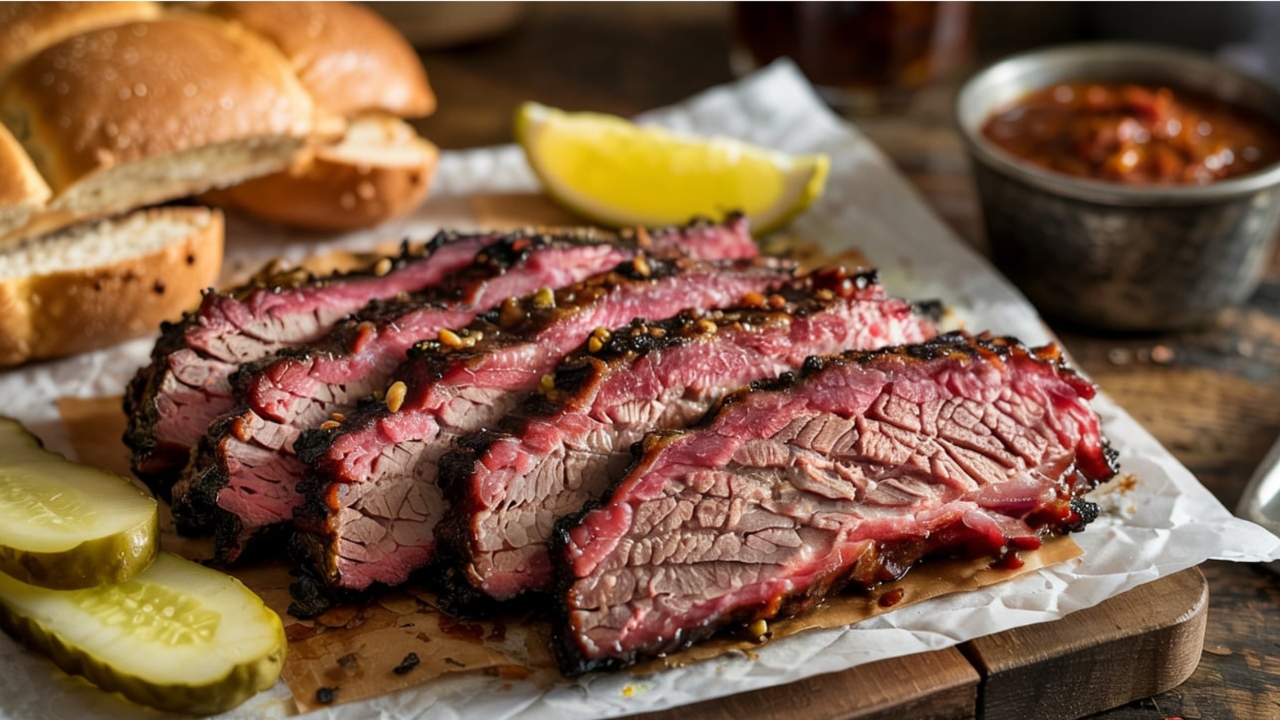
A BBQ chain just filed bankruptcy and blamed beef costs for the squeeze
A beloved regional barbecue name has become the latest casualty of rising food costs, with an Ohio-based chain seeking court protection after beef prices gutted its margins. You are watching in real time how a business built on slow-smoked brisket and ribs can be undone when the core ingredient suddenly becomes too expensive to serve profitably. For anyone who runs, works in, or simply loves restaurants, the story of Ray Ray’s is a warning about how quickly a hot concept can find itself in bankruptcy court when costs surge faster than customers can absorb.
The BBQ chain at the center of the bankruptcy story
You are not looking at a faceless corporate brand but at a specific business that grew out of Ohio and turned a backyard style of cooking into a recognizable regional chain. The company at the center of this bankruptcy is Ray Ray’s, a barbecue concept that built its reputation on smoked meats and casual counter service, then expanded into multiple locations across the state as demand grew. The brand operated in and around Columbus, Ohio, and became a fixture for fans who treated a visit to Ray Ray’s as part of their weekly routine.
That growth eventually led to a formal corporate structure, with the parent entity Smoke Ring, LLC taking responsibility for the restaurants and later emerging as the named company in the Chapter 11 case. In the current court process, Smoke Ring, LLC is identified as the operator of the BBQ chain Ray Ray’s, which means the restructuring will determine the fate of the brand, its recipes, and its remaining restaurants. For you as a customer or local resident, that legal name is the entity deciding whether your neighborhood Hog Pit survives or disappears.
How rising beef costs pushed Ray Ray’s to the brink
If you run a barbecue restaurant, you live and die by the price of meat, and Ray Ray’s is now a textbook example of what happens when that price spikes. In its bankruptcy paperwork, the company pointed directly at the surge in beef costs as a primary reason its finances collapsed, arguing that the jump in ingredient prices squeezed margins to the point where the business could no longer cover its obligations. The chain framed the problem in stark terms, describing how the cost of brisket and other cuts rose faster than it could reasonably raise menu prices without scaring you away.
The filing described RISING BEEF PRICES as a central pressure point, a phrase that captures how the economics of barbecue differ from other restaurant categories. While some eateries can pivot to cheaper proteins or shrink portions, Ray Ray’s business model depends on serving generous plates of beef and pork that meet customer expectations for value. When the cost of those proteins climbs sharply, the chain has limited room to maneuver, and the bankruptcy record makes clear that this cost shock was not a minor inconvenience but a structural blow to the company.
From local favorite to Chapter 11: what the filing actually means
For you as a diner, the word bankruptcy can sound like a death sentence, but the specific path Ray Ray’s chose is designed to keep at least part of the business alive. The company filed under Chapter 11, a section of the bankruptcy code that allows a debtor to keep operating while it restructures debts, renegotiates leases, and decides which locations to keep or close. In practical terms, that means some Ray Ray’s restaurants are still serving barbecue while the court process plays out, even as others have already gone dark.
The filing by the Ohio-based concept, formally known as Ray Ray’s Hog Pit, underscores how far the brand had come before hitting this wall. The barbecue concept, once featured on a Food Network show, is now navigating the strict oversight of a Chapter 11 case in Columbus, Ohio. That contrast, from national TV exposure to a federal courtroom in Columbus, captures how quickly fortunes can change in a business where a few percentage points of margin can separate a thriving chain from a distressed one.
Half the restaurants gone: where Ray Ray’s has already closed
The most visible sign of Ray Ray’s financial trouble is the sudden disappearance of locations that once anchored neighborhoods across Ohio. On social media, the company confirmed that it had closed three of its Ohio restaurants in Johnstown, Marion, and Linworth, a trio of communities that had embraced the brand as a local staple. Those closures mean that if you live in Johnstown, Marion, or Linworth, your nearest Hog Pit may now be a significant drive away, if it exists at all.
Those shutdowns are part of a broader retrenchment that has left the chain operating roughly half the footprint it once had. Reporting on the restructuring notes that the company has shuttered near half its restaurants amid spiraling costs, a contraction that has reshaped its presence in the Columbus region and beyond. The confirmation that Ray Ray’s closed Johnstown, Marion, and Linworth gives you a concrete sense of how the map has changed, turning what used to be a short drive for smoked meat into a longer trip or a search for a new favorite spot.
What is still open: the remaining Ray Ray’s locations
Even as some communities have lost their local outpost, Ray Ray’s has not disappeared entirely, and that matters if you are trying to figure out whether your go-to location is still operating. The chain has kept several restaurants open as part of its reorganization strategy, focusing on sites that generate stronger sales or carry strategic value for the brand. For regulars, that means you may still be able to order your usual brisket sandwich or ribs platter, but you might need to adjust your route or expectations as the footprint shrinks.
Reports on the restructuring highlight that Ray Ray’s has closed some stores while keeping others in places like Franklinton, Westerville, and Granville, which remain part of the core network the company is trying to preserve. The same coverage that confirmed the closures also notes that Ray Ray’s has filed for bankruptcy in Ohio while still operating locations in those communities. For you, that split reality means the brand is both shrinking and surviving, depending on which side of the metro area you call home.
Why barbecue chains are especially exposed to meat inflation
To understand why Ray Ray’s ended up in Chapter 11, you need to look beyond one company and consider how barbecue economics work. Unlike a salad bar or a sandwich shop that can quietly swap in cheaper ingredients, a barbecue restaurant is built around large portions of beef and pork that customers expect to see piled high on their plates. When the wholesale cost of those proteins jumps, your favorite pitmaster has limited options: raise prices and risk losing you, shrink portions and risk angering you, or absorb the hit and watch profits evaporate.
Industry analysis of the Ray Ray’s case points out that barbecue eateries cannot easily pivot away from beef and pork because those meats are the star of the menu, even if chicken and fish appear as supporting players. One report on the bankruptcy notes that this is not something barbecue eateries can simply fix by swapping proteins, since beef and pork remain the staples that define the category. In the Ray Ray’s case, the discussion of how rising beef prices drive Ray Ray’s into Chapter 11 underscores that vulnerability, showing you how a cost spike in a single ingredient can ripple through an entire business model.
Ray Ray’s in the wider wave of restaurant distress
Ray Ray’s problems are not happening in isolation, and if you follow the restaurant industry, you have seen similar stories unfold across other chains. The pressures that pushed this Ohio BBQ brand into court are part of a broader pattern of rising input costs, shifting consumer habits, and lingering debt from expansion years. When you zoom out, the Ray Ray’s case becomes one data point in a larger wave of restaurant distress that is reshaping where and how you eat out.
Coverage of the closures notes that Ray Ray’s situation mirrors broader patterns affecting other regional players, including Sticky Fingers Restaurants and Smokin’ Dutchman Holdi, which have also faced financial strain. The section on What Happens Next for Ray Ray’s explicitly links its troubles to these peers, suggesting that the combination of higher food costs and uneven demand is hitting barbecue and casual dining chains across multiple states. For you, that means the closure of one favorite spot may be a preview of similar shakeups in other parts of your dining routine.
What Chapter 11 means for employees, suppliers, and regulars
When a chain like Ray Ray’s enters Chapter 11, the impact extends far beyond the dining room, and you feel it whether you are on the payroll, delivering goods, or just stopping by for lunch. Employees at closed locations in Johnstown, Marion, and Linworth are suddenly facing job loss or relocation, while staff at surviving restaurants must navigate the uncertainty of working for a company under court supervision. Suppliers, from meat distributors to paper goods vendors, are pulled into the process as creditors, waiting to see how much of what they are owed will be repaid under a reorganization plan.
For regulars, the emotional hit can be just as real as the financial one, especially if Ray Ray’s was part of your weekly routine or family traditions. Reporting on the case notes that the BBQ Chain Files Chapter 11 Bankruptcy and details What To Know About Ray Ray’s Hog Pit Closing Multiple Locations, including how the remaining restaurants will operate while the court reviews the plan. That coverage, which frames the situation as BBQ Chain Files Chapter 11 Bankruptcy: What To Know About Ray Ray’s Hog Pit Closing Multiple Locations, gives you a roadmap for what to expect, from potential menu changes to shifts in hours or service models as the company tries to stabilize.
What you can learn from Ray Ray’s squeeze on beef
If you are a restaurant operator, an investor, or simply someone who cares about where your food comes from, the Ray Ray’s bankruptcy offers a set of hard lessons. The first is that relying heavily on a single volatile input, like beef, can leave you dangerously exposed when markets move against you. The second is that growth, whether through new locations or expanded menus, needs to be matched with a realistic assessment of how cost shocks will be handled, so you are not forced into drastic cuts or court protection when margins tighten.
For you as a customer, the story is a reminder that the price on the menu reflects a complex chain of costs, from cattle feed to kitchen labor, and that a sudden jump in any of those can threaten the survival of your favorite spot. Coverage that explains how this BBQ chain has shuttered half its restaurants after a Chapter 11 decision underscores how quickly a beloved brand can contract when costs and debt collide. As you scan the local dining landscape, Ray Ray’s experience may prompt you to pay closer attention to how restaurants talk about sourcing, pricing, and sustainability, because those details can signal which places are built to weather the next round of inflation and which might be one beef spike away from closing their doors.
Like Fix It Homestead’s content? Be sure to follow us.
Here’s more from us:
- I made Joanna Gaines’s Friendsgiving casserole and here is what I would keep
- Pump Shotguns That Jam the Moment You Actually Need Them
- The First 5 Things Guests Notice About Your Living Room at Christmas
- What Caliber Works Best for Groundhogs, Armadillos, and Other Digging Pests?
- Rifles worth keeping by the back door on any rural property
*This article was developed with AI-powered tools and has been carefully reviewed by our editors.