Activists organize new protests against deportation raids nationwide
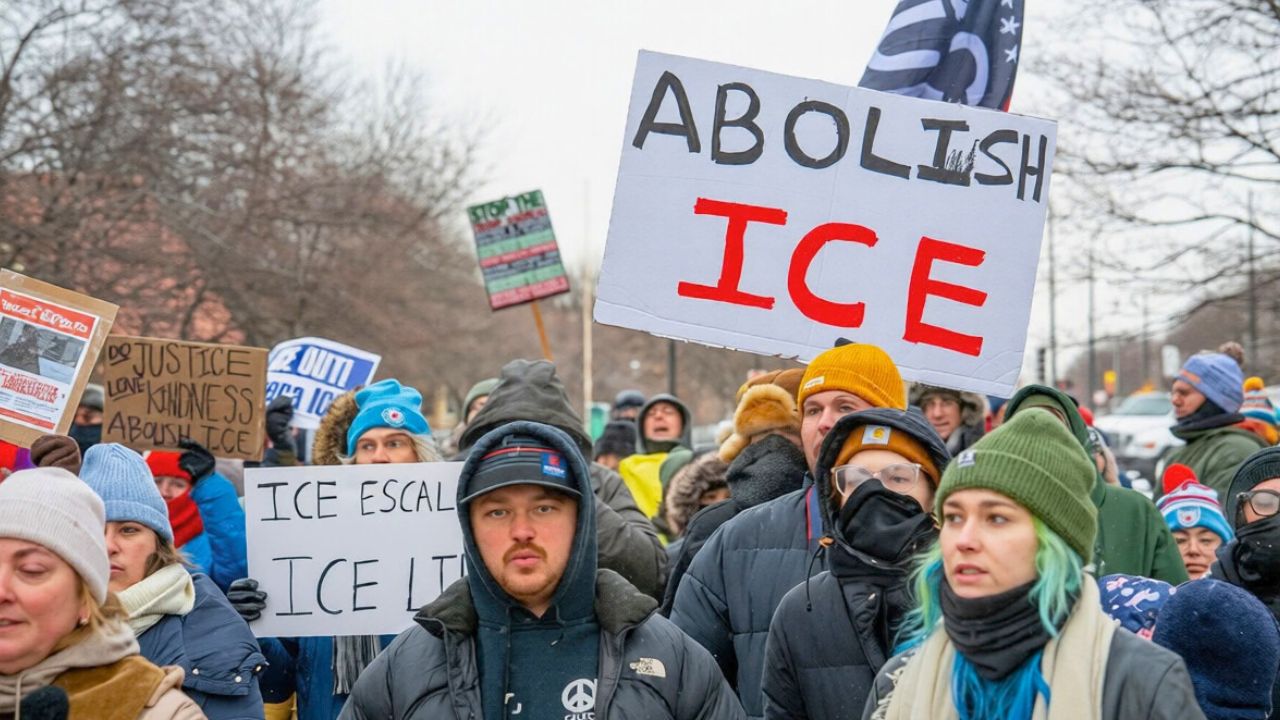
Activists are rolling out a fresh wave of protests and strikes in response to a new round of deportation raids, turning local resistance networks into a coordinated national campaign. From walkouts and boycotts to rapid-response patrols, organizers are betting that mass disruption can slow enforcement and force political leaders to confront the human cost of immigration crackdowns.
The mobilization draws on tactics refined in earlier fights against raids in cities such as Minneapolis, Chicago, Los Angeles and AUSTIN, Texas, but the latest plans reach into smaller communities and suburbs where fear of arrests has quietly reshaped daily life.
From shadow networks to open confrontation
In Minneapolis and St. Paul, a shadow network of volunteers has already been operating as a kind of informal early warning system against Immigration and Customs Enforcement. Organizers described how pushback comes quickly, with activist teams tracking unmarked cars, logging license plates of possible federal vehicles and rushing text alerts to immigrant families.
Those same networks are now helping to plan public rallies, turning what began as quiet neighborhood defense into visible defiance of Jan enforcement sweeps that have rattled communities across Minnesota.
South Florida activists have followed a similar trajectory. After a federal shooting in Minnesota, organizers in South Florida linked local vigils to national protests denouncing ICE, framing the incident as evidence that raids and arrests can escalate into lethal encounters and using that urgency to bring together church groups, students and labor organizers under a shared banner of opposition.
A national strike strategy takes shape
The most ambitious element of the new protest wave is a coordinated strike branded as the ICE Out campaign. Organizers behind the nationwide ICE Out strike say they are planning hundreds of demonstrations across all 50 states and Washington DC, combining street marches with walkouts at schools and workplaces to show how deeply immigration enforcement touches daily life.
Supporters describe the upcoming day of action as a test of whether immigrant communities and allies can move from reactive protests to sustained economic pressure, with plans for no work, no school and no shopping amplified through social media and union networks.
The ICE Out For Good Weekend of Action in WASHINGTON earlier this year provided a template. On Jan 10, organizers launched peaceful protests and vigils under the ICE Out For Good Weekend of Action banner to honor lives lost in immigration custody and to signal that they remain committed to nonviolent organizing even as raids intensify.
Those events drew families directly affected by detention alongside seasoned activists, and they showcased how faith congregations, legal aid groups and student coalitions can share infrastructure for rapid mobilization.
New protests are also building on a broader wave of anti-raid action that has already stretched from LA to Philadelphia. On one recent day of demonstrations, crowds in Los Angeles joined walkouts in Philadelphia as thousands of students and workers left classrooms and job sites in defiance of the Trump administration, turning city centers into impromptu forums on deportation policy.
Video from Free America protests captured teenagers marching beside longtime union members, a pairing organizers hope to replicate in the next round of actions.
Another broadcast on nationwide protests against the Trump administration and ICE raids showed how the issue has become a magnet for broader frustration with federal policy, with speakers tying deportation sweeps to debates over foreign policy, policing and economic inequality.
Local experiments in resistance
Chicago has become a laboratory for more confrontational but still nonviolent tactics. As ICE raids and National Guard deployments intensified there, residents reported plainclothes ICE agents staking out apartment buildings and workplaces. In response, neighborhood organizers created patrols and hotlines that send volunteers to verify reports, film encounters and distribute know-your-rights cards in multiple languages.
One of the most visible efforts is The People Patrol in Chicago, an all volunteer group that roams neighborhoods and suburbs to warn migrants of ICE activity, document arrests and connect families with legal support. According to reporting on The, volunteers have kept up these rounds since raids began, turning everyday residents into a kind of civilian accompaniment corps.
In Los Angeles, organizers have experimented with economic boycotts. L.A. Activists Call for a 24 hour boycott of companies complicit in ICE Raids, arguing that corporations providing data, transportation or detention services are profiting from what they describe as terror on immigrant communities. In Los Angeles, those calls have targeted recognizable brands and service providers, giving consumers a concrete way to register opposition beyond street protests.
Earlier coverage of protests against immigration raids in Los Angeles and other cities showed how demonstrations in one place can rapidly inspire copycat actions elsewhere. Photo essays on protests spread across documented marches in AUSTIN, Texas as well as Los Angeles, with homemade signs, family groups and legal observers forming a familiar tableau in city after city.
That visual record has become a recruiting tool for upcoming actions, as organizers circulate images of packed streets and creative banners to convince hesitant supporters that they will not be alone if they join the next march or strike.
Escalating federal response and movement risks
Federal authorities have not stood still in the face of this organizing. Earlier coverage of unrest in Los Angeles described how President Donald Trump and Defense Secretary Pete Hegseth authorized an estimated 700 M Marines and more than 2,000 National Guard troops to Los Angeles, a move that California officials sharply criticized as an overreaction to largely peaceful protests.
The deployment signaled that the federal government is willing to treat anti raid demonstrations as a security challenge, not only a political dispute, and it raised fears among civil liberties groups that future marches could face heavier surveillance and more aggressive crowd control.
Immigrant rights advocates argue that this posture only strengthens the case for mass mobilization. A commentary titled Amid ICE Raids We Continue to Organize How We Refuse to Disappear framed organizing itself as a survival strategy, insisting that isolation makes people more vulnerable to arrest while public protest can create safety in numbers and draw legal resources into threatened neighborhoods.
The piece described how communities use rallies, mutual aid funds and rapid response teams to counter the message that undocumented residents should keep their heads down and hope not to be noticed.
Digital tools and rapid mobilization
Behind the scenes, much of the organizing muscle comes from technology. Digital organizing tools and social media platforms have given activists a way to coordinate rapid responses to planned or rumored raids, share live video from the scene and document interactions that might otherwise stay hidden. A report on Digital organizing tools described how group chats, encrypted messaging apps and citizen journalism feeds have become central to this ecosystem.
In practical terms, that means a single sighting of an unmarked van outside a factory can trigger a cascade of alerts, with volunteers dispatched to observe, lawyers notified and nearby workers urged to stay home or seek safe spaces until the risk passes.
Video platforms have also helped to knit local struggles into a shared narrative. Clips of nationwide protests against Trump administration raids on broadcast streams and short updates on a nationwide day of no school, no work and no shopping on social video have reached audiences far beyond the cities where they were filmed.
For organizers planning the next round of actions, those feeds serve both as documentation and as training material, showing what worked, what did not and how police and ICE agents responded in different contexts.
What comes next
As new protests take shape, activists see a convergence of strategies that once operated separately. Shadow networks in places like Minneapolis now feed information directly into public campaigns, while legal advocates, student groups and labor unions try to synchronize calendars so that strikes, boycotts and marches reinforce one another instead of competing for attention.
The coming weeks will test whether that coordination can hold under pressure from stepped up raids and a federal security apparatus that has already shown it is willing to deploy Marines and National Guard troops to control unrest.
Like Fix It Homestead’s content? Be sure to follow us.
Here’s more from us:
- I made Joanna Gaines’s Friendsgiving casserole and here is what I would keep
- Pump Shotguns That Jam the Moment You Actually Need Them
- The First 5 Things Guests Notice About Your Living Room at Christmas
- What Caliber Works Best for Groundhogs, Armadillos, and Other Digging Pests?
- Rifles worth keeping by the back door on any rural property
*This article was developed with AI-powered tools and has been carefully reviewed by our editors.