What Caliber Gives You the Best Chance on Fast-Moving Predators Like Coyotes?
Photo credit: SolidMaks/Shutterstock.com
Fast-moving predators like coyotes punish hesitation and marginal gear, so your caliber choice has to balance speed, precision, and enough authority to anchor a small, wiry target that rarely stands still. You are not just picking a number on a box, you are choosing how flat your bullet flies, how quickly you can get back on target, and how much pelt damage you are willing to accept when everything happens in seconds.
To give yourself the best odds when a coyote streaks across a fenceline or skirts a brushy draw, you need a cartridge that fits your terrain, your rifle platform, and your tolerance for recoil and noise, not a theoretical “best” that ignores how you actually hunt. The most effective coyote calibers share a common DNA of high velocity, manageable recoil, and bullets that stay lethal across realistic calling distances while still letting you place shots precisely under pressure.
Speed, lead, and why caliber matters on a running coyote
When a coyote is trotting or flat-out sprinting, your margin for error shrinks to inches, so the cartridge you choose directly affects how much lead you need and how forgiving your trajectory is if you misjudge range. Faster rounds give you less time for the animal to move between muzzle and impact, which is why many predator specialists favor high velocity varmint cartridges that keep bullets screaming through the air and minimize holdover. That is the logic behind lists of The Best Calibers on the Market for Hunting Coyotes in 2025, where a flat-shooting .22-250 Rem is often tagged as Best Overall because it pairs blistering speed with enough energy to put coyotes down decisively.
At the same time, you have to be able to shoot that cartridge well from field positions, sometimes twisted around on sticks or leaning off a fencepost, and that is where recoil and rifle weight come in. A light, low-recoiling setup lets you track a coyote through the scope, break the shot, and stay in the glass to confirm impact or send a fast follow-up if the animal wheels or another dog appears. That balance between velocity, shootability, and terminal performance is why most modern predator advice steers you toward small, fast centerfires rather than heavy big-game rounds or ultra-light rimfires that give up reach and reliability on less-than-perfect hits.
Shotgun gauges when coyotes are in your lap
If you call in tight cover or thick brush, the best caliber for a fast-moving predator might not be a rifle at all but a shotgun that lets you swing like you are shooting upland birds. In dense timber or tangled creek bottoms, coyotes can appear at bow range and vanish just as quickly, and a pattern of buckshot or heavy coyote loads gives you a much larger effective “net” than a single bullet. That is why discussions of Introduction to Varmint Hunting often highlight how Varmint hunters lean on 12 gauge or 10 gauge shotguns when coyotes and foxes are expected to dart through brushy shooting lanes instead of crossing open fields.
For you, that means thinking in terms of gauge and choke rather than ballistic coefficients when your stands are tucked into hedgerows or timber edges. A tight choke and heavy payload can give you reliable patterns out to 40 or even 50 yards, which is plenty for most close-quarters predator setups, and the instinctive mount and swing of a shotgun can be far more forgiving than trying to find a streaking coyote in a high-magnification optic. You still need to pattern your gun with the exact load you plan to use, but if your coyotes are consistently inside bow range, a shotgun can be the most practical “caliber” choice you make.
.223 Remington: the all-around workhorse
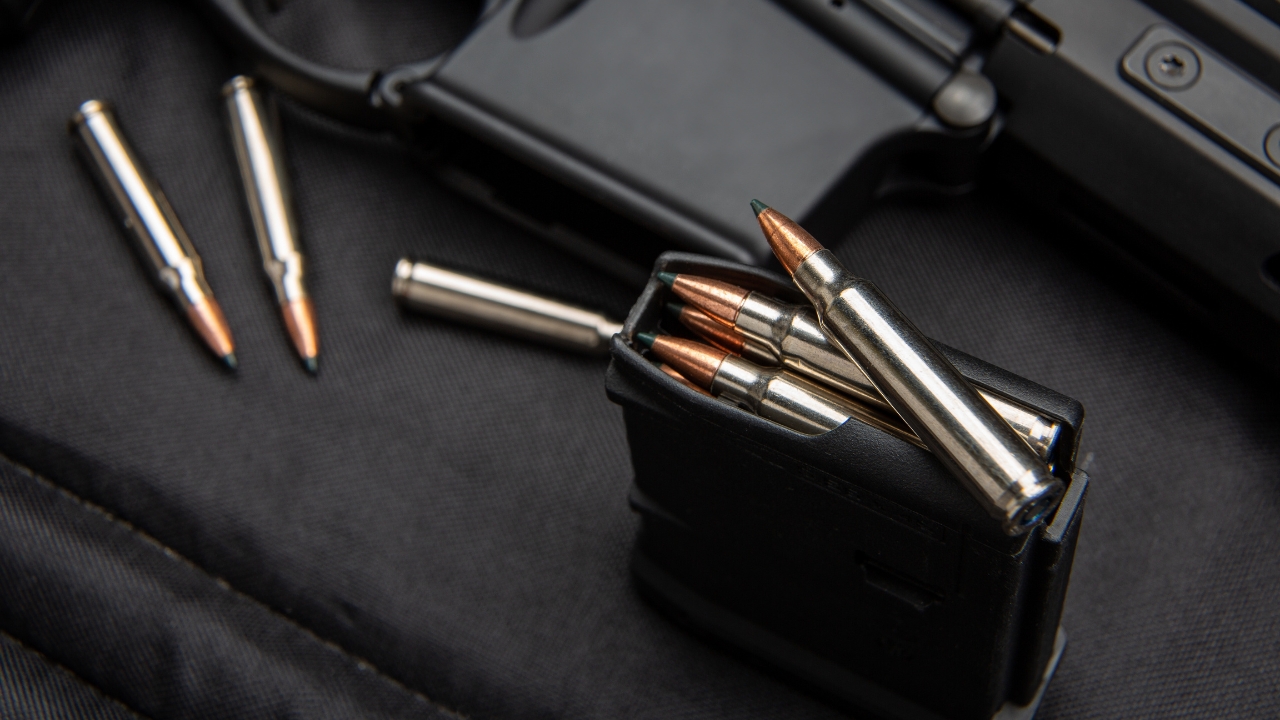
When you step back into rifle territory, the cartridge that keeps surfacing as the most versatile option for coyotes is the .223 Remington, especially if you hunt with an AR-15 or a light bolt gun. The combination of modest recoil, affordable ammunition, and enough velocity for typical predator distances makes it a natural fit if you want one rifle that can handle calling stands, truck-based sets, and even the occasional prairie dog shoot. Guides that walk through the best coyote calibers often state that 223 Remington is the first choice of many hunters, particularly for engagements typically within 300 yards where its trajectory and energy are more than adequate.
That broad utility is echoed in predator-focused breakdowns that label Best All Around Caliber as the .223, noting that One of the most popular and all-around calibers for predator hunting is the .223 Rem because it offers a balance of speed and controllability that keeps hit probability high. Other overviews of coyote cartridges go further and describe Best All Around .223 Remington as a go-to because Many hunters can place fast follow-up shots and still keep drop manageable at 300 yards, where a typical 55 grain bullet might show around 9.2 inches of fall. If you want a single caliber that gives you a strong chance on both standing and moving coyotes without punishing you in practice, .223 is hard to argue against.
.22-250 Rem and the case for raw speed
If your coyote sets stretch into big, open country and you want every possible edge on a running dog, the .22-250 Rem is where raw velocity starts to change the equation. By pushing light bullets at extreme speeds, it flattens trajectory and reduces the amount of lead you need to hold in front of a moving animal, which can be the difference between a clean hit and a miss when a coyote is streaking across a wheat field. Detailed comparisons of .22-250 versus .223 note that a 22-250 Remington can be Offering almost 3,700 fps of predator-dropping velocity with a 55-grain projectile, and that kind of speed means the cartridge shoots flatter, hits harder, and in practical terms makes more dead predators when you do your part.
That performance is why classic predator roundups insist that no respectable list of predator hunting cartridges is complete without the venerable .22-250, often describing it as a popularized wildcat that sends a 50 grain projectile at around 3,600 fps and earns repeated mentions as a top 22-250 Rem choice. Broader coyote caliber rankings that look at The Best Calibers on the Market for Hunting Coyotes in 2025 also tend to place the .22-250 Rem near the top, sometimes even as Best Overall, because that 250 class of speed gives you a forgiving trajectory and decisive terminal effect on coyotes that refuse to stand still. The tradeoff is more muzzle blast and barrel wear, but if your priority is maximizing your hit probability on fast movers at distance, .22-250 is one of the most compelling tools you can chamber.
.243 Winchester and stepping up in power
Some hunters prefer to step up slightly in caliber and bullet weight, especially if they want a dual-purpose rifle that can handle deer as well as predators, and that is where the .243 Winchester shines. With light varmint bullets, it still offers high velocity and flat trajectories, but the extra mass and frontal area give you more authority on marginal hits and in windy conditions, which can matter when a coyote is quartering away or angling through a crosswind. Classic predator cartridge rundowns open with the .243 Win and emphasize that it was Introduced in 1955, with the .243 Winchester still regarded as by far one of the most versatile predator and deer rounds, and that versatility is exactly what you tap into when you want one rifle to do it all.
From a practical standpoint, .243 gives you a bit more recoil than .223 or .22-250, but still stays manageable enough for most shooters to track a coyote through the shot and recover quickly for a second round. Predator gun guides that talk about how Big, open country is where the bolt-action rifle has earned its keep often point out that caliber choices vary widely depending on whether you are chasing coyotes or larger game, and that a 243 is a solid choice when you want a single rifle to cover both roles. If you routinely see coyotes at the same stands where you might also tag a whitetail or pronghorn, .243 Winchester gives you a strong chance on fast-moving predators without leaving you undergunned on bigger animals.
.204 Ruger, .17s, and the ultra-fast small bores
On the other end of the spectrum are the tiny, screaming-fast small bores like .204 Ruger and the .17 centerfires, which trade bullet weight for extreme speed and very low recoil. These cartridges can be devastating on coyotes when shots are well placed, and the almost nonexistent kick lets you stay glued to the scope and watch the entire sequence unfold, which is a real advantage when multiple animals respond to a call. AR-15 caliber rundowns often highlight the 204 Ruger and note that Plus it has a lot more ammo options and that All the big players load the cartridge, which means you can find high velocity ammo with good bullets tailored for varmint work.
Broader coyote caliber discussions that ask what is the best caliber for predators often mention how cartridges like the .204 Ruger perform exceptionally well on coyotes when paired with the right bullets, grouping them with other efficient small bores in lists of best coyote caliber options. There are tradeoffs, particularly in wind drift and penetration on steep angles, so you need to be disciplined about shot placement and realistic about range, but if you value minimal recoil and want to see every impact on a fast-moving coyote, these ultra-fast small bores can give you a surprising edge.
Competition insights: what the most demanding coyote hunters shoot
One way to cut through theory is to look at what cartridges dominate in coyote competitions, where hunters are under pressure to make quick, ethical kills on multiple animals in a single day. These events reward calibers that combine flat trajectories, fast follow-up capability, and enough punch to drop coyotes cleanly even when angles are not perfect, and the patterns that emerge can help you refine your own choices. Predator cartridge rundowns that focus on Killing coyotes note that Coyote competition hunters like cartridges that shoot flat and hit hard, and Whether you favor classic rounds or newer options, the cartridges on those lists tend to be the same ones that serious callers rely on season after season.
In that world, .223, .22-250, and .243 are perennial favorites, with some shooters branching into 6 mm Creedmoor or 22 Creedmoor for even more reach in wide-open country. Overviews of the best coyote calibers that include 22 Creedmoor point out that it operates at an operating pressure of 52,000 psi, which helps explain how it can push high BC bullets fast enough to stay flat and resist wind at extended ranges. For you, the lesson is not that you must chase the latest competition trend, but that the cartridges winning tournaments share the same traits you need for fast-moving coyotes: speed, consistency, and enough energy to forgive small errors in lead or range estimation.
Balancing pelt damage, recoil, and follow-up shots
Not every coyote hunter has the same priorities, and your ideal caliber will look different if you are selling fur versus simply managing predator numbers around livestock or deer fawns. Smaller, lighter bullets at moderate velocities can be more “fur friendly,” punching small entrance holes and sometimes not exiting, while heavier or faster rounds can create large exits that reduce hide value but increase your margin for error on tough angles. Comparisons that pit 223 vs 243 for Coyotes often conclude that 223 is king for cheap ammo, fast follow-up shots, and plenty of fur-friendly loads, But if you are willing to accept more pelt damage, 243 gives you extra authority and reach.
Recoil also shapes how well you can handle a fast-moving target, especially from improvised field positions or when you are shooting multiple coyotes that respond to the same stand. Guides that walk through predator cartridges of all time emphasize that the .243 Win and similar rounds offer a sweet spot of power without punishing recoil, while still acknowledging that lighter calibers like .223 or .204 Ruger are easier to shoot rapidly and accurately. When you read that the best coyote hunting cartridges are small, fast rounds built on platforms that are easy to carry and quick to get on target, you are really seeing the same tradeoffs laid bare: enough energy to anchor a coyote cleanly, but not so much recoil that you flinch or lose the animal in the scope at the moment of truth.
Putting it together: matching caliber to how and where you hunt
Once you understand how speed, recoil, and bullet design interact, the “best chance” on fast-moving coyotes becomes less about chasing a single magic caliber and more about aligning your cartridge with your terrain and style. If you mostly call in tight cover and shots are inside 40 yards, a well-patterned shotgun in a suitable gauge will likely outperform any rifle, because it lets you swing naturally and put a dense pattern where a coyote is headed rather than threading a single bullet through brush. In more open country, a .223 Remington or .22-250 Rem in a stable, accurate rifle gives you the flat trajectory and quick follow-up capability that modern predator experts keep circling back to in their lists of Best Overall coyote calibers.
If you want a dual-purpose rifle that can handle deer and coyotes, .243 Winchester remains a proven answer, while specialized small bores like .204 Ruger reward careful shot placement with minimal recoil and excellent visibility through the shot. Broader predator cartridge rundowns that start with Here is our look at the best predator cartridges ever made and go on to note that no respectable list is complete without a 250 class .22 centerfire all point in the same direction: you succeed on fast-moving coyotes when your caliber lets you shoot confidently, recover quickly, and still deliver enough energy to make every hit count. If you choose a cartridge that fits those criteria for the way you actually hunt, you give yourself the best possible odds when a coyote finally breaks cover and runs.
Like Fix It Homestead’s content? Be sure to follow us.
Here’s more from us:
- I made Joanna Gaines’s Friendsgiving casserole and here is what I would keep
- Pump Shotguns That Jam the Moment You Actually Need Them
- The First 5 Things Guests Notice About Your Living Room at Christmas
- What Caliber Works Best for Groundhogs, Armadillos, and Other Digging Pests?
- Rifles worth keeping by the back door on any rural property
*This article was developed with AI-powered tools and has been carefully reviewed by our editors.