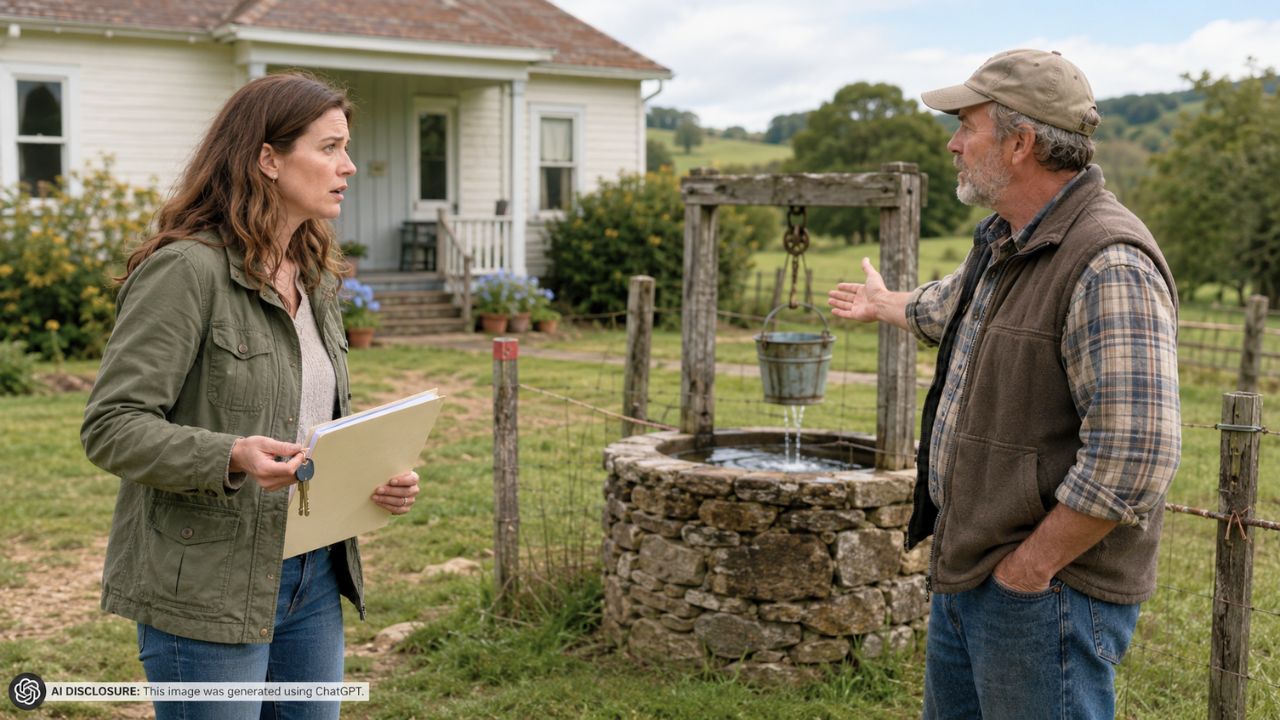
Buyer Closes on a Rural Cottage and Finds the Neighbor’s Working Well Is Sitting on the Property — Then the Neighbor Says an Oral Agreement Protects Their Right to Use It
Photo credit: AI-generated image created using ChatGPT. Illustrative only.
Buying a rural place is supposed to mean peace, space, and finally being in charge of your own utilities. For one new cottage owner in Kern County, California, it meant discovering that the most important utility on the property—the well—was already serving someone else.
In the original post, the buyer says they closed on a cottage and then learned the neighbor had been plumbed into the well “for years,” claiming a “half interest” in it based on an informal arrangement with a prior owner. The catch: nothing was recorded, nobody involved is still alive, and the new owner never signed a thing.
It started with a well that didn’t even serve the house
The detail that makes this feel especially homestead-real is that the well wasn’t plumbed into the buyer’s own cottage when they purchased it. The well sat on their land, but their home wasn’t even hooked up.
Meanwhile, the neighbor’s place apparently was connected. The neighbor’s position, according to the buyer, was that the well wasn’t just on the new owner’s property—it was partially his, too, because long ago he had some kind of “third interest” for a few years, and later an informal agreement carried on for water use.
On paper, though, the buyer says they found no covenant “with the land” and no recorded agreement. They also say they were told by their realtor that the agreement was recorded, only to later discover it wasn’t—something they didn’t learn until after the neighbor listed his own cottage for sale in July.
The paperwork problem turned into a money problem fast
When the buyer told the neighbor he had “no right to water,” the neighbor didn’t just shrug and move on. The buyer says the neighbor offered cash—“not much”—to get a contract creating a half interest in the well so he could sell his cottage with that water access.
That’s the kind of moment that makes a rural property dispute feel less like an awkward misunderstanding and more like someone trying to fix a title problem at the last minute. If the neighbor was preparing to sell, reliable water access would be a major selling point, especially in rural California where wells are everything.
For the buyer, it also reframed the earlier assurances. They say they believed the use agreement was recorded because that’s what they were told, then they checked their title and found out it wasn’t. Suddenly the well wasn’t just a neighborly shared resource—it was a liability sitting in the yard.
A crushed water tank turned “shared well” into a health scare
Then the story took a hard left from paperwork into physical damage. The buyer says an oak tree crushed the neighbor’s rooftop water tank, leaving it “gapping open.”
The neighbor, the buyer claims, tried to patch the broken tank with duct tape. From the buyer’s perspective, that wasn’t just improvised maintenance; it was a health issue. With an open tank, you’re talking about contamination risk—animals, debris, stagnant water, and who knows what getting into a system that’s tied to a working well.
So the buyer cut off the neighbor’s water pipe. Not to shut off water out of spite, they argue, but because they believed the compromised tank made continued service unsafe. Right after that, the buyer proceeded to hook the well up to their own house—something that hadn’t been done when they bought the property.
In other words: the new owner finally treated the well like what it was supposed to be for them—a functioning, on-property water supply. But they did it while the neighbor was already used to relying on it.
The demand letter landed like a sledgehammer
After the cutoff, the neighbor didn’t just complain over the fence. The buyer says the neighbor and his lawyer demanded $20,000 within 10 days, plus “an additional $200 per day until full restoration,” or they would sue.
The lawyer’s argument, as relayed by the buyer, is that the buyer “admitted to vandalism” and acknowledged the existence of an unrecorded agreement. That’s a nasty pivot: what the homeowner viewed as a safety shutoff and a boundary line becomes, in a demand letter, alleged damage and a supposed confession.
It also puts the buyer in the classic rural bind—water is essential, and any dispute over access escalates quickly. The numbers in the letter weren’t small-change neighbor drama. They were “pay up now” numbers, with a ticking daily penalty attached.
At that point, the buyer’s questions turned blunt: is this extortion, and do they need their own lawyer?
People zeroed in on proof, not promises
Even without seeing a full comment thread, this kind of story reliably triggers the same homeowner instincts: stop talking, start documenting, and get your own professional help. When someone waves around an “oral agreement” from “two generations ago,” practical people tend to ask one thing first—where’s the recorded easement or covenant?
On the homeownership side, water rights feel emotional because they’re survival-level, but they’re also brutally technical. If the neighbor truly has a legal right to use that well, it usually shows up somewhere that survives a sale: recorded easements, deed language, or other formal documentation that binds future owners.
And if it doesn’t, commenters in these situations typically urge new owners to protect themselves with the boring stuff: a copy of the title report, any disclosures from the sale, photos of the pipe connection, and a written timeline of what happened—especially the damaged tank and why it looked unsafe.
The other theme that tends to come up is avoiding further self-help shutoffs without legal guidance. Cutting a line may feel like protecting your property, but once lawyers are involved, everything becomes a potential exhibit.
Rural life lesson: the “working well” can be the biggest booby trap
Wells are supposed to be simple: water comes up, you store it, you use it. But when a well serves more than one home—formally or informally—it becomes part utility, part property line, part inheritance problem.
What makes this buyer’s experience so tense is the combination of three things at once: a well physically located on their land, a neighbor who relied on it as if it were shared, and a history that lives mostly in memories because “all parties are deceased.” Add a damaged rooftop tank and a real contamination concern, and the buyer wasn’t just dealing with “rights”—they were dealing with whether the water system was safe.
Now the standoff is set. The buyer has a well they want to use for their own cottage, a neighbor trying to sell and needing water access, and a demand letter that turns a rural handshake-era arrangement into a high-dollar threat. The quiet country purchase turned into the kind of property fight that can swallow a summer—and the buyer is staring down the reality that the most important repair on the homestead might not be plumbing at all, but untangling who’s allowed to turn the water on.