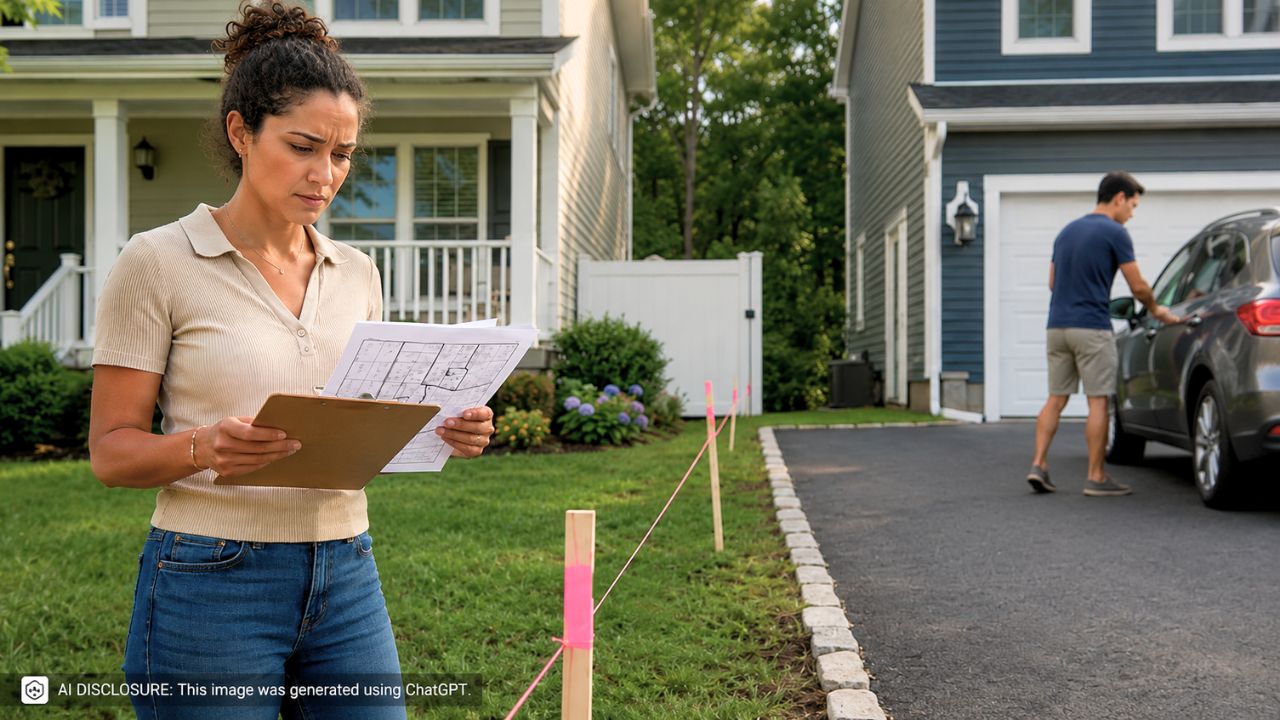
First-Time Homeowner’s Parcel Search Shows the Neighbor’s Driveway Cutting Through Her Property — Then She Learns Staying Silent Could Risk Losing the Land to Adverse Possession
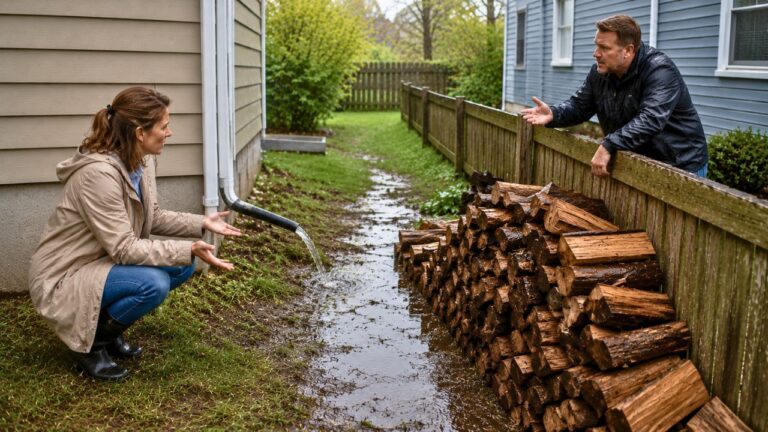
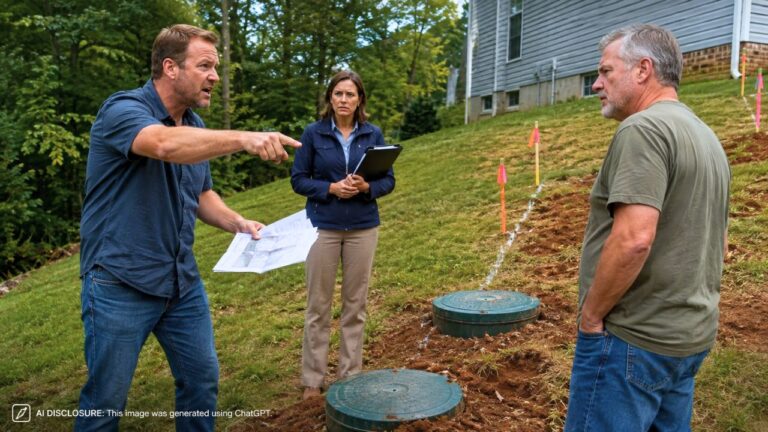
Photo credit: AI-generated image created using ChatGPT. Illustrative only.
There’s a special kind of panic that hits after you’ve finally closed on your first home—when you realize the “welcome to the neighborhood” moment might actually be a property line problem. One new homeowner said she bought her house in October, and soon after, a routine county parcel search made her stop cold: the neighbor’s driveway appeared to cut straight through her land.
In the original post, she explained that her neighbor had only purchased his home a month earlier, in September, so he clearly didn’t build the driveway. Still, the map suggested the driveway crossed onto her parcel, and her question wasn’t about picking a fight. It was simpler—and scarier: if she stayed quiet, could she lose that strip of land down the road?
The map didn’t match what daily life looked like
On the ground, the driveway was just… the driveway. Cars go in, cars go out, neighbors wave, nobody thinks twice. That’s what made the parcel search so jarring: it turned an everyday feature into a boundary issue with real stakes.
For a first-time homeowner, it’s easy to assume a driveway is “part of the house” next door the same way a mailbox or front steps are. But property lines don’t care what looks normal. If the county records show an encroachment, even an old one, it can sit quietly for years until someone tries to refinance, build a fence, install a shed, or sell.
And that’s when the harmless-looking strip of asphalt starts acting like a tripwire.
She didn’t want to start a neighbor war—she just didn’t want to lose land
The homeowner’s tone was careful. She wasn’t talking about blocking access or confronting someone every time they pulled in. She even acknowledged the obvious: the current neighbor didn’t create the problem, he inherited it.
But she’d heard enough homeowner horror stories to recognize the pattern. If you let someone use your land long enough, can they eventually claim it? That’s the fear behind the phrase “adverse possession,” and it’s the kind of legal concept that sounds dramatic until you realize it’s built around ordinary things—paths, fences, driveways, gardens—that stay in place for decades.
Even without a courtroom showdown, the risk feels real because the outcome can be permanent. Land doesn’t “grow back” once it’s signed away or legally recognized as belonging to someone else.
The hidden problem: parcel searches aren’t the same as a survey
One reason these disputes explode is that homeowners often rely on the easiest available tool: online parcel maps. They’re helpful, and they can raise red flags fast, but they’re not always precise enough to decide where a boundary truly lies.
A driveway line on a county GIS map can be slightly off. A boundary line can be approximated. Sometimes the aerial imagery doesn’t match the legal description cleanly. Sometimes the real curve of a drive or a widened section near the street makes it look like it crosses when it doesn’t.
But here’s the catch: even if the map is “just a map,” ignoring it can still be risky. If you suspect an encroachment and do nothing, you can end up with years of assumptions hardening into expectations—especially if both properties change hands again and the next owners are less friendly.
That’s why these situations often start with a simple, unglamorous step: confirm what’s real before anyone starts talking about moving concrete.
Where the real stakes show up: access, resale, and leverage
Driveways are different from a fence that’s a few inches over the line. A driveway is functional infrastructure. If it truly sits on the wrong parcel, it raises immediate questions: Who has the right to use it? Who maintains it? Who carries liability if something goes wrong on that surface?
It can also complicate the future in ways that feel unfair to someone who just moved in. If the homeowner wants to install a fence, expand landscaping, build an addition, or even just cleanly define the yard, that driveway strip becomes a permanent “exception” running through the plan.
And then there’s selling. Buyers (and lenders) get nervous when they hear “encroachment.” Even a driveway that’s been there forever can trigger demands for documentation: easements, boundary agreements, or proof that the issue has been resolved.
For the new homeowner, the worry wasn’t abstract. It was about getting trapped later—when the easiest, cheapest time to address it has already passed.
Commenters pushed proof and paperwork, not confrontation
While the post itself focused on the question—could staying silent cost her land?—the practical response most homeowners gravitate toward in situations like this is: document first, talk second. That usually means getting clarity on the actual line through a licensed survey rather than trusting a parcel search alone.
Once you know what’s real, the next layer is usually written permission or a recorded agreement. Many homeowners prefer a solution that keeps the peace and keeps access intact—something that says, in plain terms, “you can keep using this driveway area, but it doesn’t change ownership.”
That kind of paperwork can matter because it changes the story from “they’ve used it forever” to “they use it with permission,” which is exactly the distinction people worry about when they mention adverse possession.
In other words: the advice tends to be less about winning a fight and more about preventing a future mess—especially when both households are brand-new and neither one created the original layout.
Awkward timing: both owners just moved in, and the driveway predates them
There’s an extra layer of tension here because it’s nobody’s “fault” in the day-to-day sense. The neighbor didn’t pave it last week. The homeowner didn’t approve it. They’re both inheriting an old decision, and now they’re the ones who have to decide whether to formalize it.
That’s also why staying silent feels tempting. Why stir things up when everyone is still unpacking boxes?
But boundary issues don’t stay frozen. The moment someone wants to replace the driveway, widen it, add drainage, or run utilities, the property line stops being theoretical. And if either home changes hands again, the next owners may not be as patient about “we’ve always done it this way.”
For this first-time homeowner, the parcel search turned into an early lesson in something experienced homeowners learn the hard way: the calmest neighborhood on earth can still have one invisible stress fracture running right between two lots. The trick is dealing with it while it’s still just a line on a map—and before it becomes a permanent change on paper.
Like Fix It Homestead’s content? Be sure to follow us.