Homeowner Finds Runoff From the Development Next Door Flooding Her Backyard — Then Two Trees Fall on Her Roof and the Builder Denies Any Responsibility
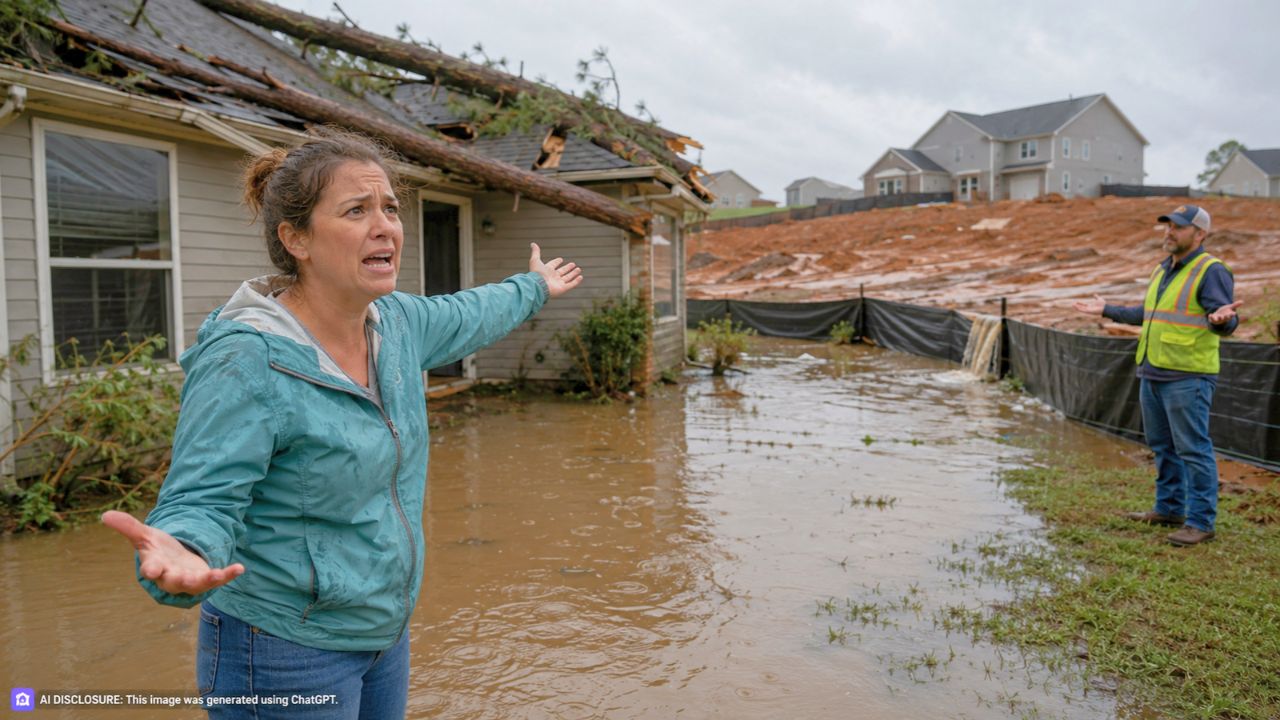
Photo credit: AI-generated image created using ChatGPT. Illustrative only.
It starts the way a lot of backyard problems start: you look out after a hard rain and realize your yard is holding water in places it never used to. In Chapin, one homeowner says that “new normal” showed up right after the land above her home was turned into a housing development—and it never stopped.
Linda Shanabrook has now filed a lawsuit naming the developer, Great Southern Homes, and Lexington County, alleging that runoff from the development flooded her backyard, undermined the ground, and eventually contributed to two trees coming down onto her home. The details were reported in the source post.
The first sign was water where it didn’t belong
Shanabrook lives on Harborview Point in the Night Harbor development near Lake Murray. Next door and uphill sits property on Daymark Drive owned by Great Southern Homes—land that used to be undeveloped before it was subdivided into smaller parcels for a new single-family project, according to the lawsuit filed June 16.
Shanabrook’s complaint says that on June 23, 2023, she began experiencing “excessive water runoff” in her backyard coming from the developer’s property. Anyone who has dealt with runoff knows how fast it can go from “annoying puddles” to “why is the ground squishing when I walk.” And once water starts repeatedly flowing where it didn’t before, it doesn’t just soak the grass—it looks for edges, seams, and weak spots.
The lawsuit says she notified Great Southern Homes right away. Two representatives allegedly came out, but denied responsibility and refused to offer solutions.
When runoff turns into a foundation-and-yard problem
This is the part homeowners dread: not a one-time flood, but a repeat issue that keeps showing up, storm after storm, while you’re still trying to figure out who’s supposed to fix it.
According to the lawsuit, the runoff and flooding continued, including along a foundational wall. That detail matters because water against a foundation is rarely just cosmetic. It can mean saturated soil pressing on the wall, erosion around the base, and the kind of slow damage that doesn’t always show up as a dramatic crack—until it does.
The lawsuit alleges the developer converted the land from natural conditions into residential lots without proper lot grading and adequate runoff and drainage measures, leading to increased runoff, flooding, and standing water on Shanabrook’s property.
Two trees falling made it impossible to ignore
Then the story jumped from “my backyard won’t drain” to “my house is taking hits.” The lawsuit states that on June 7, 2025, two trees fell on Shanabrook’s property, exposing the entire root system and causing damage to her roof, porch, and fence.
If you’ve ever seen a tree go down in saturated soil, you know the look: the root plate lifts like a hinged door, and suddenly there’s a wall of mud and torn roots where the tree used to be anchored. Even healthy trees can lose that fight when the ground around them stays wet and unstable.
The complaint connects the dots in a way a lot of homeowners would: if the yard is continually flooded and the soil stays compromised, trees don’t hold like they used to. When they finally let go, they don’t land gently.
An inspection allegedly tied the damage back to grading and drainage
Months later, on Jan. 16, 2026, an inspection was performed to address the fallen trees and the water runoff issues, according to the lawsuit. That inspection allegedly concluded that converting the uphill property from natural land to residential lots—without proper grading and runoff/drainage planning—caused the increased runoff, flooding, and standing water that compromised the trees’ stability.
That timeline also shows how these disputes drag on in real life. Runoff problems rarely get resolved in a week, especially when the party uphill denies it’s their issue. Meanwhile, the homeowner downhill is dealing with cleanup, repairs, and the uneasy feeling that the next storm could bring the next failure—another tree, another washout, another surprise where soil used to be.
Shanabrook says she has already accrued more than $40,000 in repair expenses and continues to incur costs because the runoff continues.
When the builder says “not us,” the paperwork becomes the battlefield
The lawsuit claims Great Southern Homes failed to comply with construction plans and with grading and drainage ordinances, and that this negligence created an ongoing nuisance that interferes with Shanabrook’s enjoyment of her property and affects its value.
It also alleges violations of Lexington County ordinances related to water shedding and impeding stormwater runoff. And it goes a step further, claiming the company’s actions amount to unfair and deceptive trade practices under state law—arguing it could happen again and affect the public interest.
Lexington County is included, too. Shanabrook alleges the county failed to properly approve the drainage, stormwater, and grading plan for the project, and failed to ensure compliance with that plan.
In plain homeowner terms: when dirt gets moved uphill, somebody is supposed to make sure the water still has a controlled place to go. If that oversight fails, the person downhill ends up living with the consequences.
The practical reactions people have to runoff fights
Stories like this tend to pull out the same hard-earned instincts from homeowners who’ve been through property damage disputes: document everything, early and often.
When water is the problem, people typically talk about keeping a paper trail of when it started, photos after each rain, and any communications where you notified the responsible party. They also focus on getting third-party observations in writing—whether that’s an inspection report, a drainage professional’s evaluation, or records showing what changed on the neighboring parcel.
Another common reaction is to stop thinking of it as “a soggy backyard” and start thinking of it as a safety and structural issue. Once water is repeatedly collecting near a foundation and trees start failing, it’s not just an inconvenience; it’s a risk that can multiply fast and get very expensive.
Shanabrook is seeking damages and attorneys’ fees, along with an order requiring Great Southern Homes to work to abate the runoff, and she has requested a jury trial. The homeowner reality behind all of that is simpler: she wants her yard back, her home protected, and the uphill water controlled—before the next storm finds a new weak point.
Like Fix It Homestead’s content? Be sure to follow us.