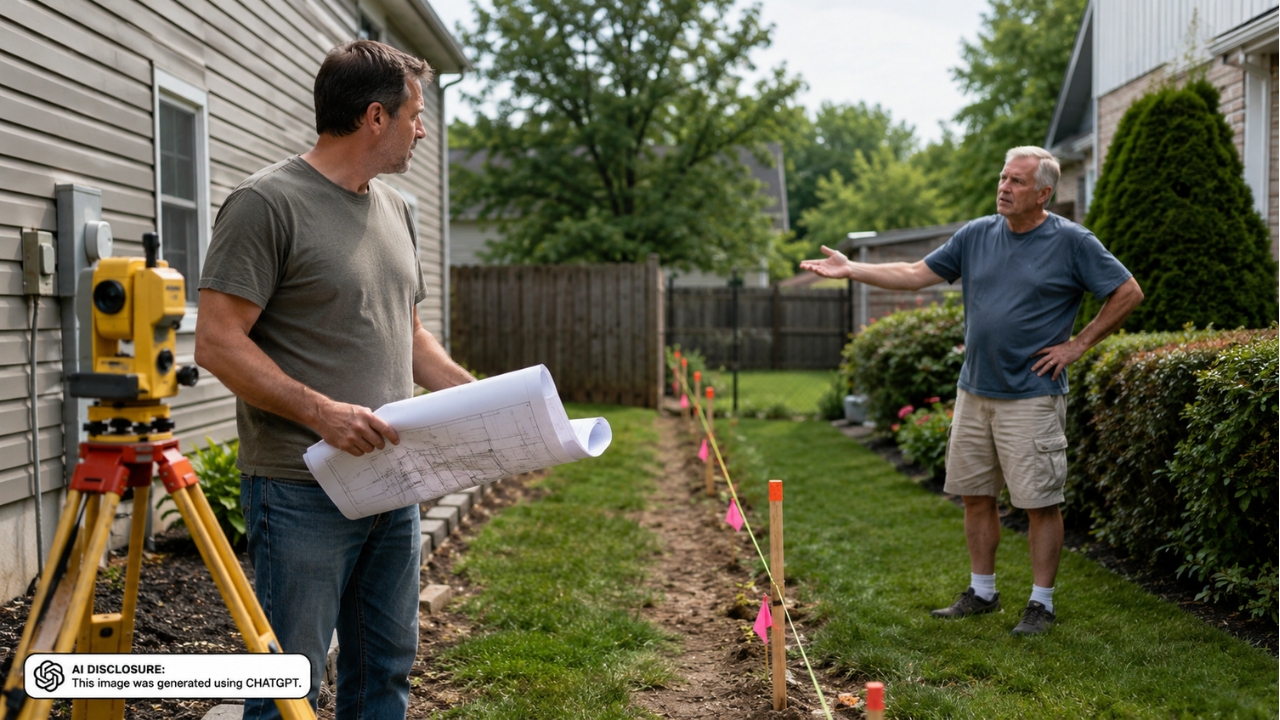
Homeowner Hires a Surveyor Before Installing a Fence and Finds the Neighbor Has Been Using Part of the Lot — Then the Neighbor Says They Will Commission Their Own Survey to Dispute the Results
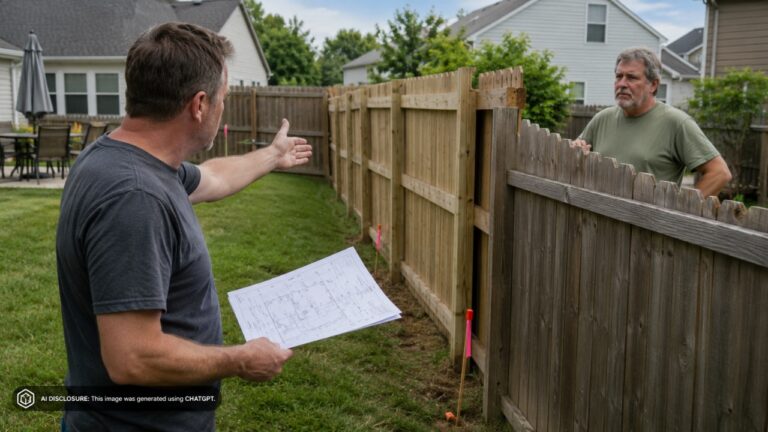
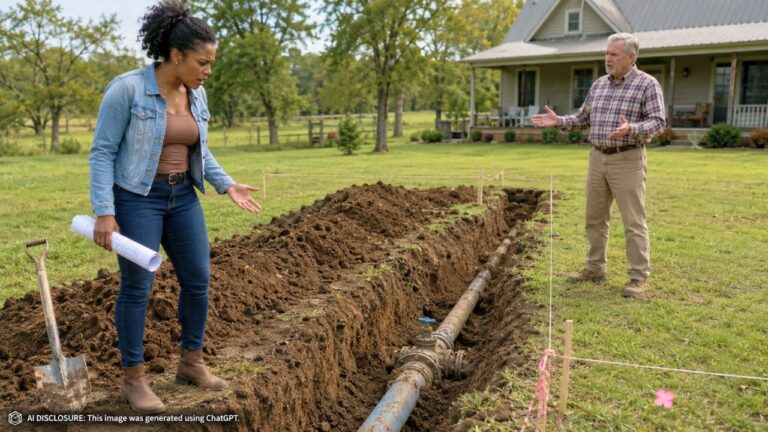
Photo credit: AI-generated image created using ChatGPT. Illustrative only.
They were just trying to do the responsible thing before putting in a fence: get a professional survey, mark the corners, and build on their own land. Instead, the survey stakes turned into a neighborhood-wide shock when the homeowner realized the existing fences didn’t line up with the property line at all.
In the original post, the homeowner said the survey showed every fence around their Tacoma, Washington property was encroaching onto their lot. And it wasn’t just a few inches of old fence that could be shrugged off. They described major, lived-in pieces of their neighbors’ setups crossing over: one neighbor’s carport reaching halfway into their property, another neighbor’s deck partially over the line, and even a propane tank sitting where it apparently shouldn’t be.
The survey didn’t just move a line—it moved the peace
Property lines are one of those things that feel theoretical until someone pays to have them pinned down. Before the survey, the fences probably looked “normal,” like the kind that have been there forever and will be there forever. The homeowner suspects that’s exactly what happened—that the fences date back to the original building of the properties.
But when a surveyor puts flags in the ground, suddenly the “normal” boundary becomes a paper trail with stakes and measurements behind it. And once you see that a neighbor’s structure is over the line, it’s hard to unsee—especially when you’re planning work of your own and need to know where you can build without creating a problem later.
It wasn’t one neighbor—it was all of them
This wasn’t a single awkward conversation with one adjacent homeowner. According to the post, all the fences encroach. That means the issue wraps around the entire property like a belt that’s been tightened in the wrong spot for years.
The specifics make it feel less like a minor boundary disagreement and more like a real loss of use. A fence encroachment can be irritating. A carport “half way” into the lot is a different class of problem, because it’s tied to how someone parks, stores items, and uses that space day after day. Add a deck and a propane tank, and it starts to feel like multiple neighbors have built their routines on land the homeowner thought they owned outright.
That’s where the stress spikes. If you push back, you’re “starting something.” If you stay quiet, you may be letting it harden into something permanent.
The neighbor’s next move: disputing the survey
Once a survey like this comes out, there’s a predictable fork in the road. One side accepts it and starts talking about solutions. The other side challenges it. In this case, the homeowner is now staring down the idea that at least one neighbor wants to commission another survey to dispute the results.
And that’s where the tension gets sticky: a property line is supposed to be a fact, but it can start to feel negotiable when different surveys, old fences, and long-standing use collide. Even if the measurements are consistent, a neighbor may not be emotionally or financially ready to hear that a carport or deck is sitting on someone else’s land.
For the homeowner, it raises the immediate question: what do you do next without turning your block into a cold war?
Why this kind of encroachment gets expensive fast
Fence disputes are often framed like petty neighbor drama, but the practical stakes can be huge. Moving a fence is one thing. Dealing with a carport or a deck is another—because now you’re talking about demolition, reconstruction, permits, and the simple fact that people don’t like being told their “finished” structure has to change.
There’s also the question of access and safety. A propane tank placed partly across a line isn’t just a boundary marker; it’s a piece of equipment that affects landscaping, clearances, and how comfortable you feel using your own yard. And if the homeowner ever wants to sell, refinance, or do improvements, unresolved encroachments can turn into last-minute surprises that slow everything down.
Even if everyone stays civil, the cost of clarity can pile up: surveys, copies of plats, title documents, and possibly conversations with professionals who can explain what the survey means and what options exist locally.
What people pushed for: proof, paperwork, and calm conversations
The homeowner asked what options they have “without starting WW III,” which is the part that will feel familiar to anyone who has had to live next to the person they’re in a disagreement with. When boundary issues show up, the first instinct is often to march next door with a printout and a strong sense of justice. The smarter move, most homeowners learn, is to slow down.
In situations like this, the practical advice tends to cluster around the same themes: document everything, keep the survey information organized, and avoid making threats in the first conversation. The survey itself matters, but so does how it’s communicated. People also tend to recommend keeping discussions in writing once they become serious—polite emails, a short letter, anything that preserves the timeline and the facts without inflaming the tone.
The idea of a neighbor ordering a second survey also changes the posture. If two surveys disagree, the next steps can get complicated. If they match, it may actually help—because it becomes harder for anyone to argue it’s just one surveyor’s mistake. Either way, it signals that this isn’t going to be solved by a quick handshake over the fence line.
The quiet risk of letting it slide
One reason these disputes turn into long, tense sagas is that “doing nothing” can feel like the most peaceful choice in the short term. You keep the neighborly vibe. You avoid a blow-up. You pretend you didn’t notice.
But ignoring encroachment can come with its own kind of pressure. The longer a boundary is treated one way on the ground, the more it starts to feel like the “real” line to everyone living there—especially if structures, landscaping, and routines are built around it. The homeowner is essentially weighing two bad options: confrontation now, or a lingering problem that could get uglier later when a sale, a renovation, or a new fence forces the issue anyway.
For now, they’re stuck in the most uncomfortable phase: the part where you have the survey results in hand, you can see the stakes in the dirt, and you know the next conversation could reshape your relationships for years. The only thing that’s clear is that the property line isn’t where the neighborhood has been living like it is—and once that’s on the table, it rarely goes back in the drawer neatly.