Homeowner Reserves a Side Lot for a Future Garage — Then New Tenant Neighbors Start Mowing Three Feet Onto It and Ask to Let People Park There Too
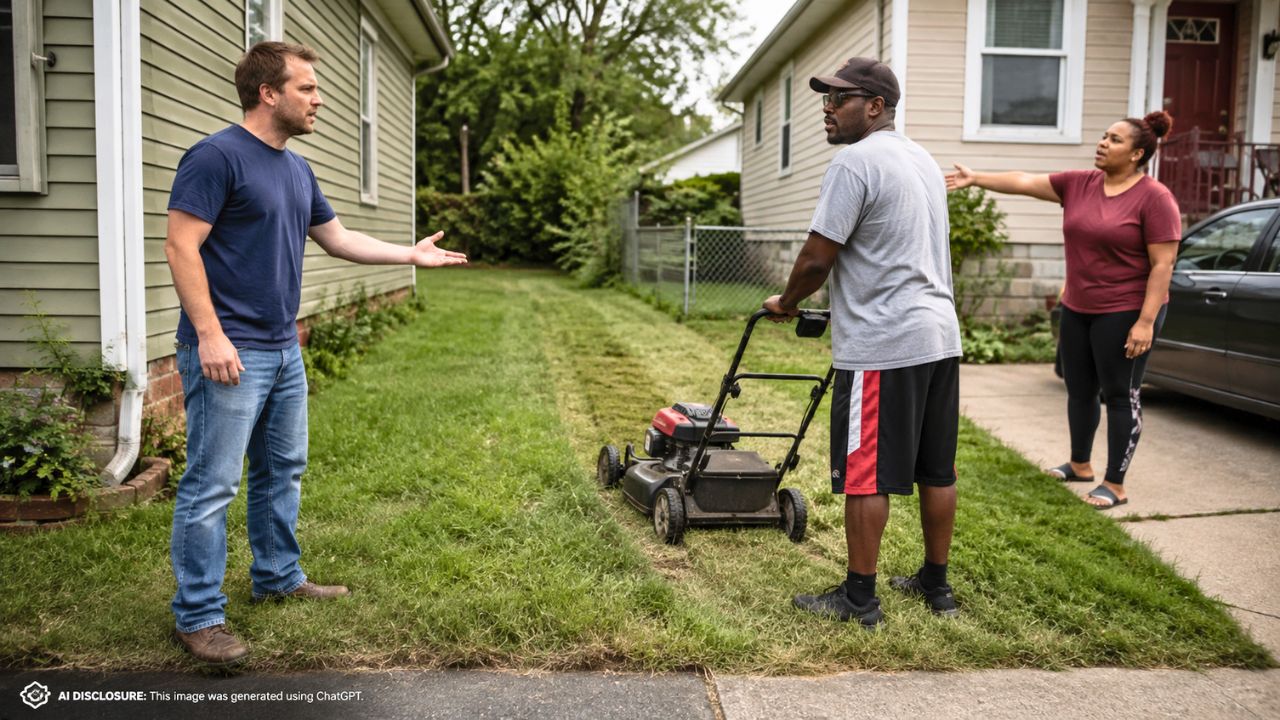
Photo credit: AI-generated image created using ChatGPT. Illustrative only.
It started as a little strip of grass—three feet wide, tucked behind a fence line—easy to ignore if you’re trying to keep peace with the people next door. But for one homeowner with an L-shaped property and plans for a future garage, that strip turned into a pattern: mowing, parking, plowing, and weekly garbage cans inching deeper onto land that wasn’t theirs.
In the original post, the homeowner explains that their backyard sits behind the house, while an extra side lot runs off to the side—reserved for a bigger garage down the road. The problem is that new tenant neighbors moved in next door last year, and they’ve been treating part of that side lot like it’s an extension of their own driveway.
The side lot wasn’t “unused” — it was the plan
The homeowner’s property isn’t a simple rectangle. It’s shaped like an “L,” which often means odd boundaries and edges that don’t feel obvious on the ground. The side lot isn’t just leftover yard; it’s essentially a reserved building site for a future garage, the kind of space you keep clear and intact because you know you’ll need it later.
Next door, the tenants’ driveway runs right along the property line. There’s a fence, then an opening to their shed. The homeowner notes that to reach the shed directly, you’d have to step onto the homeowner’s side—unless you walk all the way around the house. That detail matters, because it sets the tone: the neighbors already had a practical reason to drift across the line, and drift is exactly what happened.
The first sign was easy to brush off
After the tenants moved in, the homeowner noticed they were mowing about three feet onto the homeowner’s property behind the fence and shed. Annoying, yes—but it’s also the kind of thing people talk themselves into dismissing. It’s just mowing. It looks tidy. No harm done, right?
Still, the homeowner’s husband did what most people try first: he knocked on the door and politely explained where the line was and that he would handle mowing their own property. The neighbor offered to “take turns” mowing the side lot, and the husband declined—because it wasn’t a shared space, and he didn’t want to blur that boundary.
Then came the ask that made the intention feel clearer: could party guests park on the lot? The husband said no. And yet, even after that conversation, the mowing continued.
Garbage day became the weekly power move
The homeowner and her husband decided to let the mowing strip go for a while, likely hoping the neighbors would eventually absorb the message. Instead, the behavior expanded into a new routine: the neighbors started placing their garbage cans on the homeowner’s property every pickup day.
It wasn’t a one-off. The husband would move the cans back. The neighbors would put them right back into the yard the next week. That repetition is what wears people down—not just the inconvenience, but the message underneath it. If someone keeps doing the same thing after being corrected, it stops feeling like confusion and starts feeling like testing.
And once a neighbor is comfortable using a corner of your property for trash, it’s not a big leap for them to use it for tires, bumpers, and footprints, too.
Winter brought the kind of damage you can’t unsee
When snow hit, the issue turned from “boundary annoyance” into physical destruction. The tenants began plowing their driveway “right into” the homeowner’s yard, tearing up grass as if trying to widen the driveway and create more parking room.
Winter makes property lines harder to read and easier to ignore, especially if someone is rushing to clear snow and just angles the blade wherever it’s convenient. But torn turf doesn’t stay invisible. It becomes ruts, mud, dead patches, and a mess that lingers long after the snow melts.
On top of the plowing, the homeowner says visitors arrive on snowmobiles and ride right through the yard. Meanwhile, the driveway itself fits two cars, but the tenants have three. Overflow parking has started landing on the homeowner’s side, and when visitors come, they’ve “just started parking” in the yard too.
At that point, it’s not about grass anymore. It’s about access, liability, future plans for a garage, and the creeping sense that if you don’t stop it now, you may be fighting to reclaim your own land later.
They apologized — and kept doing it anyway
The husband confronted them again after catching them outside. The response was simple: “oh sorry.” Then the behavior continued.
That’s the part that traps homeowners. You don’t want to be petty. You don’t want to be the neighbor who “makes a big deal” out of everything. But each small encroachment stacks up into a pattern that can affect how you use your own property day to day—especially when you’ve already told them no about parking, told them where the line is, and physically moved their trash bins back week after week.
The homeowner mentions they recently installed a fence in the backyard and don’t want to spend the money or go through the hassle of fencing the side lot too. She even considered parking a vehicle right on the line by the driveway, but didn’t want it damaged and didn’t want to escalate into tit-for-tat.
How neighbors pushed back: proof, barriers, and the city
In the follow-up, the homeowner says she left a message with the city zoning department and is waiting for a call back. One big reason is the shed access question: the shed was already there when the homeowners moved in, and they aren’t sure how old it is or whether it was placed with proper setbacks or permissions. When structures and access points sit right on a line, it can create a long-term “we’ve always done it this way” attitude—even when the legal boundary says otherwise.
The homeowner’s own plan is practical and in-the-weeds: install a cheap fence temporarily until the garage is built, or plant shrubs as a living barrier. She also liked the idea of turning the lot into a more usable space in the meantime, which would naturally make it feel less like “spare” land to anyone watching from next door.
That mix—documentation through the city, plus a physical barrier that doesn’t break the bank—is often how these disputes get resolved in real life. Not with one dramatic confrontation, but with a series of steps that make it harder to ignore the line and easier to enforce it without constant face-to-face arguments.
For now, the homeowner is stuck in the uncomfortable middle: trying not to be confrontational, watching damage spread season by season, and realizing that a side lot saved for “later” can turn into a daily headache if someone else decides it’s theirs to use today.
Like Fix It Homestead’s content? Be sure to follow us.