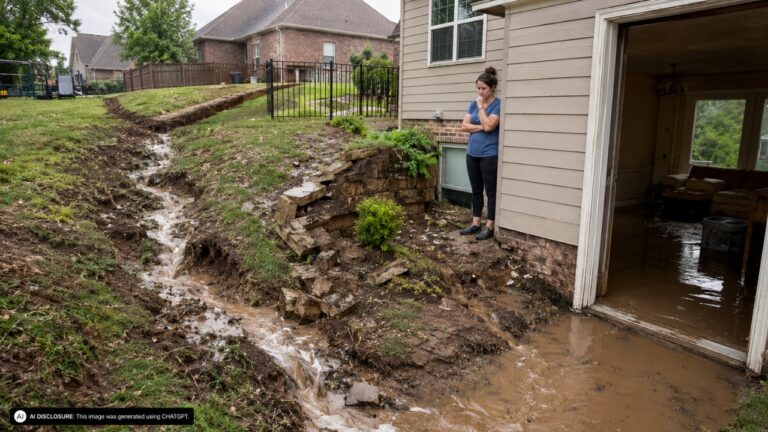
Homeowner Says a Contractor Friend Took Two-Thirds of the Money and Then Stopped Showing Up
Photo credit: Andrii Medvediuk/Shutterstock.com
Hiring a friend sounded like the safer choice.
The homeowners had three other quotes, but they chose someone they knew because they thought it would mean better communication and fewer surprises. They figured there would be trust there. Instead, they said the job stalled almost immediately, the contractor stopped answering, and the friendship fell apart right alongside the project.
In a Reddit post, the homeowner said they were dealing with a contractor who kept promising to show up and then not showing up. The project was a porch roof, and the homeowners had already paid two-thirds of the money.
That was the first big problem.
The homeowner admitted they made a mistake during the contract signing by not putting a completion date in writing. They called it a “life lesson,” and it is easy to see why. Without a clear date, they were stuck trying to argue over what counted as a reasonable timeline while the project sat there barely started.
According to the homeowner, the contractor had materials delivered and dug four post holes. That was it.
They had paid him in April after he said he could start right away. But weeks later, the porch roof still was not built. The homeowner later explained in the comments that they were going on week eight, and all they had to show for it were those post holes.
The homeowner said they had been trying for two weeks to get ahold of him about coming back out to set the poles after the holes were dug and inspected. The contractor allegedly told them he would come out “Friday or Saturday,” but then he no-showed again.
No call. No text. No real explanation.
That kind of thing gets old fast when the project is small. It gets even worse when the homeowner has already paid a huge chunk of the money and cannot use the area the way they planned. In this case, the porch roof was supposed to let the family enjoy their patio during the summer. Instead, the season was slipping by while they waited for someone who kept disappearing.
The friend angle made it messier.
The homeowner said one of the reasons they hired him was because they knew him and expected an open line of communication. But the exact opposite happened. Once money changed hands, the communication apparently got worse, not better.
Eventually, the homeowner’s wife snapped. According to the post, she started calling the contractor’s family members until someone finally got ahold of him. That led to a nasty text exchange between the homeowner and the contractor.
By that point, the homeowner said the friendship was over. In a comment, he said he had already contacted a lawyer and added that the contractor was “no friend” of his anymore.
The homeowner’s main question was whether someone who fires a contractor is entitled to get any money back. Since the materials had been delivered but the work was not being done, the situation was not clean. Some money had clearly gone toward materials. Some small amount of work had happened. But the contractor had been paid far more than the visible progress seemed to justify.
The contract made that even harder. The homeowner said it listed the work to be done, but it did not say what happened if money needed to be returned or if the work was not delivered.
That left them trying to figure out whether to keep pushing the contractor to finish, fire him and fight for money back, file a complaint against his license, or go to court.
None of those options sounded good. If they went legal, the project might sit untouched until the dispute was resolved. If they kept waiting, they could lose the whole summer and still not get the roof. If they fired him, they might never get the money back.
The homeowner said they were out more than $10,000 and had finally found the contractor’s license number. That gave them at least one possible route beyond arguing by text.
Still, the frustration in the thread came down to something painfully simple: they had hired someone they trusted, paid him because he said he could start right away, and then spent weeks chasing him just to get him back on site.
Commenters gave the homeowner a mix of legal warnings, practical steps, and hard-earned contractor lessons.
Several people warned about contractor liens. One commenter said that firing a contractor can sometimes lead to a builder’s lien against the property, depending on state law, so the homeowner needed to look up local rules before making a move. Another commenter explained that lien laws are very specific by state and that some places require certain notices before a contractor can file one.
Others told the homeowner to stop handling the dispute casually and put everything in writing. One commenter suggested sending an email and certified letter laying out the timeline: when the contract was signed, how much was paid, what the contractor promised, what work had actually been done, and what deadline the homeowner expected him to meet before taking further action.
A few commenters said the homeowner should contact the local licensing department and look into filing a complaint, especially since the contractor had a license number. Others brought up bonding and insurance, though several people warned that getting money back can still be difficult even if the homeowner wins legally.
There was also a lot of advice about payment structure. Commenters said homeowners should usually avoid paying such a large percentage upfront, ask for itemized contracts, confirm license and insurance information, and make sure the contract includes planned dates, payment milestones, and what happens if the job stalls.
Some people took a softer approach and suggested trying to salvage the job before going nuclear. One commenter said the contractor was clearly in the wrong, but if the goal was to get the porch roof finished before summer was over, the homeowner might get further by cooling the conflict down and trying to reset communication.
Others disagreed and said no-shows and silence after taking that much money were not acceptable, friend or not.
The strongest lesson running through the comments was that friendship does not replace a solid contract. It does not replace deadlines, payment milestones, proof of licensing, or a written plan for what happens when work stops.
The homeowners thought hiring a friend would protect them from the usual contractor headaches. Instead, they ended up with four post holes, more than $10,000 tied up, and a friendship that did not survive the job.