Homeowner Says a Contractor’s Bad Work Started Failing After One Year — Then the Settlement Offer Felt Way Too Low
Photo credit: Fix It Homestead
Hiring a contractor is supposed to solve a problem, not create a new one. But one homeowner found themselves dealing with a frustrating situation after discovering that work completed by a contractor had started failing barely a year later.
The homeowner shared the situation in a Reddit post on r/HomeImprovement, explaining that they were now dealing with damage tied directly to the contractor’s work and were struggling to figure out whether the company’s proposed settlement was anywhere close to fair. The original discussion can be found here: https://www.reddit.com/r/HomeImprovement/comments/tshoum/contractor_damage/
According to the homeowner, the problems became apparent after the completed project began showing signs of failure. What made the situation particularly frustrating was that the work wasn’t old. This wasn’t a structure reaching the end of its useful life or normal wear and tear after decades of use. The issues appeared relatively quickly, raising questions about the quality of the original workmanship.
The homeowner said they began documenting the damage and contacting the contractor about the situation. As often happens in disputes involving construction work, determining responsibility became one of the biggest hurdles. The contractor did not simply show up with a check and offer to make everything right. Instead, discussions stretched on as both sides tried to determine the extent of the damage and what it would cost to fix.
Eventually, the contractor’s insurance company became involved. That can sound reassuring to homeowners at first. Many people assume that once insurance enters the picture, a fair resolution is just around the corner. In reality, insurance companies frequently evaluate claims based on their own estimates and interpretations of liability.
That’s where the dispute took another turn.
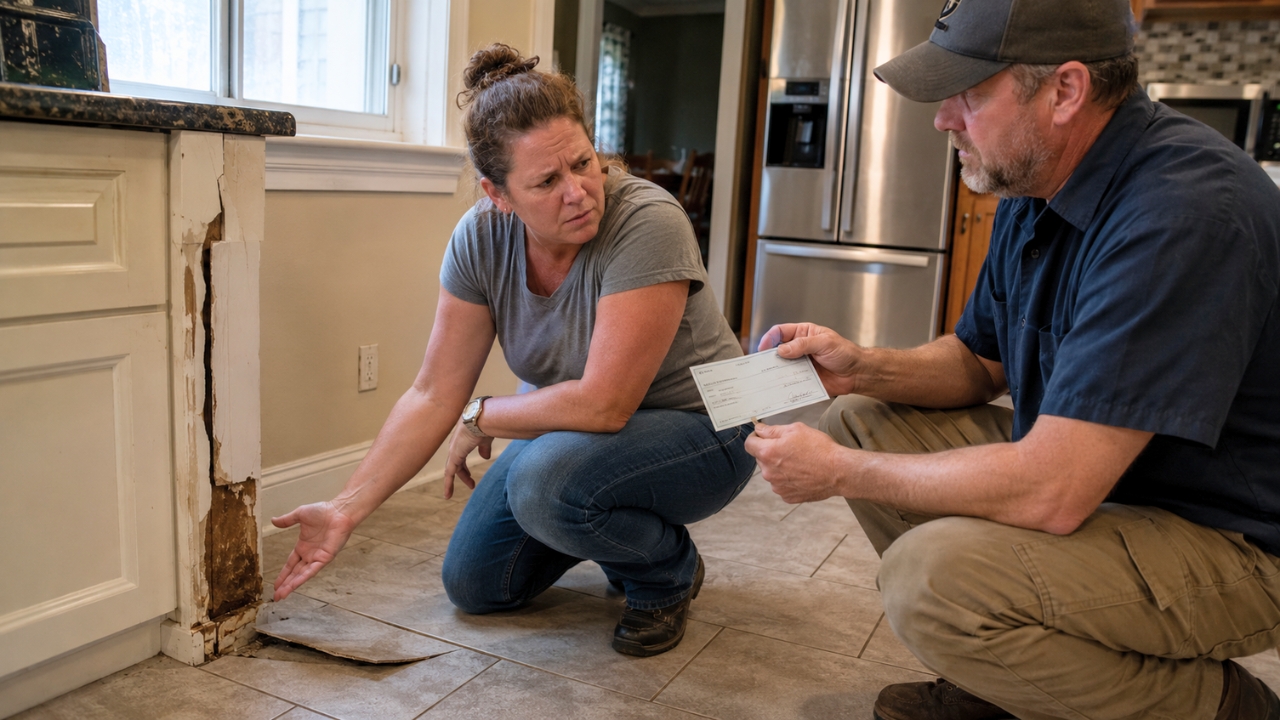
The homeowner reported receiving a settlement offer that felt surprisingly low compared to the actual cost of repairing the damage. Instead of feeling relieved, they felt stuck. Accepting the offer could mean being left responsible for thousands of dollars in additional repair costs. Rejecting it could mean extending an already stressful dispute.
Like many homeowners facing unexpected repairs, they were trying to balance practical concerns with financial reality. Home repairs rarely happen at convenient times, and major corrective work can quickly become expensive. The possibility of paying out of pocket for damage they believed was caused by someone else’s work only added to the frustration.
As details emerged in the discussion, other Reddit users began asking questions about documentation, contracts, inspections, and repair estimates. Several pointed out that disputes involving contractors often come down to evidence. Photos taken before and after the work, written communications, independent repair estimates, and inspection reports can all become important pieces of the puzzle.
Others noted that homeowners sometimes make the mistake of focusing only on the contractor while overlooking the insurance process itself. An insurer may calculate damages differently than a homeowner or a repair company would. That doesn’t necessarily mean the first offer is the final offer.
The homeowner appeared to be weighing their options carefully. While legal action is something many people immediately suggest online, lawsuits are expensive, time-consuming, and unpredictable. For many homeowners, the goal is simply getting the damage repaired without creating an even larger financial headache.
The discussion highlighted how quickly a project can become stressful when workmanship issues surface after completion. What begins as a home improvement project can turn into months of documentation, phone calls, inspections, estimates, and negotiations.
Commenters overwhelmingly encouraged the homeowner not to rush into accepting the first settlement offer. Several users recommended obtaining independent estimates from reputable contractors to establish a clearer picture of the actual repair costs.
Others stressed the importance of reviewing the original contract carefully and preserving every piece of communication related to the project. A number of commenters also suggested consulting with a local attorney before signing any settlement agreement, especially if the proposed payout appeared significantly lower than the documented repair costs.
Many homeowners in the thread shared stories of their own contractor disputes, noting that problems often become much more complicated once insurance adjusters, subcontractors, and repair estimates all enter the conversation. Several users said they learned the hard way that keeping thorough records from the beginning of a project can make a major difference if something goes wrong later.