Homeowner’s Survey Shows the Neighbor Overstepped the Line by Six Feet — Then He Claims He’s Never Heard of the Survey Company, Just Like He Told the Neighbor on His Other Side
Photo credit: AI-generated image created using ChatGPT. Illustrative only.
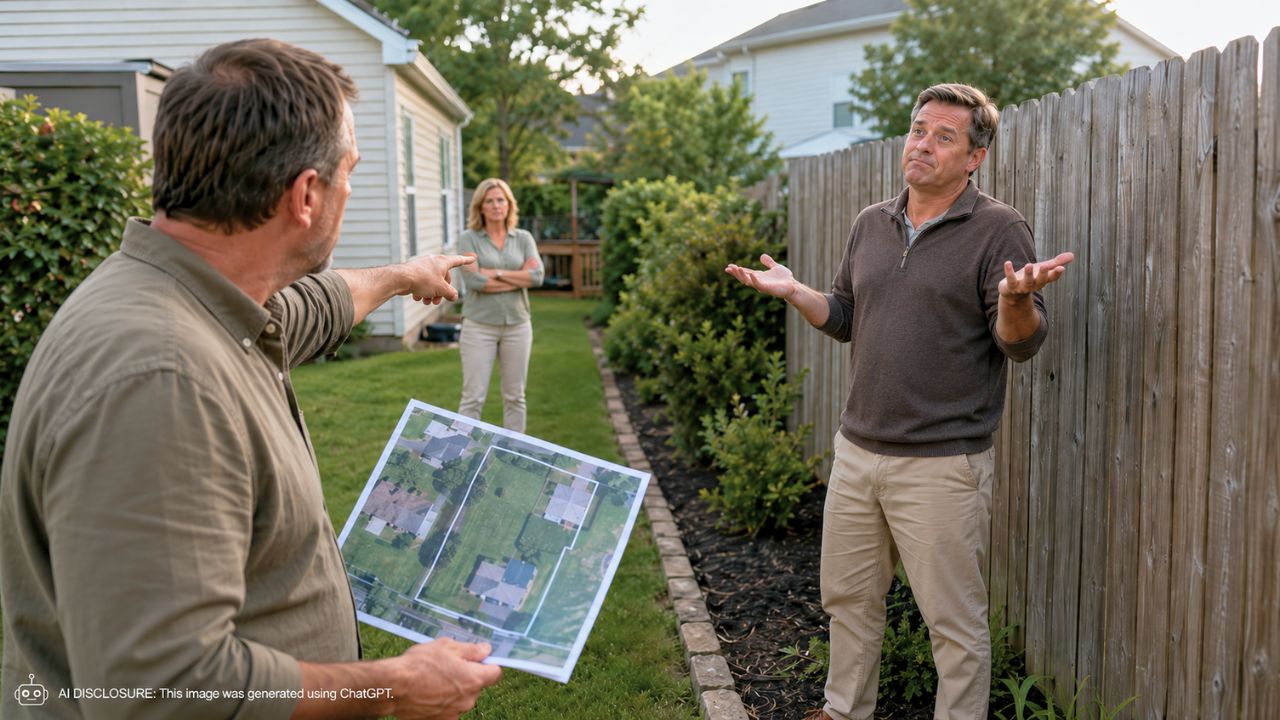
It started the way a lot of property line fights do: someone wanted a fence, paid for a survey, and expected the paper to settle it. Instead, the homeowner learned the neighbor’s landscaping and use of the yard appeared to cross the boundary by about six feet—then got hit with the classic response: the neighbor claimed he’d never even heard of the survey company and suggested the survey must be wrong.
In the original post, the homeowner admitted they didn’t push the issue at the time. They didn’t have the energy or resources for a drawn-out conflict. But a few years later, the same six feet feels a lot bigger when it affects daily life: driveway access, guests stepping out of a car, and landscapers drifting onto the wrong side like it’s no big deal.
The survey settled the line on paper, not in real life
The homeowner said the survey was done for a backyard fence “a few years ago,” and it showed the neighbor overstepped the boundary by roughly six feet. That’s not a couple inches of edging or a shrub planted too close. Six feet is the kind of space that changes how a driveway functions and how a property looks to anyone standing at the curb.
When the homeowner brought it up, the neighbor didn’t argue the measurements in detail. He went after the credibility of the survey itself—claiming he’d never heard of the company and implying they were wrong. The homeowner also noted this wasn’t a one-off personality clash; the neighbor allegedly pulled the same move with the homeowner on the other side.
The first time around, the homeowner chose peace over a fight. They let it slide, at least outwardly, and lived with it.
Six feet became a daily annoyance at the driveway edge
People can be surprisingly patient about property lines until the boundary starts affecting the way they use their home. The homeowner explained exactly why the space matters: the encroachment runs “up to the edge of my driveway.” The neighbor planted landscaping about eight inches from the driveway edge, leaving almost no buffer for normal car-door swing and foot traffic.
That means passengers stepping out of a car can end up stepping into the neighbor’s plants—an awkward little moment that also raises the risk of blame. If a guest crushes something, is it the guest’s fault for stepping “into” landscaping, or the neighbor’s fault for planting right up against a driveway that isn’t theirs?
Then there’s the maintenance spillover. The homeowner described ongoing issues with the neighbor’s landscapers: mowers turning too close, blowing leaves from his side onto theirs, and treating the driveway edge like a shared work zone. Those are the kinds of small actions that add up, especially when you already feel like someone took a chunk of your yard by force of habit.
Now the homeowner wants a fence—and expects a reaction
The homeowner’s next step sounds simple: put up a low fence to establish the boundary and keep landscaping crews off the driveway. But “simple” doesn’t apply when the person next door has already dismissed a survey once.
The homeowner was candid about the dread. They expect the neighbor to “do” something—argue, interfere, escalate. They floated a plan that many homeowners consider in this moment: send the survey drawing first, then get the fence up quickly.
That urgency makes sense. Once a fence is in, the argument shifts from theoretical to practical. But it also risks turning the project into a showdown if the neighbor decides to contest it, block it, or make daily life miserable during construction.
The city said a 3-foot fence is possible, but the logistics get weird fast
An update brought one piece of good news: the homeowner spoke to the city and learned they could propose a three-foot-high fence and get a permit, since the area in question is the front lawn in a suburban setting. That detail matters because front-yard fences often come with stricter rules than backyard fences.
But approval in concept doesn’t mean an easy build. The homeowner said the section they want is about 30 feet long and only three feet high—small enough that some fence contractors may not want the job. In home repair terms, it’s the dreaded “too small to schedule, too important to ignore” project.
They’re now looking for both a fence contractor and a lawyer. That pairing tells you where this is headed: even a low, basic fence can become expensive when it’s tied to a boundary dispute and a neighbor who’s already shown he won’t accept documentation at face value.
Cameras and temporary edging: small moves to stop the bleeding
While lining up the bigger steps, the homeowner didn’t just sit and simmer. They installed a camera pointed at the driveway and added an almost comically low physical barrier: garden edging about six inches high along the driveway.
It’s not a real boundary fix, but it sends a message without starting a direct confrontation. So far, it appears to be working in the narrow way it was intended to work. The homeowner said the landscapers didn’t rip it up, and it seems to be keeping the giant mower from turning onto the driveway edge.
That’s the reality of many neighbor disputes: before you ever get to formal paperwork and permanent structures, you end up doing “defensive homeownership”—small improvements meant to prevent damage and create a record of normal use.
The homeowner also wants their “ducks in a row” before talking to the neighbor again. That’s a telling phrase. It suggests they’ve learned the first conversation didn’t go anywhere, and the next one needs to be backed by permits, documents, and a plan that doesn’t depend on the neighbor suddenly becoming reasonable.
Most reactions leaned toward documentation before confrontation
The homeowner’s questions were practical: how to handle it, whether to send the survey drawing, and whether to move quickly on the fence. The tone also suggested they expect a fight and want to avoid mistakes that could weaken their position.
Even without a long comment thread included in the source material, the homeowner’s own updates show what that advice often looks like in practice: talk to the city first, pull permits, document activity at the driveway, and consider legal guidance early rather than late.
They also noted they don’t believe the neighbor can claim the land, partly because he’s only been there around five years. And they pointed out the city previously approved a survey done four years ago when they fenced in the backyard, showing the disputed space as part of their yard. That’s the kind of detail homeowners cling to in these disputes—anything that shows the boundary has already been recognized in an official process.
For now, the edging is holding, the camera is up, and the homeowner is trying to line up a contractor willing to take a small-but-sensitive fence job. The unresolved part is the human one: the moment the neighbor realizes this isn’t going to be shrugged off anymore.
Like Fix It Homestead’s content? Be sure to follow us.