Homes with heavy debris now facing cleaning bills approaching $500
Photo credit: Georgeclerk/istock.com
When your home is buried under heavy debris, the shock rarely ends when the flames die out or the contractors leave. The next wave hits when you discover that simply clearing and cleaning the mess can push your out-of-pocket costs toward 500 dollars or more, even before real rebuilding begins. Suddenly you are navigating specialized hauling fees, deep-cleaning rates, insurance fine print, and local rules that all treat debris as a separate, billable problem.
By understanding how these charges stack up, you can push back, negotiate smarter, and line up help before the invoices arrive. You cannot always avoid a high cleanup bill, but you can keep it from spiraling far beyond what the damage itself already took from you.
Why debris-heavy homes now face higher cleaning bills
Debris-choked homes cost more to clean because every part of the job has become more specialized and more regulated. Instead of a single flat cleaning fee, you are often paying separately for hauling, sorting, disposal, and then deep-cleaning that tackles dust, ash, and residue in multiple passes. Construction and disaster waste now includes more engineered materials, from composite decking to spray foam, that need careful handling and cannot simply be tossed into a general landfill. That raises disposal costs and pushes your bill toward that 500 dollar mark even for a modest house.
You are also competing with commercial projects for the same cleanup crews, so labor and equipment are priced for busy contractors rather than stressed homeowners. Guidance on construction debris removal shows how volume, accessibility, and hazardous items drive cost, and those same factors hit you when fire, renovation, or storm damage leaves piles of broken drywall, roofing, and insulation across your property. Once you add the separate charge for detailed cleaning of floors, cabinets, and fixtures, your combined debris and cleaning expense can easily sit in the 400 to 500 dollar range or higher, especially if you live in a larger home or a high-cost metro area.
How construction debris removal adds to your total bill
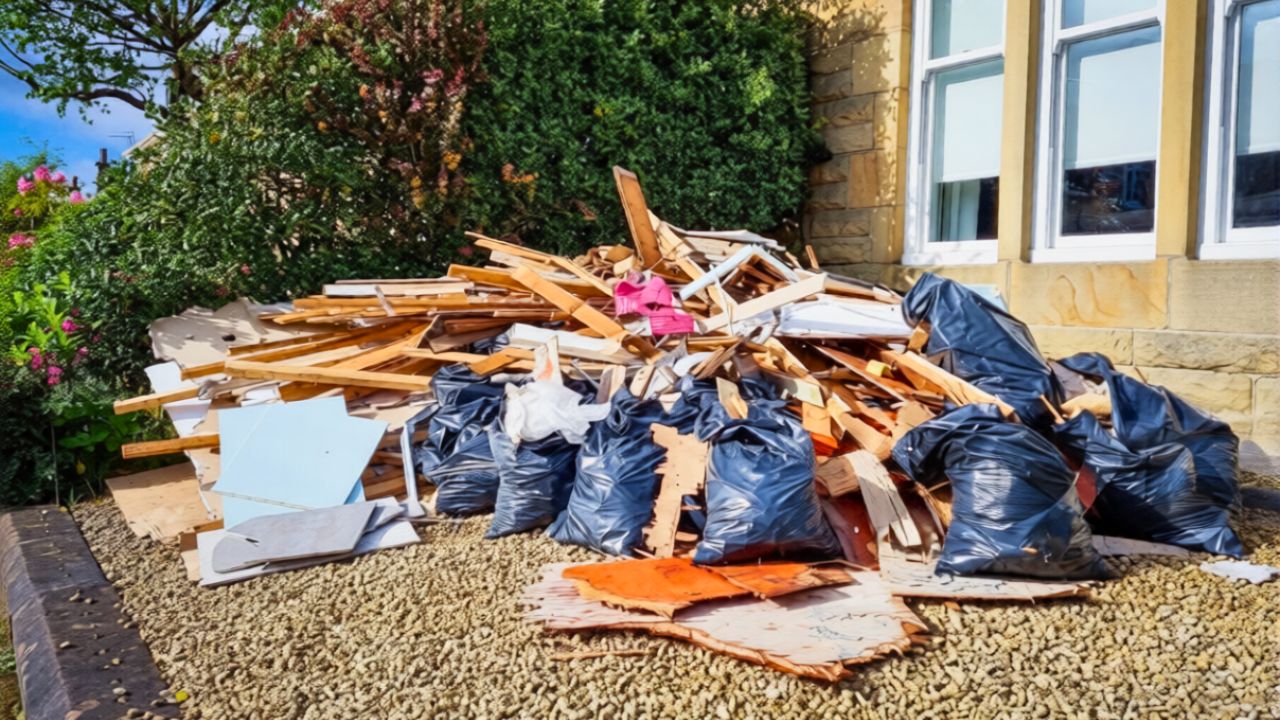
Even if you think you only need a cleaner, the debris itself often sets the floor for what you will pay. Haulers typically price removal by volume, weight, and difficulty, so a garage packed with torn-out drywall, old framing, and roofing shingles can cost far more than a simple junk pickup. When your home has heavy debris from renovation or partial demolition, you are paying not just for transportation but for sorting out recyclables, separating anything that might be hazardous, and covering dumping fees that vary by material type.
Pricing guidance for construction debris removal explains that the volume of waste, the presence of concrete or metal, and the need to handle hazardous waste items all increase what you pay. If crews must carry debris down stairs, across tight side yards, or through a narrow city driveway, access issues add labor time and surcharges. When you stack that hauling invoice next to a separate cleaning contract, the combined figure is where you see totals approaching 500 dollars for what feels like “just” getting your place back to bare walls and floors.
Post-construction cleaning: what the $274 to $707 range really means
Once the debris leaves your driveway, you still have to pay for the detailed cleaning that makes your home livable again. Industry data for How Much Does work shows a Normal Range of $274 to $707 for Construction Cleaning Cost, and you sit near the lower or upper edge of that band depending on how much dust, residue, and detail work your space needs. If your contractor left only light dust and minor smudges, you might land closer to the 274 dollar side of that spread, but if your home has multiple levels, built-ins, and fragile surfaces, your price creeps toward the top.
Because House cleaning after construction has to catch debris the contractor might have missed in vents, cabinets, and window tracks, you are essentially paying for a specialty service, not a standard weekly tidy-up. That is why your final cleaning bill, especially when combined with separate hauling charges, can easily approach 500 dollars even if the visible mess looks manageable. If you do not budget for both the debris removal and the detailed wipe-down, you risk underestimating your recovery costs by hundreds of dollars.
Why larger homes and complex layouts push you past $500
The size and layout of your home quietly drive your cleanup costs, even before anyone starts hauling out debris. A bigger footprint means more floor area to vacuum, mop, and sanitize, more windows to restore, and more bathrooms and kitchens where dust and residue collect in every crevice. Data on average home size show that many newer houses now stretch well beyond compact bungalow dimensions, so your cleaning team has to cover more square footage in the same visit, and they price accordingly.
Guidance on house cleaning prices explains that a large home with multiple bathrooms can easily reach the higher end of the range, especially when cleaners must work around specialty surfaces like tile, glass, or metal. When you layer heavy debris on top of that, crews spend extra time protecting finishes, moving around bulky piles, and accessing tight corners behind stacks of broken materials. That combination of square footage, complex finishes, and obstructions is how a job that starts with a modest estimate can climb past 500 dollars once the final walk-through is complete.
What wildfire and disaster zones reveal about debris costs
If you live in a fire-prone region, the experience of recent disasters offers a preview of how expensive cleanup can get. In Key Takeaways on Rebuilding in Fire, you see that the 2024 to 2026 wildfires in Los Angeles County destroyed thousands of structures, and every one of those properties needed debris removal before reconstruction. When entire neighborhoods are affected, demand for haulers, heavy equipment, and specialized cleaners spikes at the same time, which pushes up rates for everyone, including you.
Images and updates shared through Rebuilding and Fire Damaged Los channels show streets lined with ash, twisted metal, and collapsed framing that all must be cleared before any interior cleaning starts. In that environment, even a relatively light debris load at your home can come with premium pricing, because contractors are juggling multiple disaster jobs and complying with wildland urban interface (WUI) requirements before construction begins. Your personal bill may list only a few line items, but behind those numbers sit regional labor shortages, stricter codes, and intense demand that all keep your cleanup total hovering around or above 500 dollars.
How insurance and government programs can offset debris removal
When you first see a debris removal estimate, you might assume your policy will automatically pick up the tab, but the reality is more complicated. Local recovery guidance on Insurance and Debris in Los Angeles explains that whether you are insured, uninsured, or underinsured, you may still have access to public programs such as the USACE Phase 2 debris removal effort. Those programs can cover the heaviest and most hazardous cleanup, which reduces the volume you personally pay to haul and dispose of.
Your insurer may still expect you to use any debris removal coverage in your policy before public funds step in, and you might be responsible for cleaning inside the home once structural debris is gone. The County guidance encourages you to coordinate with your carrier so you do not accidentally sign away reimbursement rights or duplicate services. If you understand where public debris programs stop and private cleaning begins, you can time your hiring decisions so that your own bill covers only what is truly outside the scope of insurance and government support, which can be the difference between a manageable 500 dollar invoice and a far larger out-of-pocket hit.
New rules like the Construction Containment and Pollution Prevention Act
Regulation is another quiet driver of your cleanup bill, especially in states that are tightening control over construction dust and debris. In New Jersey, the proposed Construction Containment and would require contractors to take specific steps to prevent debris and pollutants from spreading beyond the work area. That kind of rule changes how crews set up your job, from installing barriers to using specialized vacuums, and those extra measures often show up in your estimate as higher labor and equipment charges.
The legislative text references a Poll of practices and local ordinances that already restrict how debris can be stored and transported, and similar standards appear in environmental and building codes in other states. When your contractor complies with these rules, they may generate less mess in the first place, which helps you, but they also incur higher operating costs that get baked into both the construction and cleanup pricing. You may not see a line on your invoice labeled “containment,” yet the total you pay, often near that 500 dollar mark for heavy debris jobs, reflects a regulatory environment that treats dust and waste as a public health issue, not just a private inconvenience.
Estate cleanouts and older homes with layered debris
If you are dealing with a property after a death or major life change, the debris problem often goes beyond fresh construction waste. Guidance on Estate cleanout costs in New Jersey describes whole truckloads of junk, tight hallways, and multiple floors that all complicate removal. When you combine decades of stored belongings with recent damage or renovation debris, your crews must sort, carry, and dispose of a wide mix of materials, from furniture and appliances to broken plaster and flooring, which pushes both labor hours and dumping fees higher.
Older homes also tend to have quirks that increase cleaning time, such as original wood trim, built-in cabinetry, and uneven floors that trap dust and small fragments. If access involves stairs or narrow doors, workers move more slowly and may need smaller equipment, which again raises cost. By the time you add a full interior cleaning to an estate-level debris haul, your total can easily land in the 500 dollar range or above, especially if you are working against a deadline to prepare the property for sale or transfer.
How to control costs while still getting a thorough cleanup
You cannot control every factor that drives debris and cleaning costs, but you can take practical steps to keep your bill from ballooning. Start by separating what you can safely handle yourself from what truly requires a professional. Bagging light trash, consolidating small debris into one accessible area, and moving vehicles out of the way can reduce labor time for the crew you hire. When you request quotes, ask providers to break out hauling, disposal, and cleaning so you can see exactly where your money is going and compare like for like.
Use pricing benchmarks from Discovered House Cleaning Prices and Averages on How Much to Charge so you recognize when a quote is out of line for your home size and debris level. If you live in a disaster-affected area, contact local recovery offices or check state portals such as Discovered to see whether public debris programs, grants, or low-interest loans can offset part of your cost. With that information in hand, you can negotiate scope, schedule work in phases, and prioritize the most health-critical cleanup first, which helps you keep essential services within your budget even when heavy debris initially makes a 500 dollar bill seem unavoidable.
Like Fix It Homestead’s content? Be sure to follow us.
Here’s more from us:
- I made Joanna Gaines’s Friendsgiving casserole and here is what I would keep
- Pump Shotguns That Jam the Moment You Actually Need Them
- The First 5 Things Guests Notice About Your Living Room at Christmas
- What Caliber Works Best for Groundhogs, Armadillos, and Other Digging Pests?
- Rifles worth keeping by the back door on any rural property
*This article was developed with AI-powered tools and has been carefully reviewed by our editors.