How to Tell if Firewood Is Seasoned: 7 Tests You Can Do Right Now
Photo credit: Zohar Gal/Shutterstock.com
Fix It Homestead is reader-supported. If you buy through links in this article, we may earn a small commission at no extra cost to you. As an Amazon Associate we earn from qualifying purchases.
The fastest way to tell if firewood is seasoned is to split a piece and read the fresh inside face with a moisture meter: under 20 percent and it burns tonight. No meter? Knock two pieces together. A sharp ring means dry, a dull thud means the water is still in there.
Seven tests, in rough order of reliability.
1. The Moisture Meter Test
The only test that gives you a number, and the one almost every article online gets wrong.
Do not test the weathered outside of a round. The outer half inch dries first and hardest, so it reads beautifully while the core is soaked.
Split a piece off the stack and push the pins into the freshly exposed inner face, near the middle, driven across the grain rather than in line with it. UNH Cooperative Extension calls the meter the “best and most reliable” method and says to test the freshly split face on several pieces from around the pile. Test at room temperature; cold wood reads low and frozen wood reads uselessly low.
| Reading on the fresh face | What it means |
|---|---|
| Under 15% | Very dry; burns hot and fast |
| 15–20% | Seasoned. The target |
| 20–25% | Marginal; you are losing heat |
| Over 25% | Not ready. Hissing, smoke, creosote |
| Over 30% | Still green. Do not burn it |
EPA’s Burn Wise guidance is blunt: “Properly dried wood should have a reading of 20% or less.”
The General Tools MMD4E is the one in half the woodsheds in the country and the cheapest useful tool you can own for a woodstove: Woodcraft lists it at 5 to 50 percent wood moisture, 0.3 inch pins, 9V battery.
See the pin type wood moisture meter for firewood on Amazon
2. The Sound Test
Pick up two splits and bang them together hard. Seasoned wood rings: sharp, hollow, almost musical. Green wood thuds, and you feel it in your hands as much as you hear it, because the wet piece absorbs the impact. Arkansas Cooperative Extension puts it the same way: a sharp crack means reasonably dry, a dull thud means moisture is still high.
It will not tell you 18 percent from 24. It will absolutely tell you 18 from 45.
3. Checks and Cracks in the End Grain
Look at the cut ends. Seasoned wood develops checks, splits running from the center out toward the bark like spokes on a wheel.
Now the honest limit. End grain is the fastest-drying surface on a split, so checks open within a couple of months while the middle is still wet enough to put out a fire. A heavily checked piece of oak can read 30 percent on a fresh face. The Chimney Sweep calls radial cracks the least reliable test on their list, partly for that and partly because once cracks open they never close, even after rain.
4. The Weight Test
UNH Cooperative Extension puts freshly cut wood between 50 and more than 100 percent moisture content. At the top of that range, half of what you are lifting is water, and you feel it by the third armload. Seasoned wood of the same species and size feels obviously lighter.
It only works comparatively: green poplar weighs less than bone-dry hickory the same size. Split a green round today and keep a half as your reference weight.
Read next: Best Log Splitter For Homeowners
5. Bark Looseness and Color
On seasoned wood the bark often loosens and falls off, and the split face fades from creamy or pink to gray.
This is the weakest signal here, and wildly species-dependent. Hickory and black locust hold bark like it is glued on, long past dry. Ash and cherry shed early. Elm barely changes. Bark also falls off dead standing timber that never seasoned, because it rotted rather than dried. A tiebreaker, never evidence.
6. The Dish Soap Test
Clever, nearly unknown, free.
Mix dish soap with an equal amount of water. Paint it across one cut end of a split, put your lips to the other end, and blow hard. Bubbles rising out of the film mean the wood is dry. Blow until your ears pop with nothing happening and it is still wet.
The Chimney Sweep, which describes this test, explains why: moisture swells the fibers and plugs the capillaries, and drying opens those passages so air can travel the piece. Use a split eight to twelve inches long; bark seals the sides of a round.
7. How It Behaves in the Fire
Wet wood announces itself. It hisses and sizzles, water bubbles out of the end grain, steam puffs from the cut ends. The fire is lazy: yellow smoky flames instead of clean bright ones, a piece that will not catch unless it sits in coals, a stove that sulks when you load it. Your glass sooties black in an evening instead of staying clear for weeks.
Why This Matters More Than You Think
Two problems, one cause. First, you are paying for heat you never get. Water has to boil off before the wood can burn, and that energy comes out of your firebox instead of your house. Penn State Extension: “much of the energy in wet fuel is used to heat and vaporize the water.”
Second, the one that matters: creosote. When unseasoned wood burns, the Chimney Safety Institute of America explains, energy goes first into driving off the trapped water, which “keeps the resulting smoke cooler.” Cool smoke condenses on a cool flue and leaves creosote behind, and CSIA notes that “All forms are highly combustible.” Then: “Dirty chimneys can cause chimney fires, which damage structures, destroy homes and injure or kill people.”
Said once and straight: burn dry wood, and get the chimney inspected and swept every year by a qualified sweep. CSIA says “The best way to prevent a chimney fire is to have an annual inspection performed by a CSIA-Certified Chimney Sweep,” and cites NFPA Standard 211: “Chimneys, fireplaces, and vents shall be inspected at least once a year.”
How Long Different Species Take to Season
EPA’s baseline: at least six months for softwood, twelve for hardwood, split to six inches or smaller. Penn State Extension says most firewood takes six to twelve months and some species need longer. Chimney professionals add the figure every wood burner learns the hard way: oak wants two years.
| Species | Time to burnable dryness | Notes |
|---|---|---|
| Poplar, aspen, basswood | 6–9 months | Light and porous; burn fast too |
| White and green ash | 6–12 months | Likeliest to be ready in one season |
| Pine, spruce, fir, cedar | 6–12 months | EPA’s softwood minimum |
| Soft maple, cherry, birch | 9–15 months | Birch bark holds moisture in |
| Sugar maple, beech, walnut | 12–18 months | Needs a full year plus |
| Red oak, white oak, hickory, elm | 18–24 months | Red oak is 60–80% moisture when cut |
No extension service publishes a species-by-species chart, because weather, piece size and stacking matter more than species does. The table sorts those ranges by density. Plan the woodshed with it; decide what burns tonight with the meter.
Oak split in April is not ready in November, and not the next November either. Lay in oak two years ahead and burn ash in between.
What to Do Tonight If the Wood Isn’t Ready
There is no fast fix. Anyone who tells you otherwise is selling something.
Bring wood inside days ahead, not hours. A rack by the stove in a dry, heated room pulls real moisture out of splits over three to five days. One night does almost nothing.
Split it smaller. Water exits through split faces, so halving a piece roughly doubles the escape route. Take marginal splits to wrist thickness.
Burn it hot, on coals, air open. Marginal wood needs air to drive the water off fast enough to keep combustion going. CSIA lists closing the air too soon and overloading the stove as creosote builders.
Mix in compressed hardwood fuel bricks. Densified sawdust bricks are kiln-dried to single-digit moisture and hold a hot fire while marginal splits dry on the coals. Buy bricks labeled for wood stoves: wax-based firelogs are made for open fireplaces and belong in a stove only if the package says so.
Buy a small quantity of kiln-dried. Bagged kiln-dried wood is the premium way to buy heat and the right call for a cold week. Bundles, not a cord.
Then fix next year’s wood. Our walk-through on how to season firewood fast covers getting a pile from green to burnable in one season: doable with ash, nearly impossible with oak.
How to Store It So This Doesn’t Happen Again
Off the ground. Wood on dirt wicks moisture up all season. MSU Extension recommends a rack that gets wood off the ground and lets air circulate. Pallets work; a bracket kit and six 2x4s takes twenty minutes.
See the adjustable firewood log rack brackets for 2×4 on Amazon
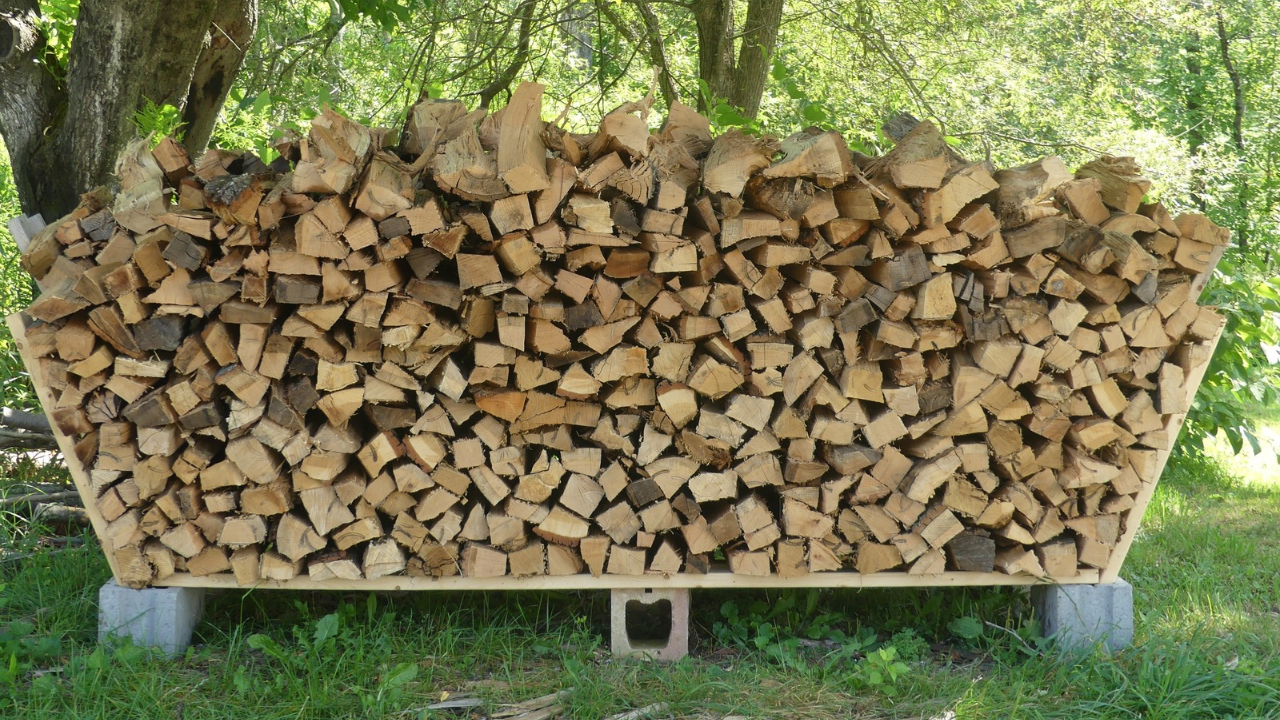
Cover the top only. The rule people get wrong most often. A tarp wrapped around a woodpile is a greenhouse: it traps the moisture coming out of the wood. MSU Extension is explicit about covering the top only, so rain stays off while air moves through. A half-length cover does that.
See the half length firewood rack cover 8 ft on Amazon
Sides open. Moving air carries the water away, so leave the faces bare.
Single row. One split deep. A four-foot-deep pile dries the outside and ferments the middle.
Sun and wind. An open, sunny spot with airflow on all sides is best, per MSU Extension. Pick the windiest corner of the yard.
Frequently Asked Questions
Can you burn firewood that is not fully seasoned?
You can get it to burn, but do not make a habit of it. Wood over 25 percent moisture gives less heat, more smoke and faster creosote buildup, which causes chimney fires. Burn it small and hot on coals, and get the chimney swept.
How long does firewood take to season?
EPA guidance is at least six months for softwood and twelve for hardwood, split small. Penn State Extension says six to twelve months for most firewood. Oak and hickory want closer to two years.
Does firewood season faster split or in rounds?
Split, by a wide margin. Bark holds water in, so a round dries mainly through its two cut ends. If a pile sat a year as rounds and reads wet, split it.
What moisture reading should firewood be?
Under 20 percent, measured on a freshly split inner face. EPA’s guidance is “20% or less.” Between 20 and 25 percent burns in a hot stove but costs you heat. Above 30 percent it is green.
Can firewood get too dry?
Not really. Very dry wood burns hotter and faster, so you reload more often, but the heat is all there and the flue stays cleaner. The real risk with an old pile is rot.
Go Split One Piece
Before you load the stove tonight: take one split off the pile, put a maul through it, and look at the fresh face. Read it with a meter if you have one, knock the halves together if you do not.
Thirty seconds tells you more than an evening of hoping. If the answer is no, you still have options tonight. Just start next year’s pile this week.