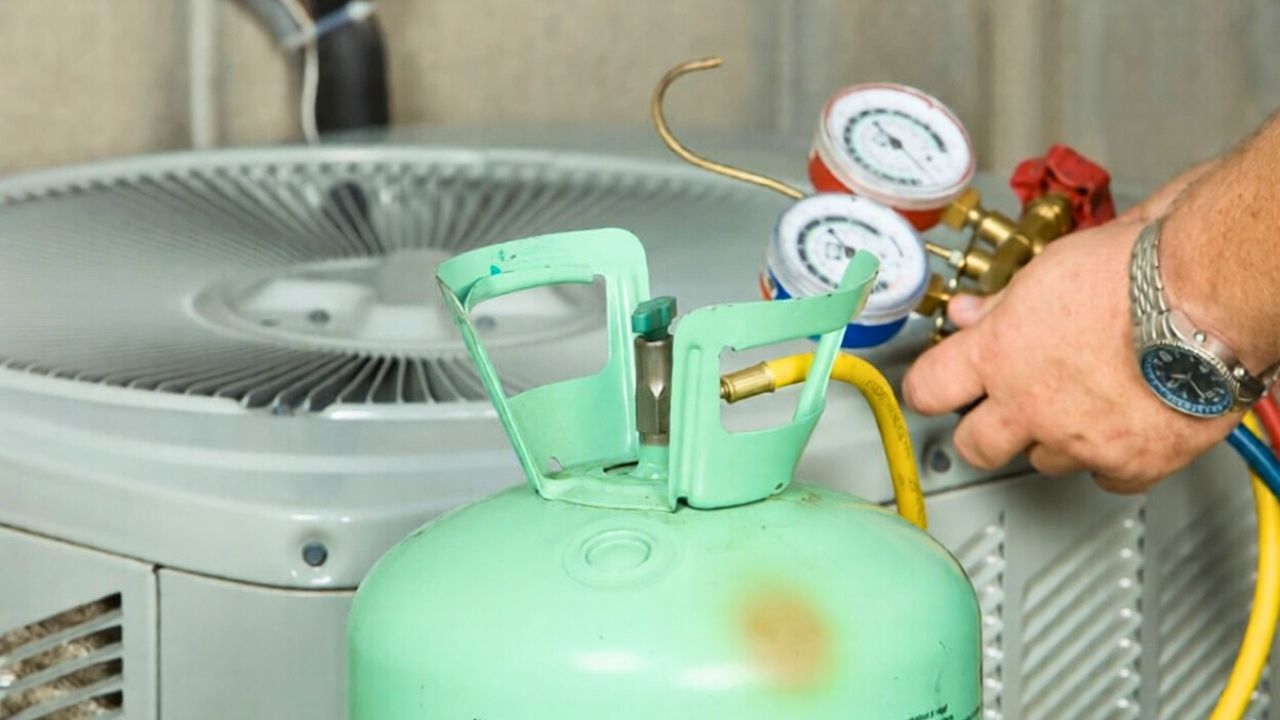
HVAC refrigerant rules changed in 2025 and homeowners are still getting bad advice from installers
Federal rules that took effect in 2025 quietly rewired how new home air conditioners and heat pumps are built, yet many homeowners are still being told half-truths or outright myths at the kitchen table. You are hearing that your existing system is “illegal,” that every unit must be ripped out immediately, or that the new refrigerants are a fire hazard waiting to happen. The reality is more nuanced, and if you understand the actual regulations and technology, you can push back on bad advice and make smarter decisions about when and how to replace your equipment.
What actually changed in 2025
The core shift is that new central air conditioners and heat pumps now have to use refrigerants with a much lower climate impact than the long‑standard R‑410A. Under NEW EPA REFRIGERANT REGULATIONS 2025, manufacturers are moving to a class of “A2L” refrigerants that have a lower global warming potential and require updated safety and installation practices. Industry guidance explains that this transition is part of broader efforts to cut greenhouse gas emissions from the HVAC sector and will influence the cost of new HVAC units as factories retool and supply chains adjust.
Several manufacturers and contractors describe the moment as a significant transition for The HVAC industry rather than a sudden ban on cooling. One overview of What You Should Know About the 2025 air conditioning regulations and systems notes that the rules apply to how new equipment is built and sold, not to whether you can keep running your current system. The HVAC refrigerant changes are therefore best understood as a manufacturing and design pivot that will gradually filter into neighborhoods as old systems age out, not as a government order to shut off existing air conditioners.
Why R‑410A is being phased down, not ripped out
R‑410A has been the workhorse refrigerant in residential cooling for years, but it carries a relatively high global warming potential compared with the new A2L options. Under The New Regulations described in one contractor briefing, R‑410A systems are being phased out in favor of refrigerants that deliver the same comfort with a smaller climate footprint, and that shift is driven by federal policy as well as international climate commitments. The same source explains that the policy is not about punishing homeowners, it is about steering the market toward refrigerants that trap less heat in the atmosphere over time.
That distinction matters when an installer tells you that your R‑410A system is “banned.” A detailed homeowner guide notes that Starting January 1, 2025, the requirement is that all new residential air conditioners and heat pumps use A2L refrigerants, while older refrigerants, including those in your existing system, are being phased out over time rather than outlawed overnight. That means you can still operate and service an R‑410A unit, and the phase‑down is designed to be gradual so homeowners are not forced into emergency replacements solely because of the refrigerant type.
The new A2L refrigerants: R‑32, R‑454B and their climate math
Most of the new systems you see marketed as “2025 compliant” are built around two A2L refrigerants, R‑32 and R‑454B, which are engineered to cut climate impact without sacrificing performance. One technical overview describes the 2025 Refrigerant Outlook and notes that R‑32 represents the current standard in many markets, offering Higher energy efficiency and lower GWP compared to R‑410A. That same analysis points out that R‑454B is expected to grow in popularity and take its place in a large share of new residential systems, giving manufacturers two main pathways to comply with the new rules.
Climate math is at the heart of this shift. Another breakdown of The New Refrigerants explains that R‑32 is Already used in many countries and has a GWP of around 675, which is significantly lower than R‑410A and results in a much smaller environmental footprint. When you hear an installer dismiss the new refrigerants as a marketing gimmick, it is worth remembering that the entire transition is anchored in these specific GWP numbers and in the regulatory requirement to move toward refrigerants with a GWP of 700 or less by 2025.
How the law treats your existing system
The most common piece of bad advice homeowners report is the claim that every existing air conditioner must be replaced immediately to comply with the 2025 rules. That is not what the regulations say. A detailed FAQ on New EPA Refrigerant Regulations 2025 explains that the rules are aimed at new equipment and that the industry is using the transition to design and innovate better AC systems, not to criminalize older ones. The same guidance stresses that the Environmental Protection Agency is focused on reducing emissions from new production rather than forcing mass early retirement of working systems.
Another plain‑language explanation answers the question directly: Will existing HVAC and refrigeration systems need to be replaced in 2025, and the answer is no. The 2025 EPA rules apply only to newly manufactured equipment, and refrigerants that are being phased down can still be used to service existing systems. A separate timeline on 2025 and Beyond While R‑410A will no longer be used in new systems, it will remain available for maintaining older systems, which is critical for keeping legacy equipment running safely and affordably.
Safety myths around A2L refrigerants
Because A2L refrigerants are classified as “mildly flammable,” some installers have leaned on fear to steer homeowners away from compliant equipment or to justify inflated prices. You may hear that these refrigerants are likely to cause a fire or that they are too dangerous for homes with children. A manufacturer’s safety briefing on A2L Myths and Facts tackles this head‑on, listing Myth 1 as “A2L refrigerants are likely to cause a fire” and explaining that, Despite their mildly flammable classification, A2L refrigerants are difficult to ignite and, even when lit, the flame spreads slowly. That is a very different picture from the horror stories some sales pitches rely on.
Contractors who have dug into the standards also stress that the new systems are designed with additional safety features to minimize any risks. One regional explainer on Understanding the EPA Refrigerant Regulations notes that The Environmental Protection Agency worked with manufacturers to ensure that equipment using A2L refrigerants includes sensors, controls, and installation rules that keep concentrations far below flammable levels in normal operation. Another contractor, in a post titled Dec Debunking 3 Myths About The 2025 HVAC Refrigerant Change, even notes that “We’ve even heard some” claims that A2Ls are more dangerous than older refrigerants, and then walks through why properly installed A2L systems actually present no greater risk than previous refrigerants.
What the rules really say about new equipment
If you are shopping for a replacement system now, the 2025 rules absolutely matter, but not in the way some high‑pressure sales tactics suggest. A detailed homeowner guide on Starting January 1, 2025, explains that all new residential air conditioners and heat pumps must utilize A2L refrigerants with a lower global warming potential (GWP), and that older refrigerants with higher GWP are being phased out of new production. That means any brand‑new system you buy from a reputable dealer should already be built around R‑32, R‑454B, or another compliant refrigerant, and you should not be charged a premium simply for “special” compliant equipment.
Manufacturers have been preparing for this for years. One consumer‑facing overview from Lennox notes that The 2025 refrigerant transition refers to a requirement that HVAC manufacturers use refrigerants with a GWP of 700 or less by 2025, and that Everything You Need to Know About the New Refrigerant Transition includes the fact that Lennox is transitioning to low‑GWP refrigerants across its product lines. Another guide on Jan Understanding the Transition to New Refrigerants explains that Starting in 2025, HVAC manufacturers must use refrigerants with a Glo (global warming potential) below the new thresholds and that many ductless systems are already using R‑32 for ductless systems, so the technology is not experimental.
How pricing and upsells are being framed
Any major regulatory change creates room for confusion on pricing, and the 2025 refrigerant rules are no exception. Some installers are telling homeowners that prices will skyrocket indefinitely or that they must lock in a system today before “the next wave of regulations” hits. A more measured breakdown of What Are the New EPA Refrigerant Regulations in 2025 notes that there will be cost pressures as higher‑GWP refrigerants are phased out and as manufacturers retool, but it also explains that the market will adjust and that homeowners should expect a mix of short‑term price bumps and longer‑term efficiency gains. That is a far cry from the doomsday pricing some sales pitches describe.
Another homeowner‑focused explainer on 2025 HVAC Refrigerant Regulations: What Homeowners Need to Know About the Shift from R‑410A to A2L Refrigerants points out that while the new systems may carry higher upfront costs, they are designed to reduce operating costs over time through better efficiency and lower refrigerant leakage. Another contractor, in a guide on Nov Will You Be Affected by the 2025 refrigerant changes, notes that the 2025 refrigerant changes will most likely impact homeowners who are already considering replacement or who have failing systems, and that the key is to choose equipment that complies with the latest regulations rather than rushing into a purchase based on fear of future price spikes.
How to separate solid guidance from scare tactics
With so much noise around the 2025 transition, you need a simple way to tell whether an installer is giving you grounded advice or leaning on scare tactics. One practical approach is to ask specific questions about the refrigerant, the regulatory requirement, and your options. A homeowner guide on Sep Refrigerant Transition explains What Homeowners Need to Know and How to Prepare, noting that as concerns over climate change grow, low‑GWP refrigerants are considered far more environmentally friendly and that you should expect contractors to be able to explain which refrigerant they are proposing and why. If a salesperson cannot clearly state whether a system uses R‑32, R‑454B, or another A2L, that is a red flag.
Another checklist on Oct What Are the 2025 EPA Refrigerant Changes suggests asking how the changes will affect you specifically, given your home, your existing system, and your budget. A separate overview titled Aug Furr Plumbing, Heating, Air Conditioning & Electrical shares What Homeowners Need To Know and emphasizes that the goal is to protect the environment for future generations, not to force unnecessary replacements. When an installer’s story lines up with these themes, you are more likely hearing sound guidance rather than a sales script.
Smart timing: when to repair, when to replace
The 2025 rules do change the calculus on whether to repair or replace, but not in the simplistic way some pitches suggest. A practical guide on Timeline for Change Starting January 1, 2025, notes that the manufacturing of systems using R‑410 will cease, However, installation of existing inventory can continue for a period as the market adjusts to the new requirements. That means you may still see R‑410A systems offered at a discount as distributors clear stock, and in some cases, that can be a reasonable short‑term choice if the price is right and you understand that the refrigerant is on a phase‑down path.
At the same time, the long‑term direction is clear. A homeowner‑focused explainer on Aug What to Know About New EPA Refrigerant Regulations in 2025 notes that Major changes are coming to the HVAC industry in 2025 and that the New EPA Refrigerant Regulations 2025 are pushing manufacturers to design and innovate better AC systems that use less energy and lower‑GWP refrigerants. Another homeowner guide titled What to Know About the 2025 HVAC Refrigerant Change explains that in 2020, the American Innovation and Manufacturing Act set the stage for this transition and that by 2025, higher‑GWP refrigerants can no longer be used in new equipment. If your system is already near the end of its life, it often makes more sense to lean into that future and choose a compliant A2L system rather than investing heavily in repairs on an aging R‑410A unit.
How to advocate for yourself with installers
Once you understand the basic contours of the 2025 refrigerant rules, you are in a much stronger position to push back on bad advice. Start by asking every contractor to specify the refrigerant, the efficiency rating, and how the system complies with the New EPA Refrigerant Regulations 2025, then compare those answers across at least two or three bids. A homeowner‑oriented explainer on Sep Major EPA Refrigerant Changes Take Effect in 2025 notes that the heating and cooling industry is undergoing a significant transition and that homeowners should expect contractors to be able to explain how their proposals fit into that landscape. If someone leans on vague warnings about “illegal” systems without tying them to specific refrigerant rules, that is a sign to keep shopping.
It also helps to remember that you are not alone in navigating this. A homeowner guide titled What Homeowners Need to Know and How to Prepare stresses that as concerns over climate change grow, low‑GWP refrigerants are considered far more environmentally friendly, and that informed homeowners can drive demand for better, more efficient systems. A separate homeowner’s guide from Lennox on Know About the New Refrigerant Transition reinforces that Lennox and other major brands are already aligned with the new GWP thresholds, so you can confidently ask for equipment that meets or exceeds those standards. When you combine that knowledge with clear questions and multiple quotes, you are far less likely to be swayed by outdated talking points or self‑serving myths.
Like Fix It Homestead’s content? Be sure to follow us.
Here’s more from us:
- I made Joanna Gaines’s Friendsgiving casserole and here is what I would keep
- Pump Shotguns That Jam the Moment You Actually Need Them
- The First 5 Things Guests Notice About Your Living Room at Christmas
- What Caliber Works Best for Groundhogs, Armadillos, and Other Digging Pests?
- Rifles worth keeping by the back door on any rural property
*This article was developed with AI-powered tools and has been carefully reviewed by our editors.