Landowner Finds His Property Has Frontage but No Driveway Access — Then a Town Map Shows a Road Running From a Cul-de-Sac to His Line
Photo credit: AI-generated image created using ChatGPT. Illustrative only
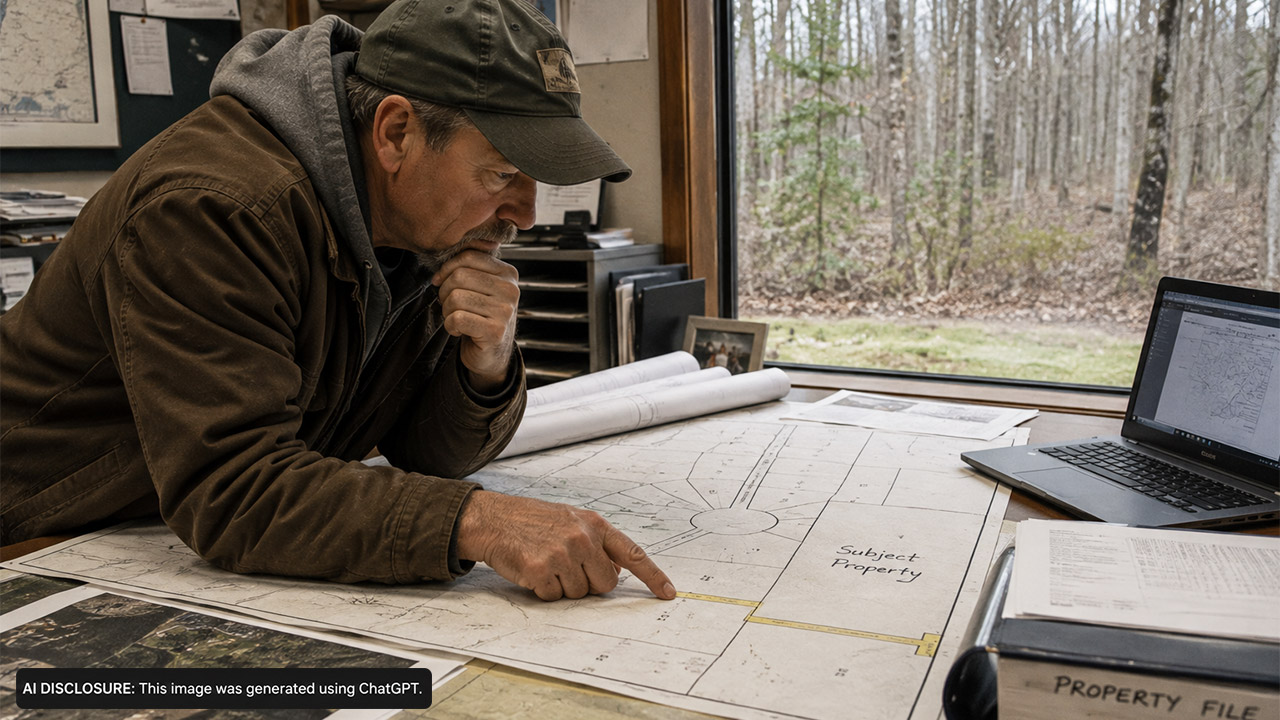
You know that sinking feeling when you realize your land technically touches the road… but you can’t actually get a vehicle onto it? That’s where Exeter, Rhode Island landowner Asa Davis found himself when he started planning access for a solar project on his property. On paper, it looked solvable: a town map showed what appeared to be an extension of a neighborhood street running out from a cul-de-sac toward his line.
The problem was that “road” wasn’t a road in real life. It was woodland—an undeveloped strip the Town treated as a “paper street,” a street drawn on recorded plans that had never been opened or used. And once Davis tried to turn that paper into gravel, it escalated into a multi-lawsuit fight that the Rhode Island Supreme Court ultimately shut down, as laid out in the court record.
The map said “street,” but the woods said “not happening”
Davis’s land had frontage on Ten Rod Road, but not a usable driveway connection. If you’ve ever dealt with a tricky lot—wetlands, steep grades, sightline rules, stone walls, or just the way an older road sits above the shoulder—you know how frontage can be a technical comfort and a practical headache.
What caught Davis’s attention was Estate Drive, a neighborhood street ending in a cul-de-sac. On a town map, it looked like Estate Drive continued beyond what residents would recognize as the end—running toward Davis’s property line. On the ground, though, there wasn’t pavement, gravel, or even an old rutted lane. The Supreme Court later emphasized the strip had not been used, maintained, or improved as a road before Davis acted.
That gap between what’s drawn and what’s drivable is where homeowners get into trouble. People see a line on a plan and assume access is a given. Towns often see it differently: until it’s formally opened and built out, it’s not a road you can just start using.
Gravel hit the ground, and the town hit back
Davis wanted to use the strip to access the proposed DuTemple Solar project. Before he had permission squared away, he cleared part of the wooded area and put down gravel—basically doing what a lot of rural property owners do when they’re trying to make land usable.
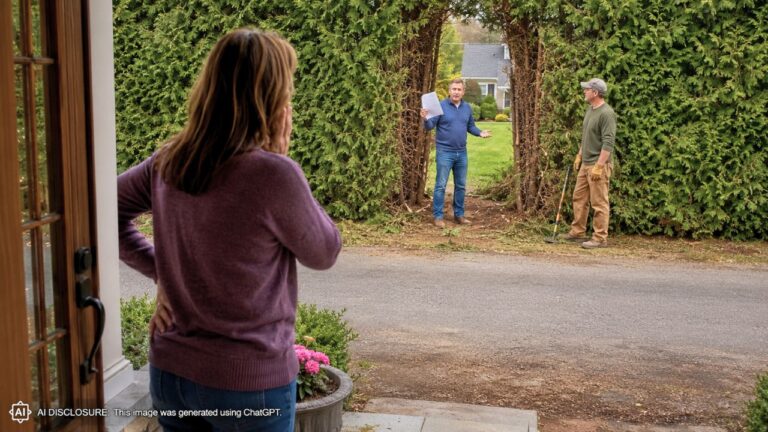
The Town’s response was immediate and physical: concrete barriers went up across the cleared area. When Davis began trying to remove the barriers, a town official sent a cease-and-desist letter. This wasn’t a neighborly “hey, can we talk” moment. It was the kind of escalation that signals the municipality believes you’re working on public land or violating permitting rules.
At the same time, the practical consequences tightened. The Town ultimately denied the solar-farm plan in part because Davis hadn’t established proper legal access. In other words: no recognized way in, no project.
The first lawsuit tried to turn a “paper street” into a public road
Davis’s first big legal push was the Road Access case. The goal was straightforward: get the disputed strip treated as a public road, and stop the Town from blocking him from using it.
He lost. In 2022, the Rhode Island Supreme Court held the strip had never functioned as a roadway before Davis’s 2018 clearing. The Court treated it as an undeveloped paper street—something the Town might open someday or abandon, but not something Davis could convert into an access road by starting work on it.
The Court also noted a point that hits home for anyone who’s ever “just started” on a driveway or cut a path thinking permits can come later: Davis hadn’t gone through the proper permitting process before excavating. That detail mattered. Once you’re in the realm of mapped streets, subdivisions, and municipal control, doing the work first can become the whole story.
Then the strategy shifted: “If it’s not public, maybe it’s mine”
A lot of property fights end after the first loss. This one didn’t. Davis had already filed another lawsuit alleging constitutional violations and misconduct by the Town. And after losing the road-access case, he filed yet another lawsuit in 2023 with a different angle.
If the strip wasn’t a public road, he argued, then maybe he had gained rights to it through adverse possession or related doctrines. The new case asserted adverse possession, quiet title, prescriptive easement, boundary by acquiescence, and map-reformation claims.
That’s the homeowner move you sometimes see when access is everything: “Fine, if you won’t call it a road, then recognize my ownership or my right-of-way.” But the Town argued he was simply relitigating the same underlying dispute under new labels. The Rhode Island Supreme Court agreed—and dismissed both the newer adverse-possession case and the separate due-process case.
The Court’s message: you don’t get unlimited do-overs
The decision turned on legal doctrines that, in plain terms, amount to: you don’t get to keep restarting the same fight until you find a theory that sticks.
First was res judicata, Rhode Island’s broad rule that if multiple claims come from the same transaction, they need to be brought together. Davis’s different lawsuits all revolved around the same core issue: his claimed right to use the land running from Estate Drive to reach his property. Different legal packaging didn’t change that.
Davis even acknowledged he could have raised adverse possession in the original case but didn’t because it clashed with his first theory (that it was a public road). The Supreme Court wasn’t sympathetic. Civil procedure allows alternative, even inconsistent claims. If you choose not to bring them, you risk being barred later. The Court cited precedent with a line that reads like something every exhausted neighbor wishes they could say out loud: “Trial on an installment-plan basis cannot be countenanced.”
Then collateral estoppel knocked out the adverse possession attempt for another reason: the earlier case had already decided a key fact—that the area was wooded and not used as a roadway before 2018. Davis’s later case tried to allege long-term clearing and exclusive use dating back to 1997. The Court said he couldn’t relitigate history that had already been determined.
Finally came judicial estoppel, the credibility problem. In the first case, Davis had sworn that he, neighbors, and the public regularly used the disputed area. In the later case, he needed exclusivity—adverse possession generally requires that. The Court said he couldn’t have it both ways, quoting another Rhode Island line that was almost certainly written for moments like this: “Having eaten his cake, defendant may not renounce its calories.”
How readers reacted: “Show me the survey, the permits, and the paper trail”
Even without a comment thread attached to the decision, this is the kind of property drama that triggers the same practical reactions every time it comes up in homeowner circles.
One camp tends to focus on the map and the lived reality: if a town has a mapped street extension but never opened it, treating it like your driveway is a fast way to end up with barriers, enforcement letters, and a stalled project. The other camp zooms in on process: surveys, recorded plats, right-of-way research, and permits before equipment ever touches the ground.
And nearly everyone who has dealt with rural access issues recognizes the trap: “frontage” sounds like safety, but “legal access” is what lenders, insurers, builders, and planning boards actually care about. When the Town denied the solar plan in part due to access, that wasn’t a technicality—it was the whole gate.
In the end, the Town of Exeter won decisively. The Supreme Court ordered Davis’s newer cases dismissed, leaving the “paper street” where it started: on the map, but not on the ground. For landowners, it’s a hard reminder that access isn’t just a matter of clearing brush and dropping gravel—it’s a matter of who has the right to say what that strip of land really is.
Like Fix It Homestead’s content? Be sure to follow us.