Landowner Surveys Sixty-Five Acres for a Quiet-Title Suit — Then Finds the Neighbor’s Deed Describes Land Two Hundred Yards South of Where She Actually Lives
Photo credit: AI-generated image created using ChatGPT. Illustrative only
It starts like a lot of rural property stories start: a family living on the same little patch of ground for decades, mobile homes coming and going, someone paying the taxes, and everyone assuming the paperwork matches the dirt. Then a survey gets ordered for a quiet-title case on a big chunk of acreage, and suddenly the “paper land” and the “lived-on land” are not the same place.
That’s the messy backdrop of the court opinion the Mississippi Supreme Court affirmed this summer, where an 84-year-old woman’s deed description was undisputedly wrong—by about two hundred yards—and yet she still ended up with title to the homeplace she’d claimed since the 1980s.
Her deed said one thing. Her life said another.
Beulah Faye Belcher moved to Mississippi in 1984, claiming a small tract based on a warranty deed from her parents. The legal description in that deed was for one acre and even spelled out a starting point: “200 yards South of the North Section line,” then a box of 210-foot runs.
The problem: everyone agreed the description didn’t hit the place Belcher and her family actually lived on. The deed described land about two hundred yards south of where the homes were. But Belcher consistently believed the 1.5-acre tract she occupied was hers, and testimony at trial tied that disputed tract to local history (a former residence and the old Springdale school house location).
On the ground, it looked like ownership. Belcher, her sisters, and later her daughter lived there at various times. Mobile homes were placed on the property. For a time, a beauty shop operated from a mobile home there. This wasn’t a vacant corner of timberland no one could point to—it was a lived-in spot with an address.
The “big survey” quiet-title suit didn’t even include the little tract
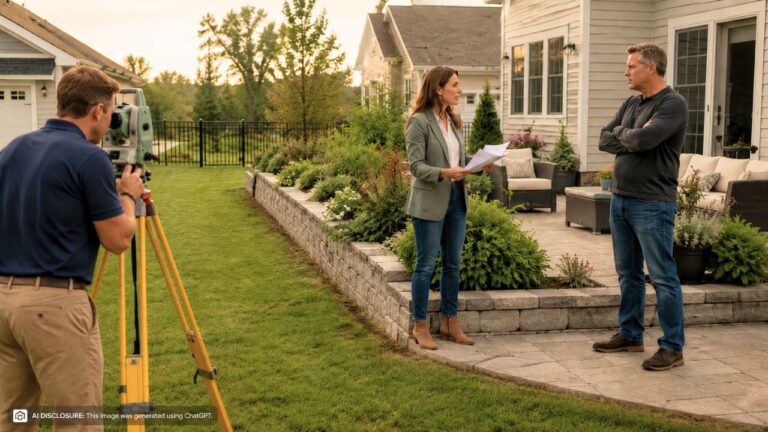
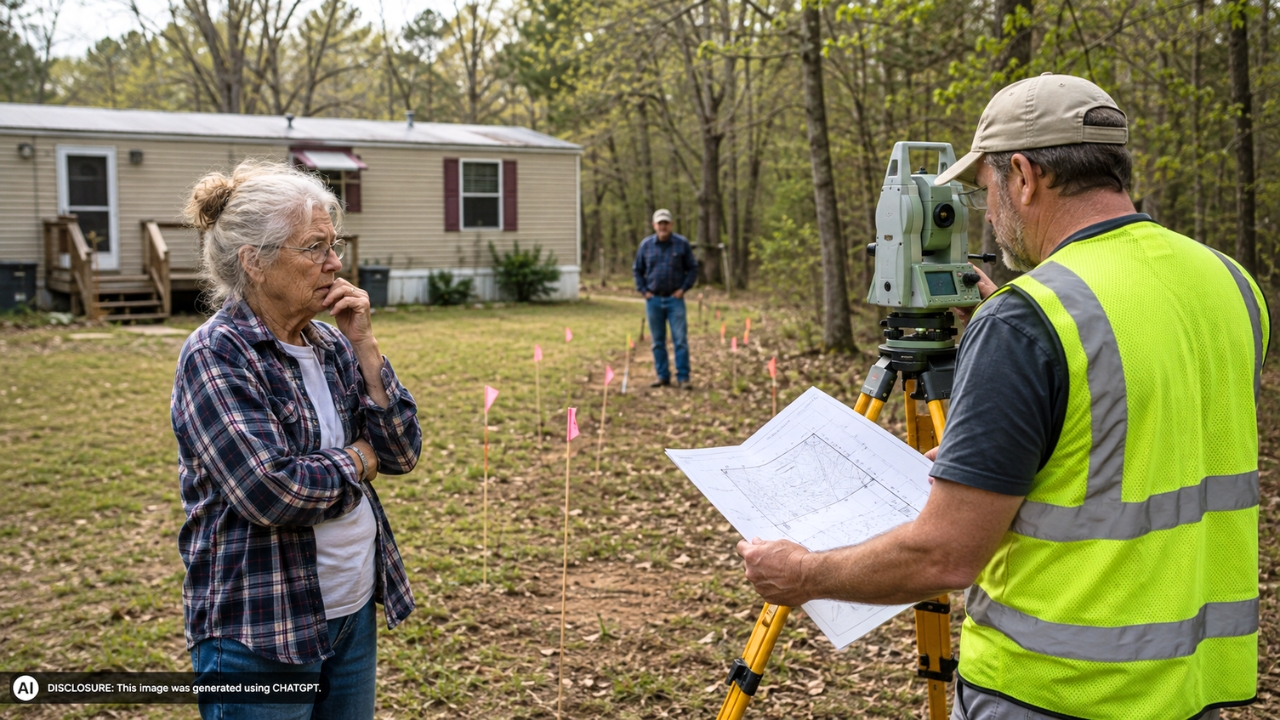
In 2000, John Ashford Sr. filed a lawsuit to quiet and confirm title to about 65.41 acres across two sections. A surveyor, Robert McCain, surveyed the property for that case, and both McCain and an abstractor testified there were major description problems in Ashford Sr.’s chain—bad enough that the suit was necessary. One deed he had “erroneously described land miles away.”
Here’s the part that feels like a punchline if you’re the neighbor: the disputed 1.5 acres where the mobile homes sat were not included in the 65.41 acres being quieted. Yet Ashford Sr. still had Belcher, and two of her family members, served with the quiet-title complaint. His complaint acknowledged Belcher owned property nearby but said she didn’t have a deed to the tract where the mobile homes were.
Belcher wasn’t even living there at the time. But her sister Bessie Jones filed a handwritten response saying Belcher owned the land they were living on—while also claiming she thought certain payments were toward buying the land and two mobile homes. That kind of “we all thought we were paying for something” ambiguity is exactly how families end up in court twenty years later.
A quitclaim deed lit the fuse inside the family
In April 2001, Ashford Sr. had the 1.5-acre tract surveyed and a legal description prepared. Then he signed a quitclaim deed that appeared to convey that 1.5-acre tract to Bessie Jones.
At the same time, the tax paperwork began showing how tangled this had become. Before 2001, the county assessed the 1.5 acres to Ashford Sr. as part of a larger tract. Belcher, meanwhile, had been assessed for one acre and had paid taxes every year since 1984. After 2001, the tax map no longer clearly marked the parcel originally assigned to Belcher, but the tax card for the 1.5 acres carried Belcher’s deed reference and handwritten employee notes showing both women were claiming the same property.
The tax office ultimately created two parcel numbers for the same 1.5 acres—one in Bessie’s name and one in Belcher’s. Bessie didn’t pay taxes because she was exempt due to age, but Belcher started paying taxes specifically on the 1.5 acres beginning with the 2002 taxes.
Then things got extra real-world: both sides treated the land like collateral. Belcher used deeds of trust with her (wrong) deed description; Bessie used deeds of trust with the quitclaim description. Paper lenders were relying on paper descriptions, while the families were relying on who had been living there and maintaining the place.
“Permission” turned out to be the whole ballgame
The later fight wasn’t just “who has the better deed,” because the deed problem was obvious. It became: who had earned ownership by adverse possession, and could a family member living there claim the land against the person who let her live there?
Belcher testified she gave Bessie permission to live on the disputed property starting in 1986, and at first Bessie and another sister paid rent to Belcher. Later, instead of rent, they made $200 monthly payments directly on a loan with Mechanics Bank. According to testimony, those payments were for the mobile homes, not for buying the land.
The Mississippi Supreme Court leaned on a simple rule homeowners should never forget: possession with permission doesn’t turn into ownership unless there’s a clear hostile claim communicated to the owner. And in families, courts often presume the arrangement is permissive unless the facts clearly prove otherwise.
The Court concluded Belcher met the elements of adverse possession herself—pointing to her long-term claim of ownership, visible occupation, taxes, continuous possession (including letting others occupy with her permission), exclusivity, and the fact no one tried to remove her. In the Court’s view, by the time Bessie received the quitclaim deed in 2001 and started claiming the land, Belcher’s ownership had already vested through adverse possession years earlier.
When the deed came back to the Ashfords, the neighbor dispute got physical
In January 2012, Bessie signed a quitclaim deed conveying the 1.5 acres back to Ashford Sr. That’s when the dispute effectively shifted from sister-versus-sister to Belcher-versus-Ashford.
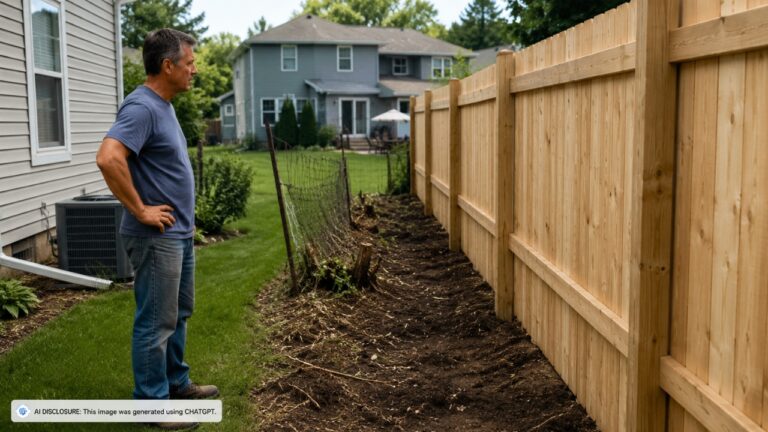
Ashford Sr. died in 2013, and the property passed to his children, eventually ending up with John Clay Ashford. He testified that at some point he noticed dirt being dumped on the 1.5 acres and put up a sign saying “No Dumping, John H. Ashford Estate,” with his phone number. He couldn’t remember when he posted it or even what year.
There was also testimony about a mobile home being placed on the property, the sheriff’s department being contacted, and a deputy investigating. Belcher testified she had someone cutting the grass for the last couple of years, and that a relative tried to set a mobile home there but had to move it due to septic issues. This is the part of land disputes that drains people: it stops being about lines on a plat and becomes about access, dumping, septic, and who gets to park a trailer where.
The reactions were predictable: “Show me the survey,” and “Pay the taxes”
If you’ve spent any time around property-line arguments, you already know the two instincts people have when they hear a story like this. First: the survey is everything, because once a surveyor starts pinning corners and drawing boxes, the story you’ve told yourself for 20 years can collapse in an afternoon. Second: keep receipts—especially tax receipts—even if the county’s mapping is a mess.
This case had both. A survey to support a quiet-title effort exposed bad descriptions. Then tax records got so confused the office created two parcel numbers for one tract, with notes showing competing claims. And even with all that paperwork, the court still focused heavily on who actually possessed the land, who acted like the owner, and whether a family member’s occupancy was permissive.
The Supreme Court ultimately affirmed the chancery court: Belcher’s title to the disputed property was confirmed, and the argument that her sister had acquired it by adverse possession didn’t hold. But the human takeaway is less “winner and loser” and more “this is what happens when deeds don’t match driveways.” In the country, a two-hundred-yard mistake can sit quietly for decades—right up until someone orders a survey and the dirt suddenly has two owners.
Like Fix It Homestead’s content? Be sure to follow us.