Landowners Find the Neighbors Claiming Their Irrigation Ditch Easement Was Abandoned — Then the Court Rules the Neighbors Failed to Prove It
Photo credit: AI-generated image created using ChatGPT. Illustrative only
Buying a place in the country comes with a certain bargain: you get space, quiet, and a little more control over your land. But you also inherit old infrastructure nobody thinks about until it stops working—like an irrigation ditch that’s been there longer than anyone’s memory.
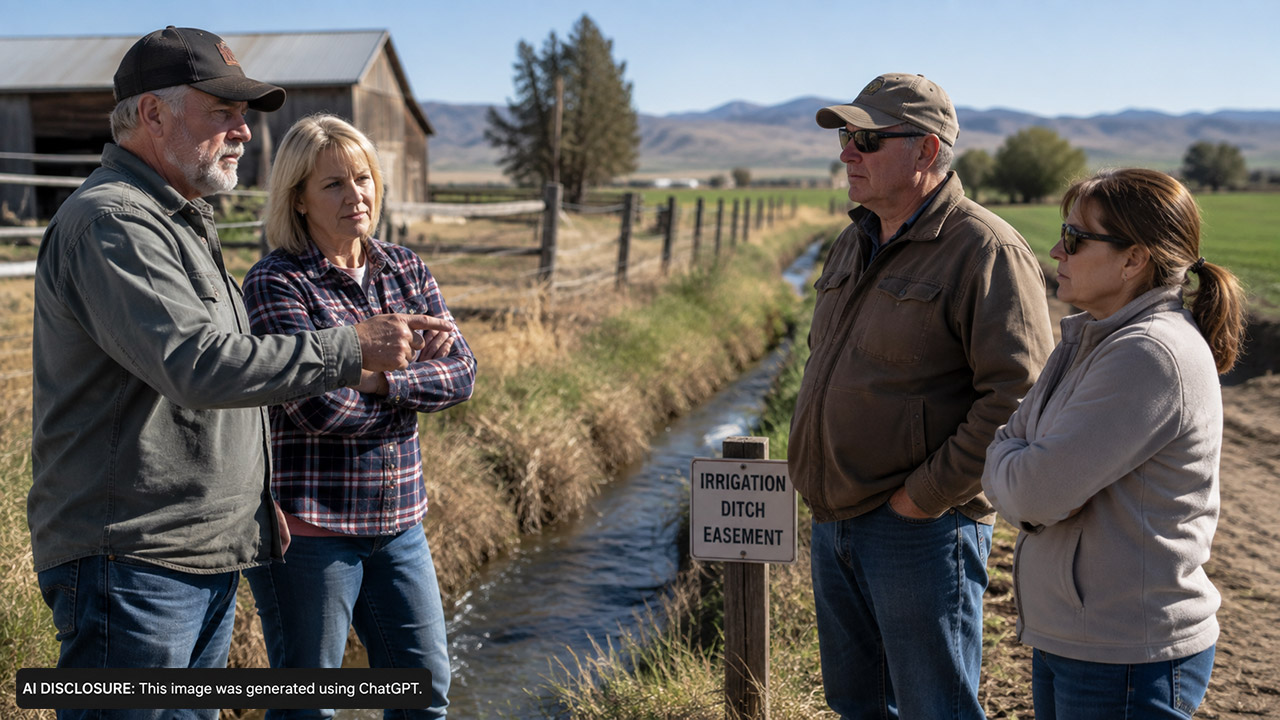
That’s what landed two Hamilton, Montana, households in a full-blown property fight after one set of neighbors insisted an old ditch easement had been abandoned. The details are laid out in the discussion, where the Montana Supreme Court ultimately sided with the landowners who needed the water and upheld a nearly $190,000 attorney-fee award.
The first spring: no water, then a quick “fix,” then a hard stop
Frank and Shirlynne Apecella bought their home in late 2020. Come spring, they noticed they weren’t getting irrigation water they believed they were entitled to, so they brought in a consultant to figure out what was going on and then approached their western neighbors, Lillian Overman and her husband Larry Robinson.
The route wasn’t mysterious—it was just old. A historic channel known as the Decker Ditch brings water from Roaring Lion Creek, about a mile away. On the Overman property it splits, and one branch continues toward the Apecellas, passing through a rock wall via a metal pipe before connecting into another ditch system on the Apecellas’ land.
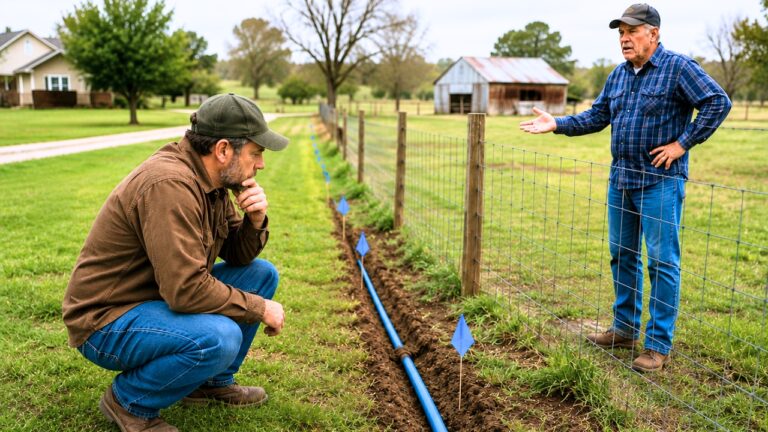
At first, it looked like the kind of rural neighbor problem you solve with gloves and a shovel. Robinson opened the ditch and sent water toward the Apecellas. In May 2021, lawn debris clogged things up, and the neighbors even worked together to clear it.
Then, two days later, the tone changed. Robinson filled the ditch with dirt, shutting the flow off entirely, and put up a “no trespassing” sign. When Frank Apecella confronted him, Robinson didn’t debate the history—he told him to “have your people call my people.” The Apecellas sued the next month.
This wasn’t just “water access”—it was a property right riding on old dirt
The Apecellas weren’t claiming a casual favor from upstream neighbors. They owned irrigation rights dating back to May 1, 1897, with their two lots allocated a combined 127 gallons per minute as part of a larger Roaring Lion Creek water right.
And in Montana, the water right and the right to use the ditch that carries it are treated as separate property rights. So even if everyone agrees you have water rights on paper, the fight can shift to: do you still have a lawful right for the water to cross someone else’s land, and can you step onto that land to maintain the ditch when needed?
That’s exactly what the Apecellas asked the court to declare—an easement across the Overman property and the “secondary” right to enter for inspection, maintenance, and repair. They also claimed Overman and Robinson unlawfully interfered by filling the ditch and blocking access.
The “abandoned ditch” theory ran into a century of receipts and memories
Like most rural property disputes, this one turned into a history lesson. From 1943 to 1966, Ted and Felsie Boldt owned about 600 acres that included what later became both properties. When they split the land in 1966, they kept a 36-acre homestead that eventually became the Apecella property and sold land that ultimately became the Overman property.
Members of the Boldt family testified that the Decker Ditch had long carried Roaring Lion Creek water across what became the Overman property to irrigate the homestead. Ted Boldt Jr. said his grandfather dug the ditch by hand, and testimony described water coming through that route since the 1800s.
More modern owners filled in the gaps. Rick Kelm, who owned the Apecella property from 2010 to 2020, testified water regularly ran through the ditch in his early years and that he used it for irrigating pasture for horses and cattle.
After about 2013, the flow weakened. Kelm said he sometimes got only a trickle—but still got some water every summer. That detail mattered, because Overman’s core argument was that the easement had been abandoned. The courts weren’t persuaded.
The court said “less use” isn’t the same thing as “gave it up forever”
Overman pointed to periods when prior owners dried portions of the property for septic testing and subdivision work, and to reduced irrigation over the years. But the Montana Supreme Court emphasized that abandoning an easement takes more than a rough patch or a weaker flow. The party claiming abandonment must show nonuse and a clear intention to permanently give up the right.
On this record, the justices said there wasn’t decisive conduct showing permanent surrender. At most, people temporarily reduced or stopped irrigation while doing practical things like perc testing. Evidence also cut the other way: one owner kept irrigating during a time the land was supposedly being dried out, another asked that flow be stopped temporarily for testing, and Kelm actively fought to restore water when interference cropped up.
Overman also tried a different legal angle: reverse adverse possession, meaning she claimed the easement was extinguished because the ditch had been blocked openly and continuously for the required period. In Montana, that takes clear and convincing evidence of open, notorious, exclusive, adverse, continuous, uninterrupted exclusion for five successive years.
The Supreme Court said that didn’t happen here either. Kelm continued receiving seasonal water through 2020. Then in 2021—crucially—Robinson himself opened the ditch and sent water down. That voluntary delivery didn’t fit a story of “we’ve excluded you continuously for five straight years.” Only after that did he fill the ditch and post the no-trespassing sign.
A three-day trial, an injunction, and a fee award that stings
After a three-day trial, the district court found the Apecellas proved both an implied easement and a prescriptive easement through the Overman property. The judge also found unlawful interference when the ditch was filled in, and found the no-trespassing sign interfered with the Apecellas’ secondary right to enter the property when reasonably necessary to inspect, repair, and maintain the ditch.
The court permanently prohibited Overman and Robinson from interfering with the easement. But there was one practical limit: although the Apecellas’ recorded allocation was 127 gallons per minute at the Roaring Lion Creek headgate, evidence showed substantial loss along the roughly mile-long route, and there were questions about the capacity of the existing pipe through the rock wall.
So the judge limited the easement to the capacity of that existing pipe, rather than ordering a larger system. Overman argued that should count as a partial win and block attorney fees. The Supreme Court didn’t buy it, noting the Apecellas still won the core issues: the easement exists, maintenance access exists, interference happened, and the court ordered an injunction.
Because Montana law allows the prevailing party in a statutory ditch-interference case to recover reasonable attorney fees and costs—and because the Apecellas prevailed on their statutory claims—the nearly $190,000 award ($189,935.32) stood.
The homeowner reaction: “document everything,” because dirt turns into dollars
This is the kind of dispute that makes homeowners instantly think about the unglamorous paperwork: old plats, recorded water allocations, historic use, and whether anything was put in writing when previous owners fought over access. The record here shows why—years of “it still trickles every summer” and “we replaced the pipe when it disappeared” can end up being the difference between a living easement and a dead one.
It also shows how fast a neighbor disagreement escalates when someone touches the actual infrastructure. Clearing a debris clog is one thing. Filling the ditch with dirt, posting “no trespassing,” and forcing people into court is another—especially when that “ditch” is tied to century-old rights and the court can order both an injunction and a massive fee award.
In the end, the Apecellas kept their ditch easement and their right to access it for maintenance, while Overman and Robinson were ordered to stop interfering. The water may still have to squeeze through whatever that existing pipe can handle—but the bigger message of the ruling is hard to miss: if you’re going to claim an easement is gone, you’ll need more than a few dry seasons and a shovel.