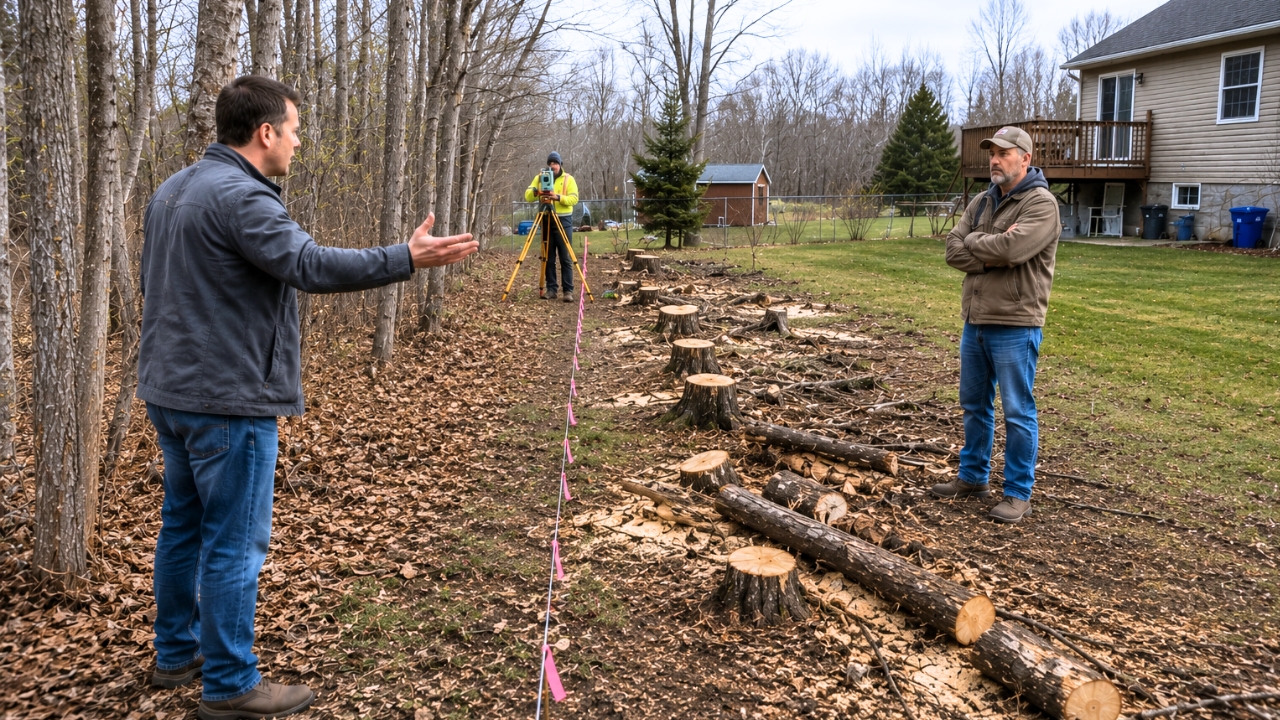
Neighbor Cuts Down Trees Along the Property Line — Then the Survey Makes the Damage Look Expensive
Photo credit: Fix It Homestead
Trees along a property line can feel like part of the landscape until someone decides they are in the way.
For one homeowner, the problem started when a neighbor cut down trees near the boundary between the two properties. At first, it may have looked like a frustrating mistake or an overconfident cleanup job. But once the survey came into the picture, the situation started looking much more serious.
The trees were not just random brush.
They may have been on the homeowner’s side of the line.
And if that was true, the neighbor had not just trimmed up their own yard. They had removed someone else’s trees.
That is the kind of discovery that can turn a neighbor problem into a very expensive property dispute.
The trees had been acting like a natural boundary
In many neighborhoods and rural areas, trees do more than provide shade.
They create privacy. They block noise. They screen out a driveway, barn, house, or road. They help with drainage and erosion. They can even make a property feel larger and more secluded.
So when trees disappear overnight, the loss can feel bigger than it looks on paper.
The homeowner was not just upset about cut limbs or a messy edge along the property. They were looking at a changed landscape. A row of trees that had once provided separation between properties was suddenly gone or badly damaged.
And once trees are cut down, there is no quick fix.
A fence can be rebuilt. Grass can grow back. But mature trees may take decades to replace.
The survey changed the argument
Property-line tree disputes often start with confidence on both sides.
One neighbor may say, “Those trees were mine.”
The other may say, “No, they were on my property.”
But a survey can strip away the guessing.
Once the homeowner checked the boundary, the issue became less about opinion and more about location. If the trees were clearly on the homeowner’s side, the neighbor’s actions became much harder to brush off as a misunderstanding.
That is where the situation started looking expensive.
Cutting down someone else’s trees can involve more than replacing a few saplings from a garden center. Depending on the location, species, age, and local law, damages can sometimes include the value of the trees, the cost of restoration, loss of privacy, cleanup, and other costs tied to the property damage.
For a neighbor who thought they were just clearing a line, that can be a painful surprise.
The homeowner had to think carefully before reacting
It would be easy to get angry and confront the neighbor immediately.
But with tree damage, documentation matters.
The homeowner needed photos, dates, property records, survey information, and any proof of what the area looked like before the cutting happened. If there were old real estate listing photos, satellite images, security camera clips, or messages from the neighbor, those could all become important.
Tree disputes are tricky because the damage is already done by the time the homeowner discovers the full extent of it.
There is no putting the tree back.
That means the next step is not just stopping the neighbor. It is figuring out what the loss is worth and whether the homeowner can recover anything.
The neighbor may have thought the line was different
Not every property-line tree dispute starts with bad intent.
Sometimes neighbors truly believe the boundary is in a different place. Old fences, mowing patterns, ditches, tree rows, and informal landmarks can confuse people for years. A person may maintain a strip of land long enough that they start thinking of it as theirs.
But a mistaken belief does not automatically erase the damage.
That is why surveys matter so much. A neighbor’s assumption might explain why they cut the trees, but it does not necessarily make the cutting acceptable.
And if the homeowner had already warned the neighbor, or if the neighbor crossed a visible line to remove the trees, the situation could look even worse.
Commenters focused on not settling too quickly
People who have dealt with tree disputes often warn homeowners not to accept a quick apology and a promise to plant a few replacements without understanding the actual loss.
A mature tree is not equal to a small replacement tree.
If the trees created privacy, blocked wind, stabilized the land, or added value to the property, the damage may be more significant than a neighbor realizes.
Commenters also tend to recommend getting the survey in writing, taking photos immediately, and contacting a certified arborist or local professional who can help assess the value of the trees.
In some cases, a real estate attorney may be needed, especially if the neighbor refuses to take responsibility or if the damage crosses into a large dollar amount.
The real issue was respect for the boundary
The most frustrating part for the homeowner was likely not just the missing trees.
It was the feeling that the neighbor acted first and asked questions later.
Property lines exist for a reason. A person may not like the trees along the boundary. They may think the trees are messy, inconvenient, or blocking their view. They may want more sunlight or a cleaner fence line.
But those preferences do not give them control over someone else’s land.
Once the survey showed where the boundary actually sat, the tree cutting became more than a landscaping disagreement.
It became a question of who had the right to decide what stayed and what went on that strip of property.
For the homeowner, the damage was already visible.
The privacy was gone. The trees were gone. And now the neighbor’s “cleanup” may have created a bill far larger than anyone expected.