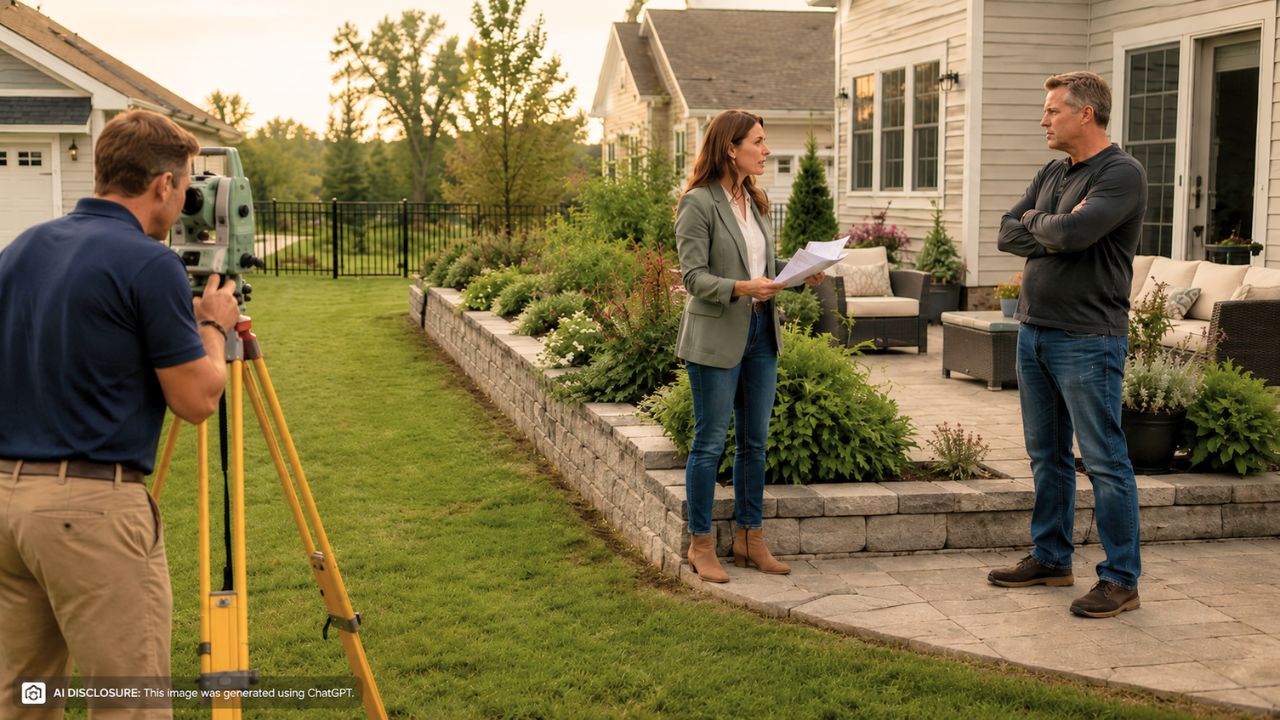
New Homeowner Commissions a Survey and Finds the Neighbor’s Garden Beds and Patio Hardscaping Have Crossed Two Feet Over the Line — Then the Neighbor Says They Have Invested Thousands in That Area and Will File for Adverse Possession If Asked to Remove It
Photo credit: AI-generated image created using ChatGPT. Illustrative only.
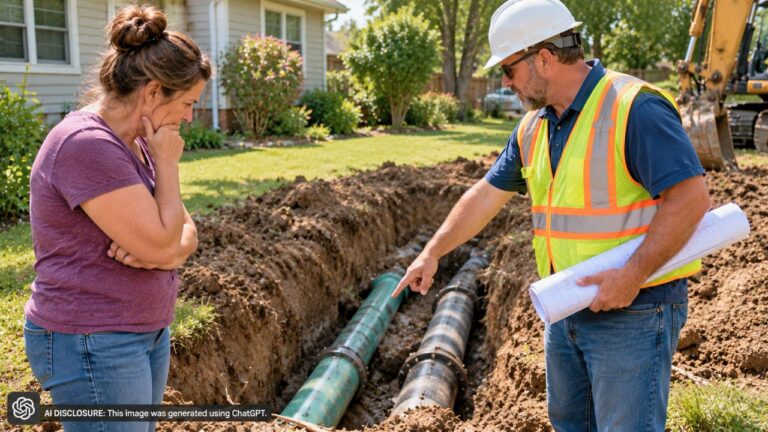
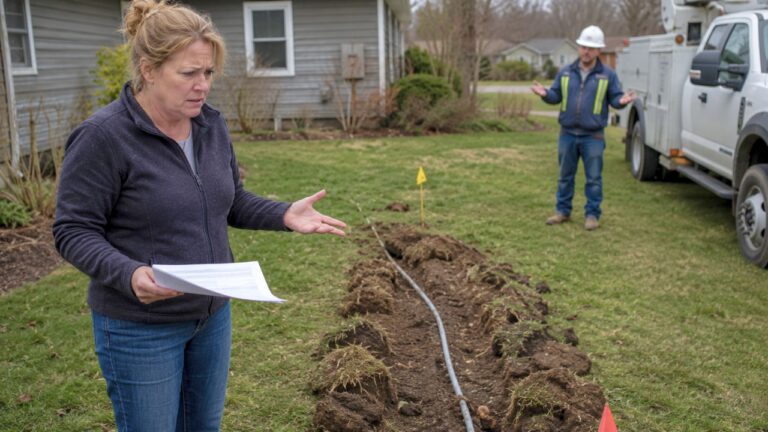
The new owner thought they were doing the responsible thing: get a survey, learn the lines, plan the first season of projects without stepping on anyone’s toes. Then the stakes showed up in the ground, and the “little” overlap turned into a real, measured problem.
In the boundary dispute outlined in the source post, a survey revealed that what looked like the natural edge of the property wasn’t the legal edge at all. A fence and thick hedgerow had been acting like the “real” boundary for years, but the deed line ran several feet beyond it—creating a strip of land that one side had been using like it was theirs.
The “boundary” looked settled until someone paid for a survey
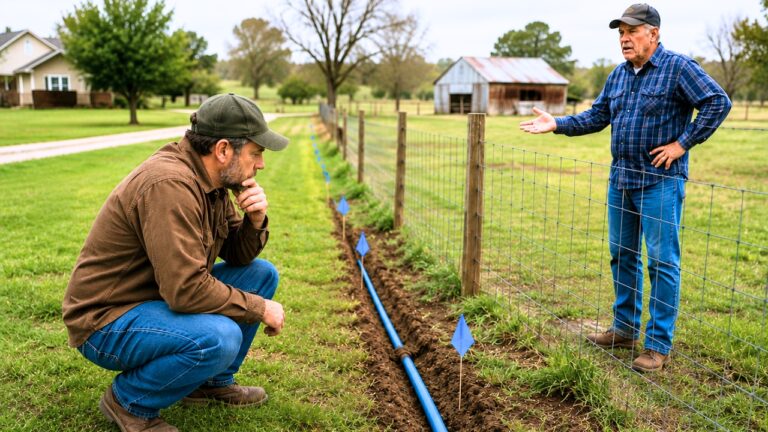
On the ground, the western boundary was easy to read: a wire fence with a hedgerow grown up around it, full of wild shrubs and trees. It stretched roughly a half mile, which meant it wasn’t just a backyard squabble—it was a long, physical divider that would make anyone assume the line was obvious.
That’s the trap with old fences. They feel official because they’re visible, they’ve been there forever, and the landscaping has literally grown around them. But when the neighbors in the case had their property surveyed after buying it, the paper line didn’t match the fence line.
The survey found their parcel extended about four feet past the fence at the north end and up to eleven feet at the south end. That difference isn’t a rounding error when you start talking about gardens, patios, livestock, and access—things that get built “to the edge” because nobody wants to waste usable space.
When improvements go in, the overlap stops being theoretical
The emotional temperature changes fast when the disputed area isn’t just grass that can be mowed differently next week. In the scenario readers will recognize immediately, the neighbor with improvements says they’ve put real money into that strip: garden beds, hardscaping, time, and materials.
In the case study itself, the farm owner had worked the land along that fence line for decades, cultivating it year after year or using it as pasturage for livestock. That’s not casual use. That’s a pattern of treating that strip as part of the working farm, season after season.
The fence condition added another layer. The farm owner maintained the northern half in reasonably good condition, but the southern portion had fallen into disrepair and no longer sufficiently constrained livestock. That’s the kind of detail that sounds small until you imagine animals wandering, neighbors getting nervous, and everyone suddenly looking for leverage.
The neighborly tension wasn’t just about dirt—it was about day-to-day living
This wasn’t a quiet “let’s straighten out the map” disagreement. The southern neighbor had recently taken up a flourishing beekeeping operation, and stray swarms were moving back and forth across the border.
Bees don’t care about deeds, and they don’t respect hedgerows. But people do care when a property line argument is happening at the same time as stings, swarms, and the feeling that the other side is pushing into your space.
That’s how these fights escalate. One person sees a fence and a hedge as an established boundary; the other sees a survey and a legal description. And once there are animals or insects involved, the dispute stops being an abstract real-estate question and turns into a daily stressor.
“I’ll file for adverse possession” is the part that makes everyone freeze
The farm owner ultimately brought a suit claiming title to the disputed strip by adverse possession. That’s the legal phrase that makes new homeowners feel like they’re about to lose land they just paid for, and it’s also the phrase long-time users lean on when they’ve treated a piece of ground as theirs for years.
As the expert witness response explained, adverse possession lawsuits often come out of boundary disputes where a fence separates two pieces of land. To claim absolute title, the person in possession generally must show their possession was continuous, hostile or adverse, actual, open and notorious, exclusive, and under a claim inconsistent with the true owner’s title.
The time piece matters, too. The expert described a “period of over 10 years” as the kind of threshold many states use, and in this case the farm owner’s use was described as more than 30 years. If you’re the new owner looking at a neighbor’s patio or beds sitting two feet over, that’s the moment your stomach drops—because time can be the neighbor’s best argument.
The expert also pointed to the fence and hedgerow as a “clearly discernable boundary line,” which can support the idea that the person using the land did so openly and exclusively, not secretly or by accident. In other words: the very feature that made everyone assume the boundary was settled can become part of the argument that the use was obvious for long enough to count.
What people latched onto: proof first, emotions second
When homeowners talk about these disputes, the practical crowd tends to rally around documentation. The case study is basically a reminder that boundaries aren’t vibes—they’re surveys, history of use, and what can be proven.
The survey in the case is the spark that lit everything up, but it also shows why people insist on getting one before they build. Once you’ve got hardscaping in the ground or you’ve been farming a strip for decades, “just move it” isn’t a casual request anymore. It’s a demand that could mean thousands in removal, rebuilding, and possible loss of function.
And then there’s the quiet but powerful detail: “exclusive control.” The farm owner claimed the disputed property had always been under their exclusive control. That’s the kind of fact that gets argued with photos, maintenance patterns, and witness memories—who mowed, who planted, who repaired, who kept others out.
If you’re the new owner staring at a neighbor’s improvements over the line, that’s why the threat to pursue adverse possession lands so hard. It isn’t just bluster; it’s a legal theory that lives and dies on visible, trackable behavior over time.
The part that keeps homeowners up at night
What makes this kind of dispute so miserable is that both sides can feel “obviously right” at the same time. One side sees a deed line supported by a survey. The other side sees decades of use, a fence and hedgerow everyone treated like the boundary, and money invested into the space.
In the farm case, the expert’s view was that cultivating the strip year after year and managing all land east of the fence likely supported an adverse possession claim, especially with a long-standing physical boundary. That doesn’t magically resolve the human part, though—because even if the law leans one way, the neighbor relationship still has to survive fences, animals, bees, and the next thirty years of living side by side.
And that’s where these stories usually sit: a couple of feet that look small on paper, but on the ground feel like a challenge, a threat, and a permanent reminder that buying a property doesn’t always mean buying peace.