New Homeowner Finds a Fence Encroachment Five Days After Closing — Then Learns the Sellers and Title Company Both Knew All Along
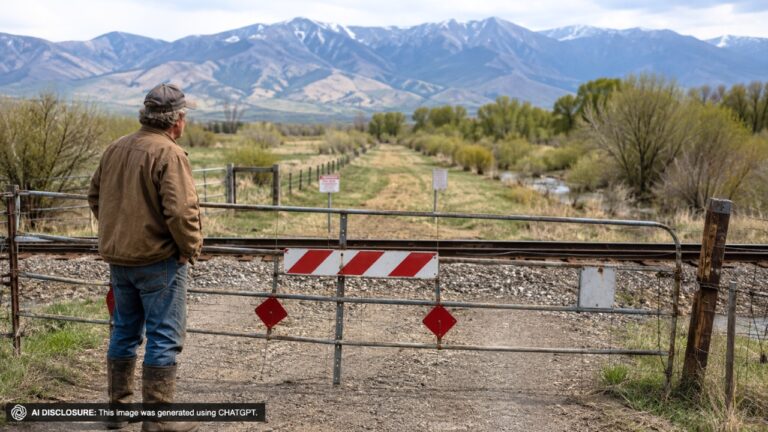
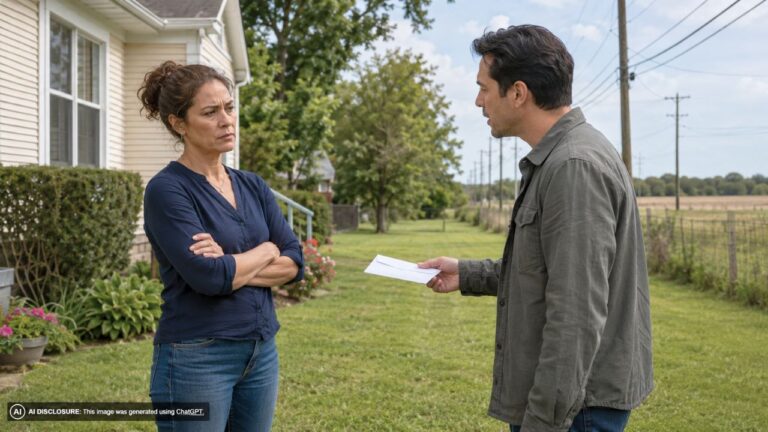
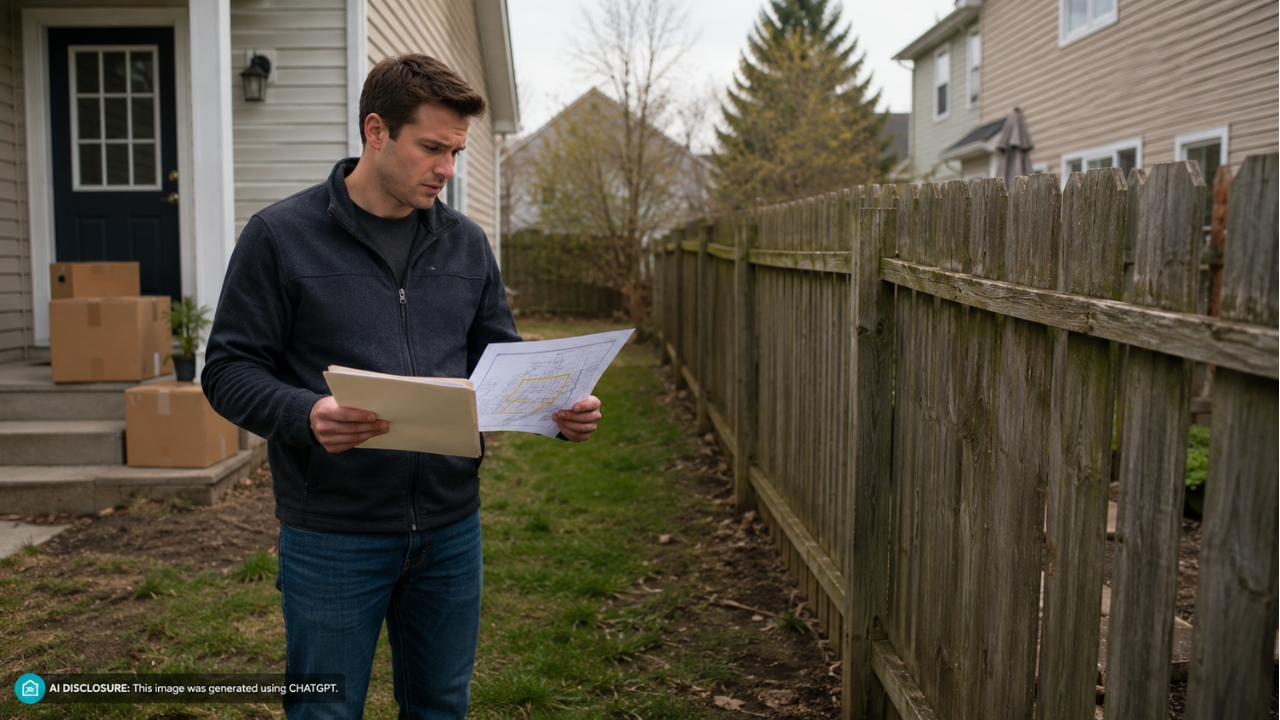
Photo credit: AI-generated image created using ChatGPT. Illustrative only.
Five days into owning their first home, a new homeowner opened an email from the bank expecting routine paperwork. Instead, the “missing closing document” read like a warning label: it said the bank wouldn’t be liable for legal consequences tied to a fence encroachment along one side of the property.
That’s when the bottom dropped out. The buyer says the encroachment was never disclosed during the purchase process, yet the wording made it sound like this was already a known issue. Their account, shared in the original post, describes the kind of homeownership surprise that doesn’t show up in listing photos—one that can turn “finally moved in” into “do we own the yard we think we own?”
The “missing document” that changed the whole mood
The buyer had barely gotten through the first week—those early days filled with keys, boxes, and the mental checklist of what to fix first—when the bank’s mortgage department reached out. It sounded simple: sign a document that didn’t make it into the closing packet.
But the language wasn’t about a harmless clerical error. The document referenced a fence encroachment and specifically stated the bank wouldn’t be responsible for whatever legal consequences came with it. The homeowner says that from the document alone, they couldn’t even tell which direction the problem ran—whether their fence crossed into a neighbor’s land or whether a neighbor’s fence crossed into theirs.
Either way, it was the first time they’d heard about any of it. And it arrived after closing, when most buyers assume the “surprises” phase is supposed to be over.
What made it worse: it didn’t feel like new information
The part that really rattled the homeowner wasn’t just that there might be a property-line problem. It was the strong impression that the issue wasn’t discovered accidentally at the last minute. The buyer believed the sellers and the title company were both already aware before closing.
That detail changes the flavor of the problem. A fence line being off by a couple feet is one thing—old neighborhoods, DIY fence jobs, shifting markers, confusing plats. But finding out because your lender slides a liability waiver across the table after the keys are already in your pocket? That feels like someone tried to keep the buyer from asking the one question that would slow everything down.
The homeowner looped in both their lender and their realtor. They were told, according to the post, that the buyer “absolutely should have been made aware” earlier in the process. Even more unsettling: the lender and realtor reportedly weren’t aware until the buyer flagged it.
Fence encroachments don’t stay theoretical for long
It’s easy to imagine this as a paperwork issue—words on a document, a line on a map. But fences have a way of turning legal boundaries into daily, physical friction. You mow up to them. You hang lights on them. You put a garden bed along them. Your dog runs the fence line. Your neighbor treats it like a wall that proves something.
If the fence is over the line, it can come with real consequences: demands to move it, disputes over who pays, or a neighbor who suddenly feels entitled to use or block access to what you thought was yours. Even when everyone is calm, it can complicate future projects—adding a shed, replacing the fence, installing drainage, or selling later when another buyer orders a survey and asks why the boundary doesn’t match the fence.
The buyer’s biggest immediate problem was basic: they didn’t know what the encroachment actually was. The document mentioned it, but didn’t clarify who was encroaching on whom.
The budget shock: “We didn’t order a land survey”
The homeowner openly admitted they didn’t order a land survey before closing—something plenty of first-time buyers skip, especially when every line item already hurts. Inspections, appraisals, closing costs, moving expenses. After you’ve written that final check, the idea of immediately paying for a lawyer or another professional feels impossible.
In the post, the buyer asked who would be at fault: the seller, the bank, or themselves. They also worried about legal ramifications, while acknowledging they’d been advised to speak with an attorney—an expense they weren’t eager to take on right after closing.
This is the trap a lot of homeowners recognize. The expensive part isn’t always the fence itself. It’s the uncertainty. It’s not knowing whether you can safely replace the fence, whether you should stop using a strip of the yard, or whether a neighbor might come knocking with their own paperwork and a different version of the boundary.
And there’s a time pressure baked in. The longer you live with a bad boundary assumption, the more you might invest in the wrong footprint—plants, mulch, irrigation, patios, even just routine maintenance that makes a line feel “established.”
Reactions centered on paperwork, proof, and not winging it with neighbors
The buyer said their lender and realtor agreed the disclosure should have happened earlier, but that didn’t solve the immediate problem of what to sign and what it all meant. That’s where the typical homeowner instinct kicks in: don’t sign something you don’t understand, especially when it shifts liability onto you.
In these kinds of property-line disputes, practical minds tend to focus on documentation first—what was in the title work, what exceptions were listed, whether there was any prior correspondence about the fence, and why a “missing document” appeared only after closing. The buyer’s post also reflects a common fear: if the title company and sellers knew, why wasn’t it plainly presented during the decision-making stage?
There’s also the neighbor angle, hovering in the background. Most people don’t want their first interaction with a new neighbor to be “hey, about that fence.” But once an encroachment is on the table, some neighbors become territorial, while others are relieved to finally deal with a long-running boundary annoyance. Either way, it helps to approach it with facts instead of assumptions.
Living in the house while the boundary feels shaky
For now, the homeowner is left in an uncomfortable place: they’ve closed, they’re moving in, and they’ve been introduced to a problem that could affect how they use their own property. It’s not just a financial worry—it’s a daily-life worry, because fences define routines and expectations.
Their post reads like someone trying to figure out whether this is a small fix with a few signatures, or the start of a drawn-out conflict that should have been handled before the house ever hit “sold.” They’ve got an emergency fund, but they don’t want their first big homeownership expense to be untangling a fence line nobody warned them about.
Sometimes the hardest part of buying a home isn’t the mortgage or the moving truck. It’s realizing that one buried detail—one line in a document you weren’t shown until after the ink dried—can turn your “new place” into a question mark right along the property line.
Like Fix It Homestead’s content? Be sure to follow us.