New Homeowner Finds a Structure the Neighbor Built Three Feet From the Property Line Without a Permit — Then the County Confirms No Permit Was Ever Filed
Photo credit: AI-generated image created using ChatGPT. Illustrative only.
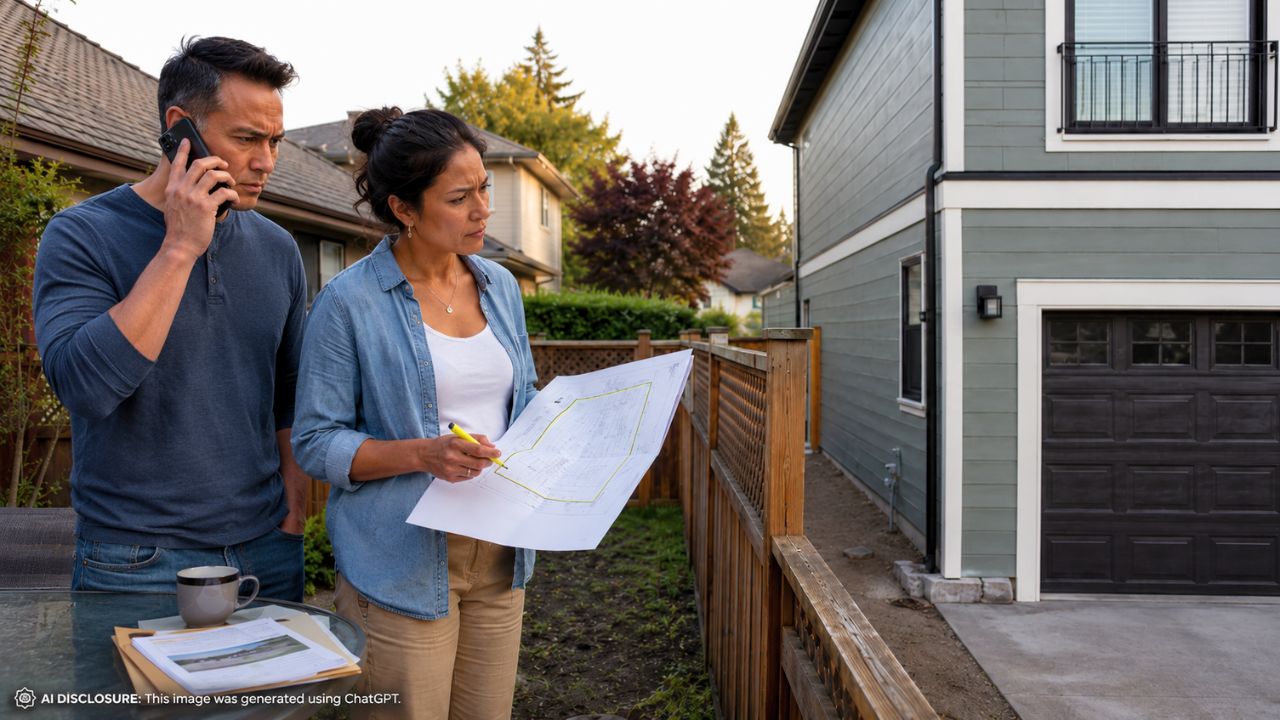
It’s the kind of thing you don’t notice until you’re staring at a survey with a highlighter in your hand: a neighbor’s brand-new garage/apartment isn’t just close to the line—it’s over it. A New York homeowner says they were reminded of the problem after reviewing an older survey and realizing one corner of the neighbor’s structure overhangs their property by multiple feet.
In the original post, the homeowner explains that the build happened years ago, and the family tried to do the right thing at the time. Now the paper trail is missing, the stakes are higher, and the “friendly neighbor” part doesn’t automatically make the property line issue go away.
The reminder came from a survey, not a confrontation
This didn’t start with a shouting match over a fence or a sudden construction crew showing up. It started quietly, with the homeowner reviewing a survey from 2013 and seeing something they couldn’t unsee: the corner of the neighbor’s garage/apartment overhangs the property line by multiple feet.
That detail matters, because “close to the line” is one kind of headache. “Over the line” is another. Once a structure is physically occupying your land, even partially, it turns into a long-term ownership and resale problem—not just a neighbor dispute.
The homeowner’s first instinct wasn’t to punish anyone. They said they want to resolve it by selling that slice of property to the neighbor, cleanly and permanently, so the boundary matches the reality on the ground.
A missing letter turned a solved problem into an open one
Back when the overhang was discovered, the homeowner’s mother did what a lot of people wish they’d done in the moment: she got a signed letter from the owner acknowledging the encroachment. The goal was practical—avoid adverse possession problems down the road.
Then life happened. The homeowner’s mother passed away, and now the letter can’t be found.
That’s where the tension creeps in. A friendly understanding between neighbors is one thing, but a missing document is a different kind of vulnerability—especially when the homeowner is thinking about selling, and future buyers (or their lenders and title companies) will want clean answers.
Without that signed acknowledgment, the homeowner is back to relying on the survey and whatever can be reconstructed through records and new agreements.
Why selling a sliver of land sounds simple—and gets complicated fast
On paper, the homeowner’s plan sounds straightforward: transfer the piece of land under (or near) the corner of the structure to the neighbor so the building is no longer over the line. It’s a clean ending. Everyone stays friendly. No one has to move walls.
In real life, small land deals often have big hoops. There’s the question of exactly what’s being conveyed—how many feet, what shape, and whether it affects setbacks, drainage, access, or future building rights. Even when the neighbors agree, the lot line change needs to be documented correctly so it doesn’t create a new mess later.
The homeowner also raised the question a lot of people ask when the neighbor seems reasonable: is it risky to handle it directly, or is it worth paying a lawyer? That’s not paranoia—that’s experience talking. The friendly neighbor today might sell tomorrow, and the next owner won’t care about anyone’s handshake agreement.
Even a simple purchase can trigger survey updates, deed changes, and other paperwork that has to be right the first time.
The quiet pressure of “I want to sell”
Encroachments have a way of staying invisible until you try to do something normal—refinance, build an addition, or list the house. Then suddenly it’s not theoretical. It’s a line item that can stall a deal.
The homeowner isn’t describing a feud. They’re describing a practical problem that’s now on a clock. If a buyer’s inspector or attorney spots the overhang, it can become a negotiation point, a demand for a fix, or a reason to walk away.
And if the homeowner lists without resolving it, the next person who owns the property inherits the headache. That’s how neighbor relationships get wrecked: not by the first mistake, but by the delayed fallout when someone tries to move on.
There’s also a fairness angle that’s hard to ignore. The homeowner didn’t build the structure. They didn’t benefit from it. But they’re the one trying to untangle it so it doesn’t poison a future sale.
Commenters pushed one theme: get it in writing, the right way
Even with minimal details, the responses to stories like this tend to cluster around the same warning: a missing letter doesn’t mean the past didn’t happen, but it does mean you should stop relying on memory and start rebuilding documentation.
In practical terms, that usually means confirming the boundary with a current survey if needed, then putting any agreement into a formal, recorded document—something that follows the property, not the people. A letter in a drawer is better than nothing, but recorded paperwork is what survives probate, moves, and new owners.
Several readers in these kinds of property-line disputes also tend to stress that “friendly neighbor” and “clean legal fix” are not opposites. A lawyer doesn’t have to be a weapon; sometimes they’re just the person who makes sure the deal you think you made is the deal that actually exists on record.
And when a structure is involved—especially one described as a garage/apartment—commenters often home in on how quickly a simple boundary problem can become a permitting, setback, or financing issue once it’s documented and brought to closing.
Where it leaves the homeowner now
What makes this story uncomfortable isn’t the neighbor relationship. It’s the limbo. The homeowner knows a corner of a building is sitting where it shouldn’t, based on a 2013 survey, and the one piece of paper meant to keep things calm and clear is gone.
They’re trying to choose between an informal approach—talk to the neighbor, agree on a price, and move forward—and a more structured one that costs more upfront but may prevent ugly surprises later. Either way, the goal is the same: align the legal boundary with the physical reality so the property can be sold without a cloud hanging over it.
For now, it’s a familiar kind of homeownership stress: nothing is actively “broken,” but it still keeps you up at night. A few feet on a survey can turn into months of paperwork, and the sooner it’s handled, the better chance it stays a neighborly fix instead of becoming a permanent problem attached to the deed.
Like Fix It Homestead’s content? Be sure to follow us.