New Homeowner Finds the Neighbor Threatening to Cap the Forty-Year-Old Well That Serves the House — Then Says the Well Was “Always Meant to Be Shared”
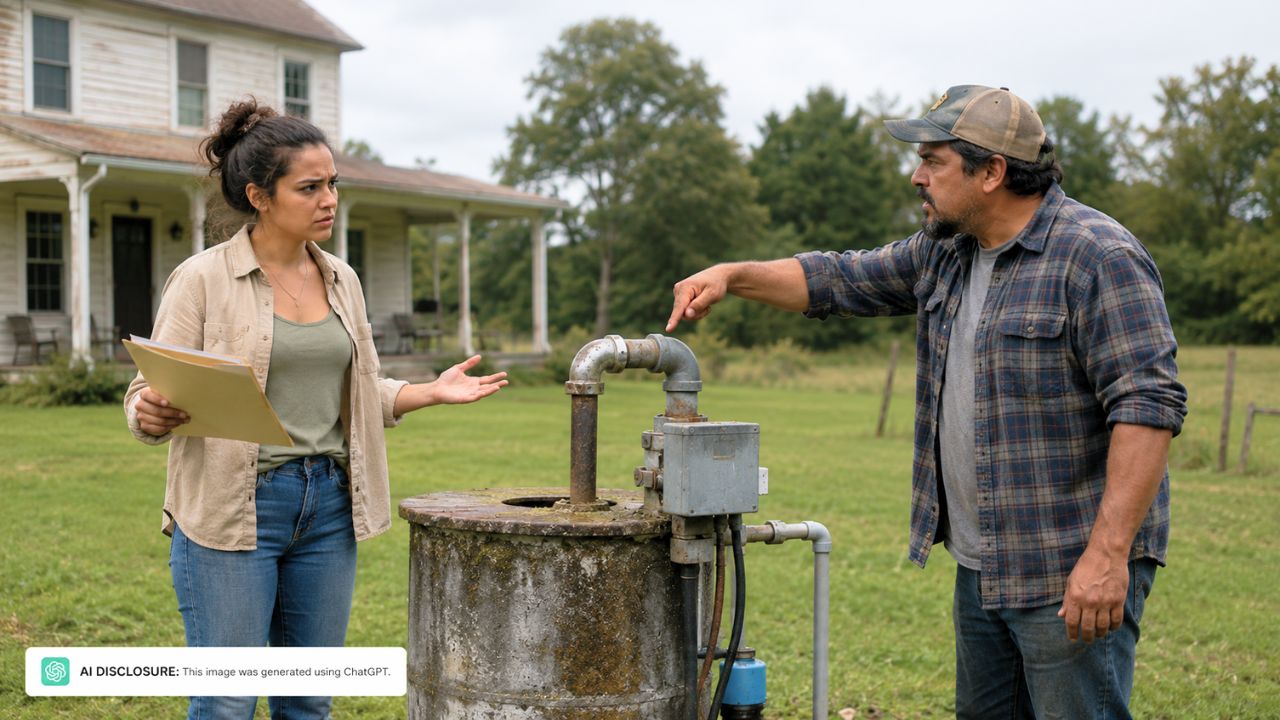
Photo credit: AI-generated image created using ChatGPT. Illustrative only.
The well wasn’t new. The house wasn’t new. The threat was new.
A homeowner posted that their neighbor had come over with a land survey and a sharp message: the water well that feeds the home sits a couple feet over the property line, and because of that, the neighbor says they can cap it immediately. The homeowner laid out the basics in the original post—this is the home’s only water source, and the well has a permit from the state engineer that shows it was installed on the homeowner’s lot.
A survey line turns into a water shutoff threat
Property line disagreements are common. But most of them start with a fence, a shed, or a hedge that crept too far. This one started with a resource you can’t “just live without” while you figure it out.
The neighbor’s survey, the homeowner wrote, places the well just over the line—“a couple of feet” onto the neighbor’s lot. That might not sound like much until you picture the practical side: a wellhead, a power supply, plumbing that runs into the house, and a family that needs water every day.
Then came the escalation. The neighbor wasn’t talking about negotiating, splitting costs, or sorting it out calmly. The homeowner said the neighbor was acting like the survey automatically handed them rights to the well—and that they could cap it “whenever he wants.”
The paperwork doesn’t match, and that’s where it gets messy
The homeowner isn’t saying the neighbor made the survey up. But they are saying there’s another piece of paper that points in the opposite direction: a permit from the state engineer showing the well was installed on the homeowner’s lot.
That mismatch is the kind of thing that turns a quiet boundary issue into a full-on homestead headache. Surveys can differ based on methodology, markers, and what records the surveyor relied on. Permits can be tied to descriptions, maps, or coordinates that don’t perfectly match what’s physically in the ground decades later.
And when the object is a forty-year-old well—installed long before today’s home sales disclosures and digital mapping—small discrepancies can snowball fast. “A couple of feet” can be the difference between a simple neighbor handshake and a panicked scramble for a temporary water plan.
“It’s my land” meets “it’s my only water”
The homeowner’s core question wasn’t even “Who owns it?” yet. It was more immediate: can a neighbor legally claim the right to cap a working well based on one survey, right now, with no process?
Because the consequence isn’t theoretical. Capping a well cuts off running water. That means no showers, no laundry, no flushing toilets, no cooking, no basic sanitation. If you’re on a well, you don’t have a utility company to call for a same-day reconnection. You’re suddenly looking at hauling water, booking an emergency plumber, or paying for a temporary storage tank—if you can even get one on short notice.
It also turns the homeowner’s house into a kind of hostage to a boundary dispute. Even if the homeowner is ultimately in the right, the damage from an abrupt shutoff would land first on the people living there.
That’s why this kind of property-line argument hits different in rural and semi-rural neighborhoods. Wells, driveways, shared drainage, and old easements were often built for function first, paperwork second. People inherit these arrangements without realizing how fragile they are until a new survey or a new neighbor forces the issue.
The unspoken fear: fixing it could make it worse
Once a neighbor starts talking about taking physical action, homeowners tend to go into “don’t touch anything” mode. And for good reason. If you dig, move the wellhead, reroute lines, or try to “correct” the location without a clear plan, you can create new liabilities in a dispute that’s already volatile.
At the same time, doing nothing feels risky when someone is telling you they can cap the well at any moment. It’s the worst kind of homeownership limbo: you can’t relax, you can’t plan, and every normal day depends on whether the neighbor decides to follow through.
The homeowner’s post shows that tension clearly. They’re not looking for drama. They’re looking for time—time to “look into this situation,” time to understand whether the state permit matters, and time to figure out what protections exist when a home’s only water source is being threatened.
Readers focused on documentation and de-escalation
Even without a full comment thread included in the material here, the pattern of responses to disputes like this is predictable: people tend to push homeowners toward documentation, verification, and reducing the chance of a sudden, irreversible move.
In practical terms, that usually means treating the neighbor’s survey as one data point, not a final verdict. It also means lining up the homeowner’s own records—the well permit, any home purchase documents referencing the well, and anything that suggests the well was intended to serve this property.
And because the threat was to physically cap the well, the most grounded advice tends to be: don’t let this stay a casual driveway conversation. Once someone says they can shut off your water “whenever,” you’re no longer negotiating landscaping. You’re trying to prevent a major interruption to habitability.
People also tend to remind homeowners that surveys can be challenged or re-done, and that long-standing use of an improvement can raise complicated questions that go beyond “whose dirt is it under.” Even if the well is technically over the line, that doesn’t automatically make “go cap it today” a clean, consequence-free move for anyone.
A couple feet on paper can change daily life fast
This homeowner’s post captures the part of rural living nobody daydreams about when they picture quiet land and self-sufficiency: your essentials can be tied to old decisions you didn’t make, buried in soil you don’t control, and subject to someone else’s interpretation of a boundary.
The neighbor has a survey and is acting like that ends the conversation. The homeowner has a state engineer permit that suggests the well belongs where it is. In between those two documents is a working well that keeps a home livable.
Whatever the final answer is, the pressure point is immediate. When the only water source is in play, you don’t have the luxury of letting tempers cool for a few months. You have to move quickly—but carefully—because the wrong “fix” can turn a property line disagreement into a permanent, expensive problem.