New Homeowner Finds the Neighbor’s Septic Tank Buried Ten Feet Past the Property Line — Then the County Health Department Confirms the System Was Never Permitted There
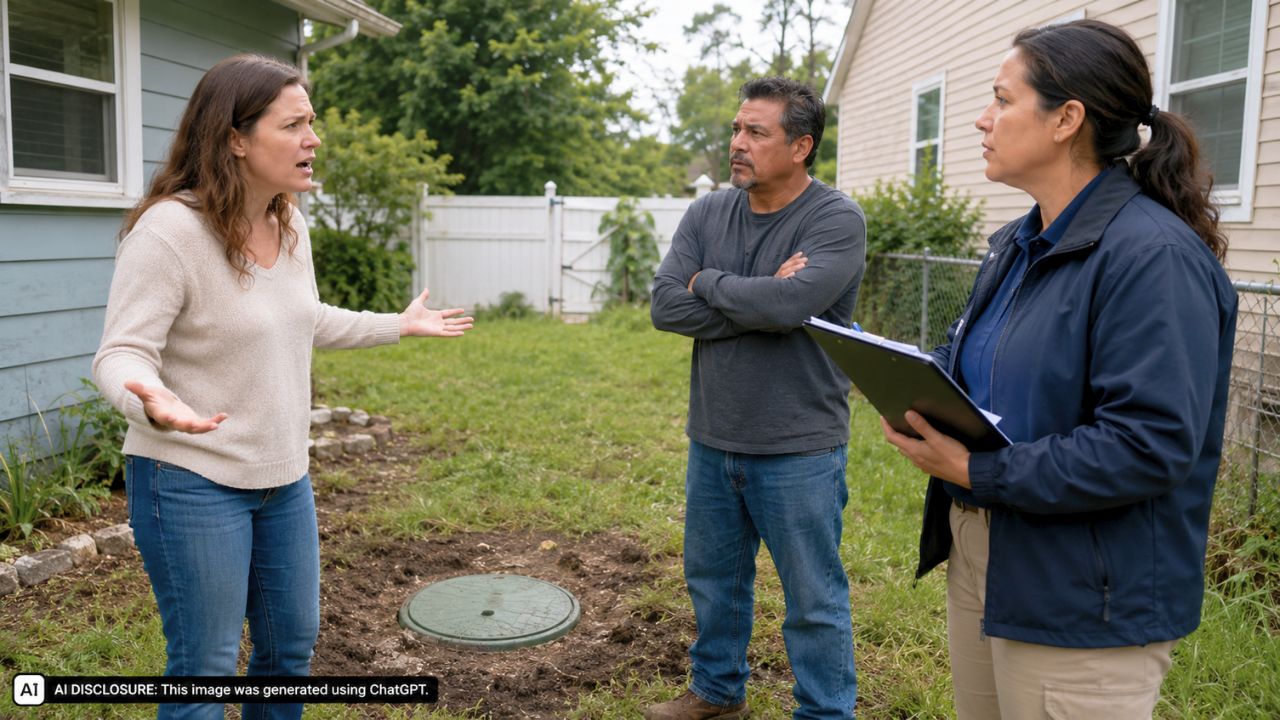
Photo credit: AI-generated image created using ChatGPT. Illustrative only.
Six years into owning their place in rural Stevens County, Washington, a homeowner realized the “good enough” fence they’d built for the dogs might be hiding a much bigger problem. The fence was never meant to mark the boundary—just to keep pets off the road—but it became the de facto line once new neighbors bought the adjacent five acres and started building close to it.
Then a neighbor on the other side dropped a detail that changed everything: the actual property line appeared to be about 46 feet past the fence. If that’s right, the new neighbor’s septic system may not just be close—it may be sitting halfway or entirely on land they don’t own, as described in the original post. And when the county health department was contacted about the setup, the homeowner says they were told the system was never permitted for that location.
The fence was never a property line—until it became one
The homeowner’s fence went up when they had no neighbors next door. They placed it where it was easiest to build by hand, stopping short because the ground was too rocky to work farther out. It did what it was supposed to do: kept the dogs away from the road.
When the adjacent parcel sold later, the homeowner’s father-in-law—who lives on the property—made a point to tell the new arrivals the fence wasn’t the true boundary. It was a barrier, not a survey. That warning mattered, because once people start treating a fence like a line in the dirt, everything behind it becomes “their side” in their minds.
New neighbors moved in, and the building started close
After the new owners bought the neighboring five acres, they built their septic system “really close” to the fence. Close enough that the father-in-law “threw a fit,” according to the homeowner, but eventually let it go.
That moment is familiar to anyone who has lived rural: you weigh the cost of a fight versus the cost of staying quiet. At the time, the homeowner didn’t have a firm reason to escalate. No survey. No stakes in the ground. Just a bad feeling and a tank that looked too close for comfort.
Years later, that decision looks different, because septic isn’t a shed you can move with a tractor and a weekend. Once it’s in, it’s in—and if it’s in the wrong place, the “fix” tends to be expensive, disruptive, and personal.
One offhand comment put the septic tank in a whole new place
The homeowner said it was a neighbor on the other side who pointed out the property line might actually sit about 46 feet past the fence. Suddenly the math got ugly: if the line is that far out, the septic tank might be halfway onto the homeowner’s land, maybe even fully on it.
That kind of discovery lands hard because you immediately picture the unseen parts: the tank location, the drainfield, where effluent flows, how close everything is to water, and what happens if a line gets drawn officially. It’s not just a “who owns what” argument. It’s soil, contamination risk, and liability attached to a system you didn’t design, pay for, or approve.
The homeowner’s first instinct was practical: hire a surveyor, confirm the boundary, and then talk to a real estate attorney depending on what turns up. They also planned to do that legwork before confronting the neighbor, choosing proof over adrenaline.
When the health department gets involved, it stops being neighbor gossip
Septic systems are one of those things rural homeowners learn to respect quickly, because they sit at the intersection of property rights and public health. If a system is placed over a line—or installed without proper approval—there’s the neighbor dispute, and then there’s the regulatory problem that doesn’t care who’s mad at who.
In this case, the homeowner says the county health department confirmed the septic was never permitted for that location. That detail changes the tone. A boundary disagreement can drag on as a “civil matter,” but an unpermitted system tied to sanitation and groundwater is the sort of thing counties track closely once it’s on their radar.
The risk isn’t hypothetical. If the tank and drainfield are where they shouldn’t be, any future sale, refinance, or repair can become a full-stop event. Even basic troubleshooting—pumping the tank, replacing a baffle, locating lines—gets complicated when the system’s footprint is in dispute.
Then came the pigs, the creek, and the contaminated water claims
As if the septic question weren’t enough, the homeowner described a second problem: the neighbors built a pig pen right next to a creek. Now people “down the way” reportedly have contaminated water, and the homeowner says they do too—though their drinking water comes from a well, not the creek.
The homeowner had heard there may be a rule requiring pigs to be at least 200 feet from the creek. Whether that exact distance applies in their county or depends on local ordinances and best management practices, the bigger point is simple: livestock near water can become everyone’s problem fast.
Runoff doesn’t stay on one parcel. If a creek is carrying waste downstream, it can affect neighbors who never agreed to live next to a concentrated animal area. And once water quality complaints start moving around a rural road, it rarely stays a quiet conversation between two households.
The homeowner’s plan was measured: set up the survey first, then approach the neighbors about the water contamination and mention the survey appointment—without tipping their hand on the septic question until they knew more.
Most people urged the same play: document first, talk second
Even without a blow-by-blow of replies included, the homeowner’s approach mirrors what seasoned property folks tend to recommend when the stakes involve boundaries, septic, and water: get documentation before you turn it into a personal confrontation.
A survey is the anchor. Without it, the argument stays stuck in “I think” territory. With it, decisions get clearer—whether that means negotiating an easement, demanding removal, or pushing the issue through official channels once the county is aware of an unpermitted installation.
The other consistent theme in these disputes is communication in writing. Rural neighbors often prefer handshakes, but when you’re talking about a septic system and potential contamination near a creek, memories get selective. A calm paper trail can be the difference between a fix and a feud.
For now, the homeowner is standing at that uncomfortable fork: take action and risk open conflict, or do nothing and risk living next to a problem that can literally seep into the ground. In rural living, the land is the asset—but water, waste, and property lines are the parts that can turn neighbors into lifelong enemies in a single season.
Like Fix It Homestead’s content? Be sure to follow us.
- Man Says He Found Out the Fence He Paid For Wasn’t Actually on His Property
- Woman Says Her Neighbor Started Taking Mulch From Her Delivery Pile Before She Could Even Spread It
- I made Joanna Gaines’s Friendsgiving casserole and here is what I would keep
- What Caliber Works Best for Groundhogs, Armadillos, and Other Digging Pests?