New Homeowner Finds the Neighbor’s Sump Pump Discharging Directly Onto the Land Just Six Feet From the Foundation — Then the Neighbor Says Redirecting It Isn’t in the Budget
Photo credit: AI-generated image created using ChatGPT. Illustrative only.
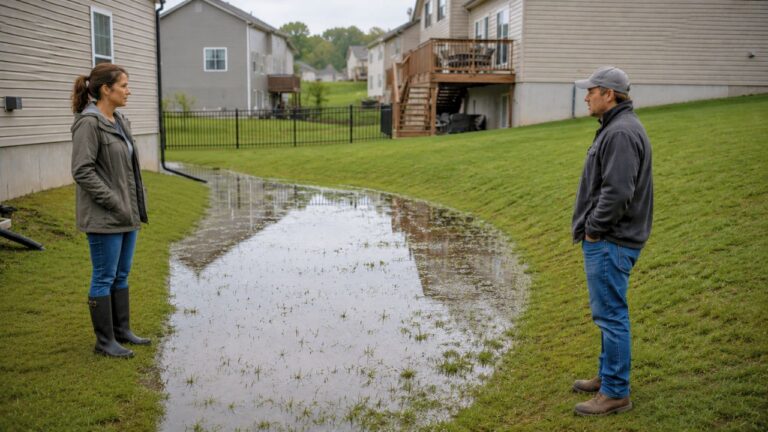
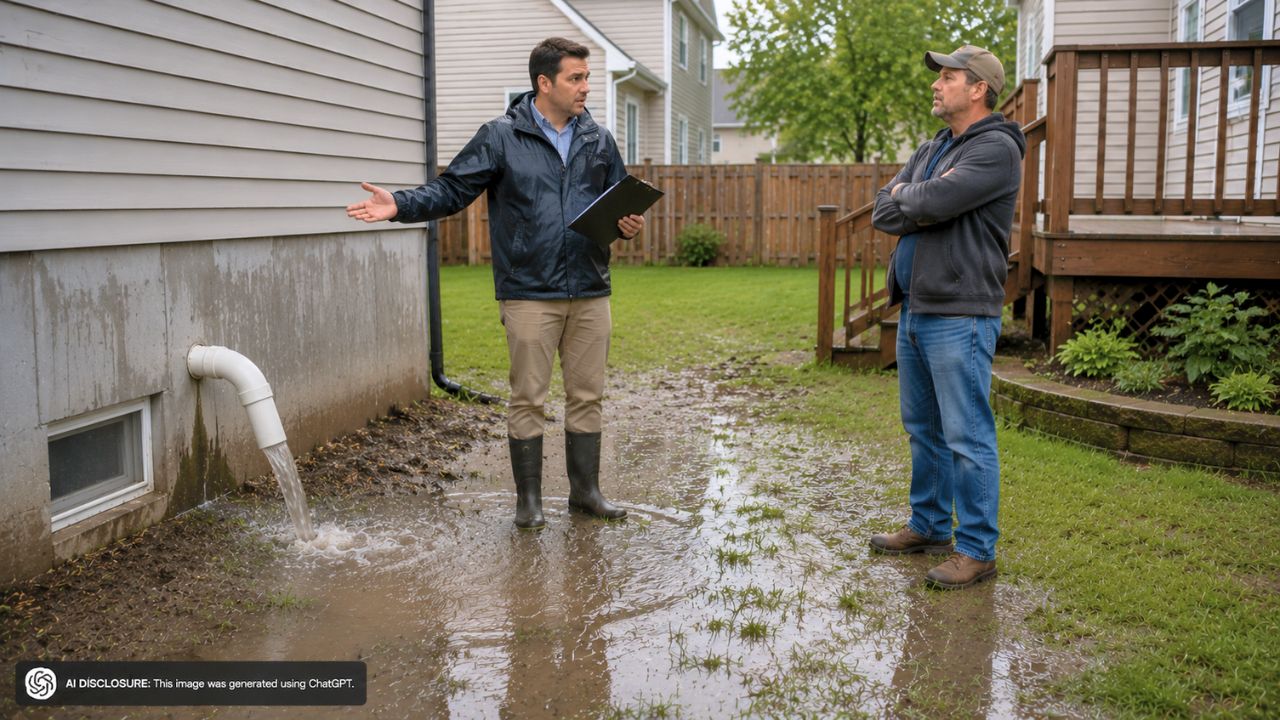
It started as one of those “why is my yard always soggy?” problems that can be easy to shrug off—until the wet spot never dries, the ground turns to muck, and you realize it’s not rainwater at all. A new homeowner noticed their neighbor’s sump pump was sending a steady stream of water onto their side, close enough to feel like it was being aimed right at the house.
In the original post, the homeowner explained that the discharge line from next door was draining into their yard and flooding it. They’d already asked multiple times for the neighbor to reroute it, even offering to help dig, but got a string of excuses—too busy, not the right time, and eventually the kind of answer that translates to: it’s not happening.
The wet patch that wouldn’t go away
Sump pumps are supposed to protect basements, not create a new swamp next door. But from the homeowner’s perspective, that’s exactly what was happening: water was being pushed out of the neighbor’s system and dumped into their yard, leaving standing water and saturated soil.
For a new homeowner, that kind of persistent flooding hits a nerve fast. You’re still learning how the property drains, what the grading looks like, where the low spots are—and whether a wet area is “normal” or a sign of something that can get expensive. When the source turns out to be someone else’s equipment, it adds a whole second layer of frustration.
They tried the polite route first—more than once
The homeowner didn’t jump straight to threats or enforcement. They asked repeatedly and tried to make it easy: reroute the discharge, and they’d even help with the digging. That’s not a small offer. Anyone who’s wrestled with a shallow trench along a property line knows it’s sweaty, awkward work, and it’s the kind of neighbor-to-neighbor help that can keep things friendly.
Instead, the homeowner said they got “all excuses,” including the neighbor being too busy. That’s the part that tends to escalate these disputes: not just the water, but the sense that your property is taking damage while the other person is comfortable letting it happen.
And because sump pumps tend to run hardest during the exact times you’re already stressed—heavy rain, high groundwater, spring thaw—the problem doesn’t politely wait for someone’s schedule to clear.
When your yard becomes their drainage field
Flooding a yard isn’t just an eyesore. Saturated soil can kill grass, compact pathways, and create a muddy strip that tracks into the house. In some cases it can invite mosquitoes and turn a simple weekend lawn project into a constant maintenance battle.
But the bigger fear for many homeowners is what water does when it keeps showing up in the wrong place. Even if the discharge is “only” flooding the yard, water has a way of finding routes—toward foundations, down along fence lines, or into low spots that weren’t noticeable until they stay wet for weeks.
The homeowner’s worry wasn’t described in engineering terms, but the urgency was clear: the neighbor’s setup was dumping water where it didn’t belong, and it wasn’t stopping on its own.
The DIY counter-move: sending the water back
After getting nowhere with requests, the homeowner took matters into their own hands—at least partly. They said they “manually rerout[ed]” the discharge back into the neighbor’s yard. It’s an understandable impulse: if someone’s pump is flooding you, the quickest relief is pushing the problem back where it came from.
But even then, the fix didn’t stick. The homeowner said it still floods. That detail matters because it suggests the issue may not be as simple as pointing the hose a different direction. The volume could be too high, the slope could be wrong, or the water could be returning right back across the line because the yards drain toward the same low area.
And there’s also the reality that “manual rerouting” implies something temporary—moving a hose, shifting an extension, adjusting a line—rather than a proper buried discharge or permanent pathway to a safe outlet. Temporary fixes are fragile, especially when rainstorms hit and everything is working at maximum flow.
The enforcement question: do you call the city and risk a feud?
With the water still causing problems, the homeowner reached out to the city. They learned a code violation could be issued, but they weren’t sure whether taking that step would “stir the pot.” That’s the homeowner’s dilemma in one sentence.
Code enforcement can be effective because it changes the neighbor’s cost-benefit math. A problem that was easy to ignore suddenly comes with deadlines and consequences. But it also changes the relationship permanently. Once a complaint becomes official, it’s not just two people talking over a fence—it’s a record, and everyone knows it.
For many homeowners, that’s the trap: if you do nothing, you live with the damage. If you escalate, you may end up living next to someone who blames you for making their life harder.
What people usually push for in these drainage standoffs
Even without a long comment thread included in the source material, the pattern of advice in these disputes is consistent: document first, then act. When water is involved, people tend to focus on proof—photos of standing water, dates and times, and clear shots showing where the discharge is pointed and where it lands.
Homeowners also tend to look for the option that forces a durable fix instead of a temporary patch. The reason is simple: if the neighbor’s sump runs frequently, the yard flooding won’t be a one-time event. It becomes a repeating problem tied to weather and groundwater, not a single storm.
And the moment someone says rerouting isn’t possible—whether it’s because they’re too busy or, in the way these conversations often go, because it “isn’t in the budget”—others usually read that as a sign the homeowner may need to rely on formal channels. Not to be petty, but because water damage doesn’t wait for a better financial season.
The unresolved tension here is that the homeowner has already tried cooperation and even tried their own workaround. The yard is still flooding. The city is an option, but it comes with social fallout. That’s where a lot of property-line problems end up: not with a clean fix, but with a homeowner staring at a wet yard and deciding which kind of headache they can live with.