New Homeowner Finds the Neighbor’s Yard Drains Directly Onto the Property After Every Rain — Then the Neighbor Says the Grade Has Always Sloped That Way
Photo credit: AI-generated image created using ChatGPT. Illustrative only.
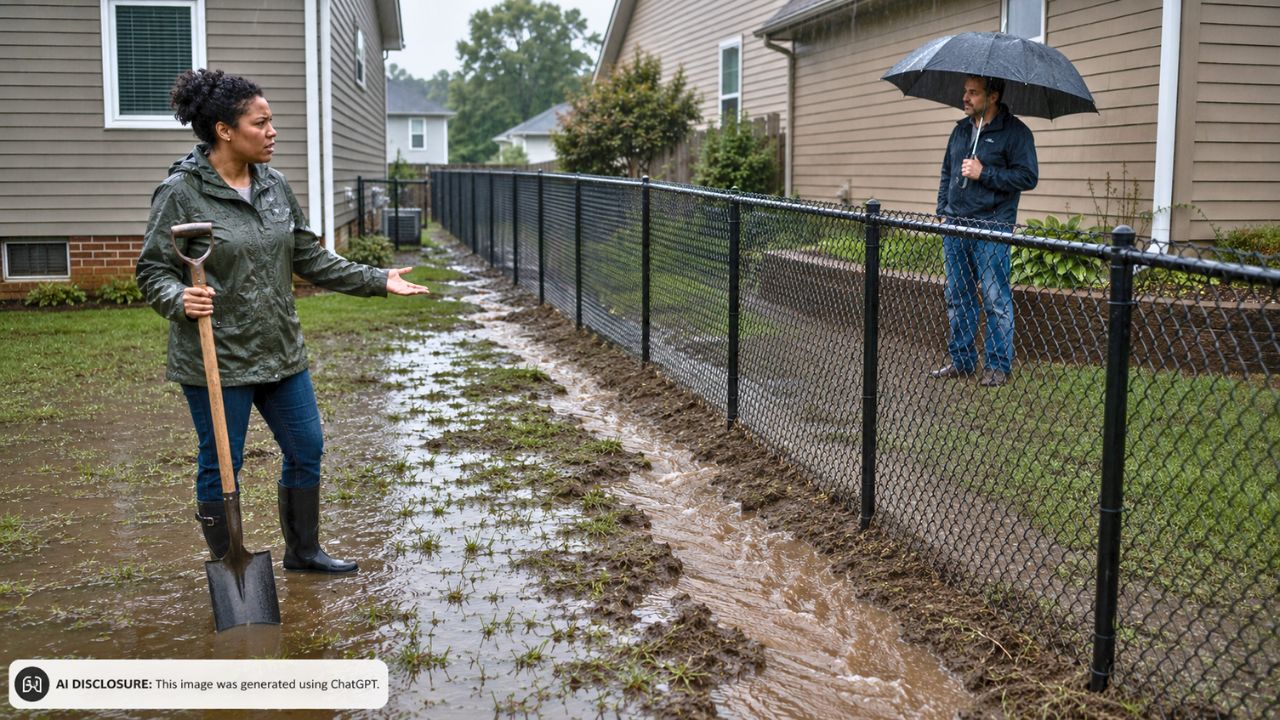
The first big rain after moving in is supposed to be a little victory lap: you watch the gutters do their job, you listen to the water roll off the roof, and you feel like the house is “settling in” with you. For one new homeowner, that rain came with a nasty surprise—water didn’t just move through the yard, it poured in from next door, pooling, chewing away at the soil, and leaving behind a soggy mess.
In the source post, the homeowner describes a simple, specific problem: their neighbor’s roof water is running into their yard, causing flooding and erosion. They even mention having a video of it, the kind of evidence you record because you already know the story is going to get disputed later.
The first sign wasn’t a puddle—it was the erosion
Flooding gets attention, but erosion is what makes people panic. A puddle can dry up in an afternoon. Erosion is the yard physically leaving, and it doesn’t come back without work, materials, and usually money.
That’s what stands out in the homeowner’s description: not just “water comes over here,” but “flooding and eroding our yard.” If water is concentrating into one path—like a chute from a downspout or a fast-moving sheet off a roofline—it can cut a channel quickly, especially along property edges where the soil might already be loose from landscaping changes.
It’s also the kind of damage that keeps escalating. Once water cuts a groove, the groove becomes the preferred route for the next storm. The next storm digs deeper. Then the yard starts to look like it has a permanent drainage ditch that nobody asked for.
When the water is coming from a roof, the neighbor argument is predictable
Plenty of neighbor drainage fights start the same way: one yard is higher, one yard is lower, and gravity does what it does. But roof runoff is different than “it’s always sloped this way.” Roof water is collected and concentrated, and if it’s being dumped at the wrong spot, it can turn a normal grade into a mini washout.
The homeowner’s post is short, but the problem it hints at is the classic one—someone’s system is effectively treating the property line as a drain. Maybe it’s a downspout pointed sideways. Maybe it’s missing an extension. Maybe gutters overflow and waterfall in the same spot every storm. However it’s happening, the result is now visible on the lower property in the most annoying way: mud, ruts, and a yard that’s too soggy to use.
And once a neighbor responds with a shrug—“it’s always been like that” or “the grade goes that way”—the conversation usually stops being about fixing anything and starts being about who’s responsible.
Why it’s such a problem for a new homeowner
For someone who just bought the house, drainage problems feel like a trap. If the yard wasn’t visibly torn up during showings, you don’t expect the first serious storm to reveal a hidden “feature” that the neighborhood has quietly lived with.
It also puts the new owner in a bad position socially. You’re the newcomer complaining. The neighbor has the advantage of familiarity and time, even if their setup is the thing creating the damage. Meanwhile, your yard is the one paying the price after every rain, and it’s not just aesthetics—saturated soil can undermine fences, make mowing miserable, drown plants, and encourage mosquitos.
There’s another layer people don’t think about until they see it: repeated water against the house side of the property can create long-term risks. Even if the pooling is “just” in the yard now, water has a habit of finding its way toward foundations, crawlspaces, and low spots near patios or walkouts.
The stress point: you can’t fix your yard if the water keeps coming
The homeowner is asking for “the steps that we need to take,” which is telling. This isn’t a question about planting grass or throwing down mulch. It’s the feeling of being stuck: any repair you do—regrading, reseeding, adding soil—can get wrecked by the next storm if the source stays unchanged.
That’s what turns these into real disputes. The lower property can spend weekends and money trying to patch things up, but the neighbor’s roof runoff keeps delivering the same punishment on schedule.
Even basic attempts to protect the yard—like adding edging, building up a small berm, or installing a shallow swale—can backfire if they accidentally redirect water elsewhere. Suddenly it’s not just “their water is hurting my yard,” it becomes “you changed drainage,” and now both sides are dug in.
That’s why people start recording video in the first place. Not to be dramatic—just to be able to show, plainly, what happens when it rains.
What other homeowners usually focus on: proof, boundaries, and paper trails
Even without a long comment thread pasted in, this type of post typically draws the same practical instincts from other homeowners: document everything and figure out exactly where the water is coming from before the conversation gets heated.
Video of active runoff is one of the clearest pieces of evidence you can have, especially if it shows the flow coming from a roof/downspout area and crossing a property line. People also tend to suggest taking photos after storms, noting dates, and capturing the erosion getting worse—because the “it’s always been like that” defense falls apart when you can show the damage progressing week by week.
Then there’s the boundary question. A surprising number of drainage battles get muddied by assumptions about where the lot line is. Homeowners often end up checking their survey, their closing documents, or any visible markers, simply because solutions like a trench, drain line, or barrier can’t be installed confidently if nobody agrees what land is whose.
Finally, the paper trail: people lean toward written communication once it’s clear the fix isn’t going to happen with a friendly chat. Not because everyone wants a legal fight, but because verbal “we’ll look at it” promises disappear after the next rain.
A messy problem, because the weather doesn’t wait for anyone to agree
The hardest part of runoff drama is that it doesn’t pause while neighbors negotiate. Every storm is another test, and the yard keeps taking hits. The homeowner who posted is already in the phase where damage is visible and aggravating, and they’re trying to figure out the right next move before doing something that makes it worse—or makes the relationship worse.
For now, they’re watching their yard erode in real time and trying to turn a soggy, frustrating pattern into something actionable. In neighborhoods, water always picks a direction. The question is whether the people living there are willing to change anything before the ground is permanently carved into a new normal.
Like Fix It Homestead’s content? Be sure to follow us.