New Landowner Finds the Neighbor’s Private Road Cuts Across the Front of the Property With No Recorded Right of Way — Then the Neighbor Says Removing Access Would Cut Off Their Only Route In
Photo credit: AI-generated image created using ChatGPT. Illustrative only.
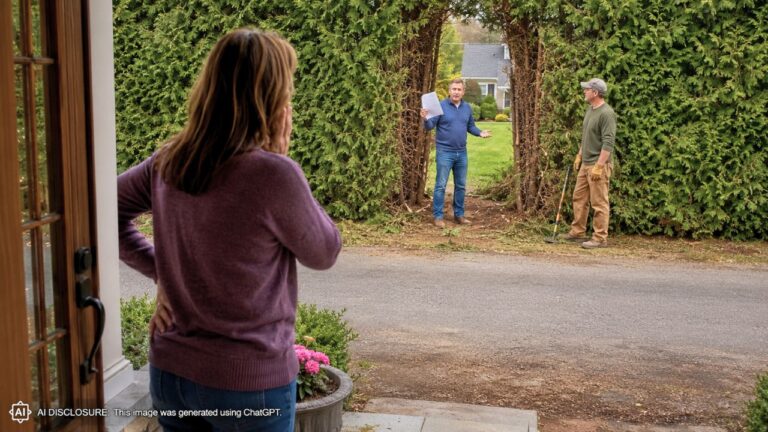
Buying land is supposed to come with a few surprises—maybe an old shed you didn’t notice, maybe a junk pile tucked behind some trees. But this Vermont buyer found a surprise that comes with tire tracks: a neighbor’s driveway cutting across the corner of their newly purchased property, apparently with nothing in writing to back it up.
In the original post, the new landowner said they only realized after closing that a driveway they hadn’t known about crosses a corner of their lot. The seller’s disclosure didn’t mention any right of way. Their deed didn’t mention one either. They even pulled the neighbor’s deed at town hall and said it also didn’t show a recorded right of way.
The discovery came after the papers were already signed
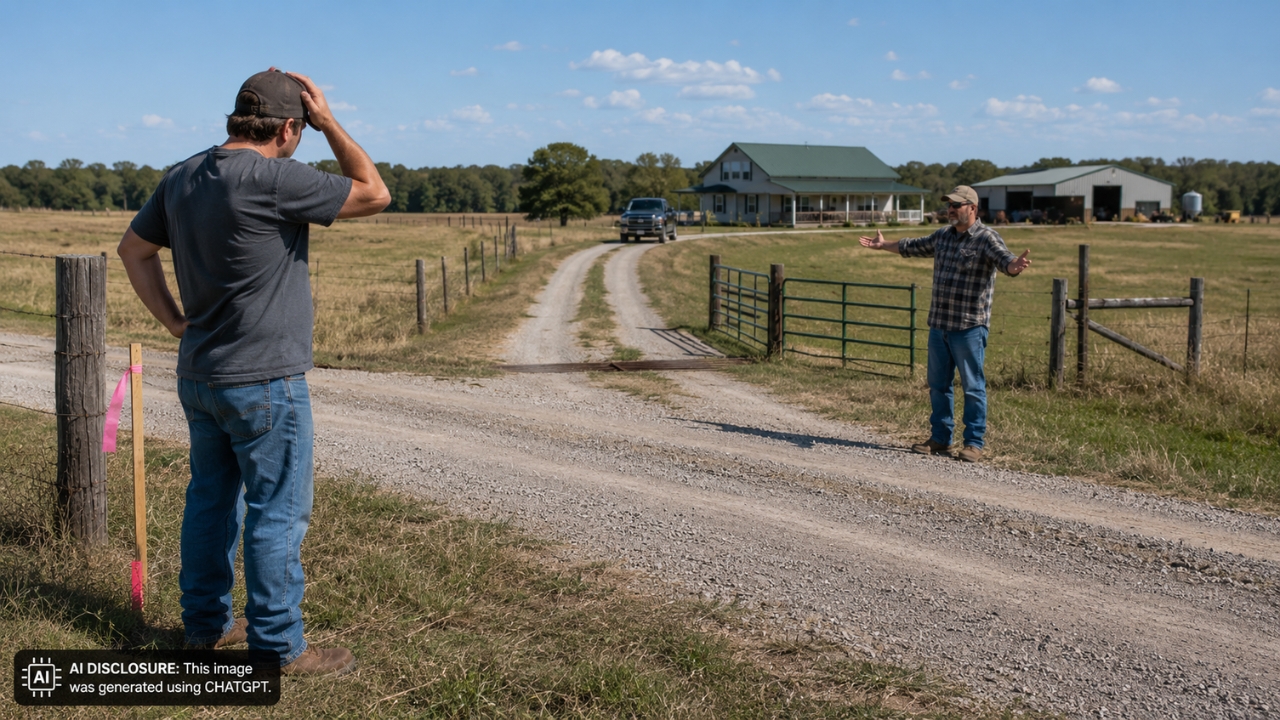
The buyer described it like a slow-motion “wait, what?” moment. They’d already purchased the property, and only then did they notice the driveway’s path doesn’t stay neatly on the neighbor’s side. Instead, it clips a corner of the buyer’s land.
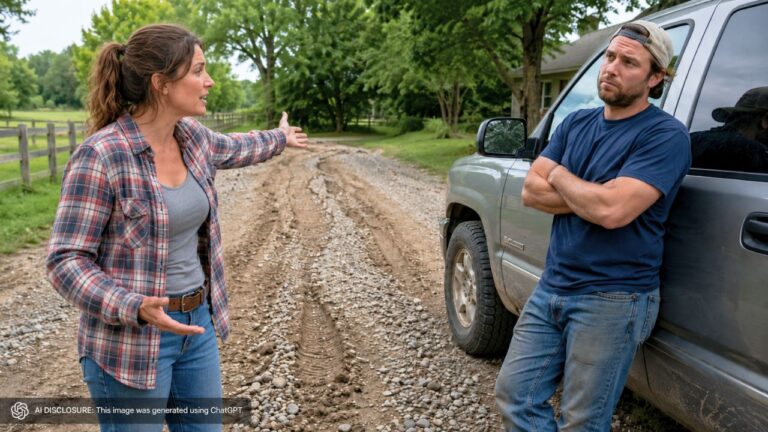
This isn’t just a walking path or a neighbor cutting across the grass once in a while. The post mentions the neighbor uses the driveway to tow a pop-up camper. That adds weight—literally and figuratively—because regular vehicle traffic changes the stakes. Ruts, drainage problems, crushed edges, and maintenance questions aren’t theoretical when something with a trailer is rolling through.
And once a new owner sees that kind of use happening on their land, the clock in their head starts ticking. If you allow it, does it become “normal”? If you block it, do you start a feud with the first neighbor you meet?
No right of way on paper, but a driveway exists in real life
What made the buyer uneasy wasn’t only the driveway itself. It was the paperwork being silent while the ground told a different story. They checked the seller’s disclosure. Nothing about rights of way. They checked their own deed. Nothing. They checked the neighbor’s deed. Still nothing.
That’s the kind of mismatch that makes homeowners feel exposed. A driveway isn’t like a temporary fence someone can move. It’s a sign of long-term use. Gravel, grading, culverts—driveways often look “permanent” even when the legal rights behind them are murky.
The buyer said they wanted to be careful and have a conversation, but they also didn’t want to walk into it unprepared. That’s a common trap in rural and semi-rural properties: the land has its own history, and neighbors often treat long-standing habits as if they’re legal rights, even when nothing is recorded.
The neighbor’s access problem turns it from annoyance to leverage
The headline version of this kind of dispute almost always ends up at the same pressure point: access. If that driveway is the neighbor’s only practical way in and out, suddenly it’s not just “please stop crossing my land.” It’s “if you stop me, I can’t get home.”
Even without a recorded right of way, a neighbor who depends on a route will usually act like they’re entitled to it—because in day-to-day life, dependence feels like entitlement. That’s when the tone can shift fast. A new owner thinks they’re asking a reasonable question about boundaries. The neighbor hears an existential threat to their property’s usability.
And that’s why this kind of conflict gets tense early: one side is thinking about property rights and liability, the other is thinking about being cut off. The buyer’s goal, as they put it, was a peaceful resolution—but also something formal. Not a handshake that leaves them holding the risk.
The real fear is liability, damage, and “now it’s your problem”
Driveway traffic across your land can feel like a minor inconvenience until you start thinking like an owner. What happens if the neighbor’s camper damages the corner of the lot? What happens if the ground washes out and a vehicle gets stuck—or worse, rolls? Who maintains that section? Who decides when it gets plowed, graded, or widened?
There’s also the uncomfortable question of what “allowing it” signals over time. Homeowners worry that silence and tolerance can be interpreted as permission. Even people who hate confrontation start thinking about documentation, timelines, and whether they’re accidentally agreeing to something they’ll regret later.
The buyer hinted at exactly that balancing act. They wanted to do their homework before speaking with the neighbor, and they said they would definitely talk to a real estate attorney. In other words: keep it calm, but don’t be naive.
“Who missed this?” becomes the second problem
Once the buyer confirmed there was no recorded right of way in the obvious places, the next question was hard to ignore: how did this not come up during the purchase? They asked whether they should be considering legal action against someone for not catching it—floating the seller, realtor, title company, the attorney used for closing, and even the neighbor as possibilities.
That’s where a lot of land purchases feel especially unforgiving. When you buy a house in a tight neighborhood, boundaries tend to be visible: fences, sidewalks, driveways squeezed between homes. With land, it’s easy to miss a corner cut—especially if you didn’t walk every line or if the driveway blends into the landscape.
But from a buyer’s perspective, the driveway feels like something that should have been flagged. The seller’s disclosure didn’t mention rights of way. The deeds didn’t mention it. Yet the use is real enough that the neighbor is towing equipment across that corner like it’s routine.
Most reactions pushed “peaceful, but formal”
Even without a full comment thread included in the source material, the buyer’s edit tells you what kind of feedback they were getting: they thanked people for the input and said their goal was still a peaceful resolution, but with a more formalized agreement.
That’s usually where homeowners land after the initial anger burns off. They don’t necessarily want to trap a neighbor or trigger a property war. They want the neighbor to have whatever access is fair and necessary, but on terms that protect the new owner—clear boundaries, clear responsibilities, and something written down so it doesn’t turn into a vague “we’ve always done it this way.”
The unspoken subtext is that a friendly conversation is easier now than after the first blown tire rut, the first argument about plowing, or the first time a guest asks why someone else’s driveway is on your land.
For this new Vermont landowner, the next steps sounded like a mix of caution and practicality: talk to an attorney, understand the history, then approach the neighbor with a plan that doesn’t rely on memory or goodwill alone. Because once you own the land, the corner someone else drives over stops being a curiosity and starts being yours to manage—whether you asked for that job or not.