Pennsylvania Homeowner Surveys the Yard Before Adding a Shed and Finds the Neighbor’s Well Sitting on Her Land — Then a Cordial Conversation Ends With the Neighbor Threatening to Call a Lawyer
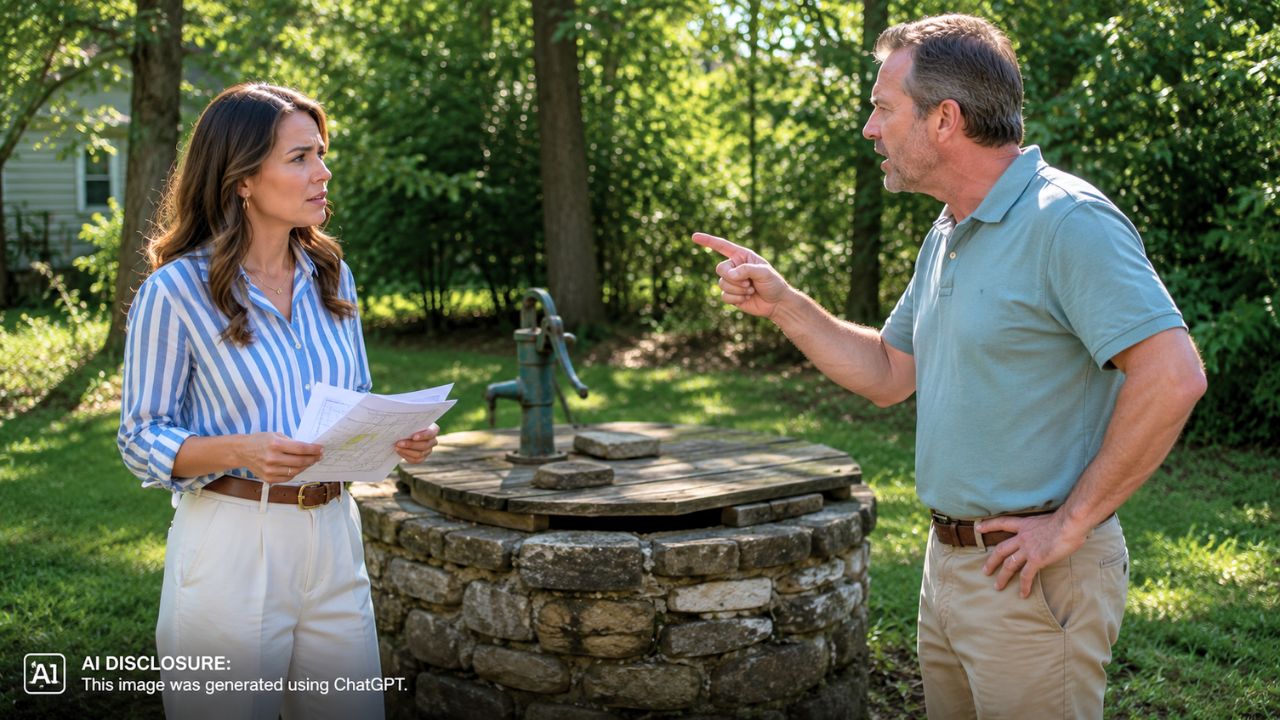
Photo credit: AI-generated image created using ChatGPT. Illustrative only.
It started like one of those responsible homeowner moves you’re glad you made: get a survey before dropping money on a backyard shed. The property lines get marked, you place the building where it belongs, and you avoid the classic “my fence is on your land” fight before it begins.
Except this time, the paint flags didn’t just guide the shed placement. They led to an uncomfortable discovery—one that turned a routine project into a boundary dispute involving a drinking-water well and talk of lawyers. The homeowner laid out the details in the original post, explaining that once the surveyor marked the lines, it looked like the neighbor’s well and other backyard items were sitting inside her property.
The shed was the excuse—then the survey changed everything
The homeowner said they had a survey done specifically to place a shed correctly. A “really cool semi retired dude” came out, prepared with a plan, and marked the lines so the shed could go in without crossing into anyone else’s yard.
But after those marks went down, the homeowner noticed something odd: the surveyor’s line seemed to run uncomfortably close to the opposite neighbor’s steps. That wasn’t a “maybe the fence leans” kind of discovery. That was a “why is a structure basically on the line?” moment that makes your stomach drop.
To make sure it wasn’t a mistake or a misunderstanding, they brought in a second surveyor. The second check appeared to confirm the first: the neighbor’s well—and a couple other backyard items—were over the line onto the homeowner’s property.
Finding a well on your land hits different than a stray fence
A shed, a garden bed, even a section of fencing can feel negotiable. A well is different. It’s tied to utilities, water safety, and in many households, daily survival. It’s also something people assume is unquestionably “theirs,” because it serves their home.
The homeowner’s questions came fast and blunt: Do we own their well if it’s on our property? Has anyone ever seen a home built within five feet of a property line? What are the actions and repercussions when a well and other items appear to encroach?
In the real world, this is where stress compounds. If the neighbor’s water source is physically on your land, access becomes an issue. Maintenance becomes an issue. Liability becomes an issue. And if anything ever goes wrong—contamination, collapse, damage during landscaping—nobody wants to be the person holding the blame.
A cordial approach didn’t stay cordial for long
The homeowner tried to handle it the way most people hope they can: talk it out, human to human. They said they spoke cordially to a relative of the neighbor who now lives there—described as an uncle/cousin/brother—someone who seemed to be the on-the-ground person at the property.
But then the tone shifted. The homeowner said they received a phone call from the actual homeowner, and the message wasn’t neighborly. It was lawyer talk. The homeowner posting the story said the other side was threatening to speak with a lawyer, and they decided they were “lawyer-ing up as well.”
That escalation is familiar to anyone who has dealt with property lines. People can be friendly for years, right up until a piece of paper suggests one person might lose land—or be forced to move something expensive. At that point, even decent neighbors sometimes snap into defense mode, because the downside feels immediate and personal.
When it turns into paperwork, the real cost is time and access
The homeowner isn’t just staring at a misplaced object. They’re staring at a chain of future headaches: Who has the right to access the well if it’s over the line? Can the neighbor walk onto the homeowner’s property whenever maintenance is needed? If there’s a pump, a cap, or electrical tied into it, what exactly crosses the boundary and what doesn’t?
Even the phrase “a couple other backyard items” matters. A single encroachment can be resolved with a move. Multiple items start to look like a long-term pattern, the kind of thing that can turn into arguments about how long it’s been that way and whether it was ever allowed.
The homeowner also asked if anyone had heard of a house built within five feet of a property line. That detail hints at the bigger picture: if structures are tight to the boundary, every inch matters, and any old assumptions about “where the line is” become risky. It’s not just about the well. It’s about how close everything else is—and what happens if future work requires equipment, digging, or access near that edge.
What people in the comments pushed: document first, talk second
While the post itself focused on what to do next and what questions to bring to a lawyer, the underlying theme from this kind of dispute is predictable: once “my well is on your land” enters the chat, casual conversations tend to fail.
The homeowner already took one of the biggest steps people urge—getting a second survey to confirm the boundary marks. That alone signals they weren’t looking for a fight; they were looking for certainty before making a big accusation.
From there, the practical advice in these scenarios usually circles the same points: keep everything in writing, keep your records organized, and don’t rely on handshake agreements when a critical utility is involved. Because if the other party is already floating the word “lawyer,” then any friendly verbal understanding can evaporate the minute someone gets scared or gets different advice.
The questions that suddenly matter when a well is involved
The homeowner asked what questions to have ready for their attorney, and you can see why. A well isn’t just property; it’s an ongoing need. If the neighbor has been relying on that well for years, there may be old permissions, old assumptions, or old documents nobody has looked at since the houses changed hands.
It also raises practical “what happens tomorrow?” problems. If the neighbor needs service, do they have to request permission to enter? If the homeowner wants to landscape, fence, or build more, can they? If the well is damaged during normal use of the homeowner’s yard, who pays? And if the neighbor believes the well location gives them a right to keep using that spot, how do you formalize that without giving away more than you intend?
In Pennsylvania—where the homeowner said they live—those answers won’t come from vibes. They’ll come from deeds, surveys, any prior agreements, and whatever rights may have been created over time. That’s exactly why the story went from “let’s talk” to “we’re getting attorneys” in a hurry.
For now, the shed is in, the survey stakes are down, and the neighborly small talk has been replaced by legal posturing. The hardest part isn’t the awkward conversation—it’s living next to someone whose daily water supply appears to sit on your land, while both sides try to figure out what’s enforceable, what’s negotiable, and what happens if nobody wants to budge.
Like Fix It Homestead’s content? Be sure to follow us.