Rancher Finds Locked Gates on the Road to His Livestock After a 66,000-Acre Ranch Sale — Then Sues, Warning the Cattle Could Die of Thirst
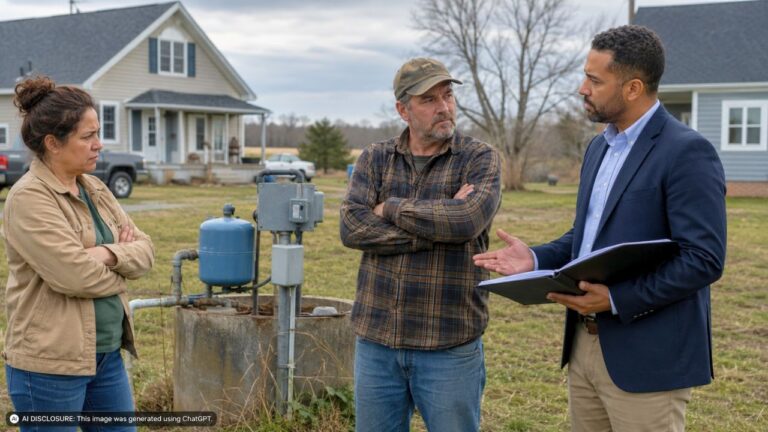
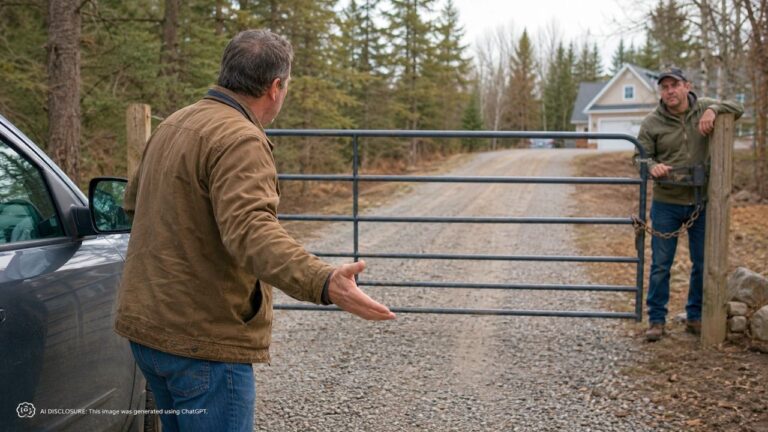
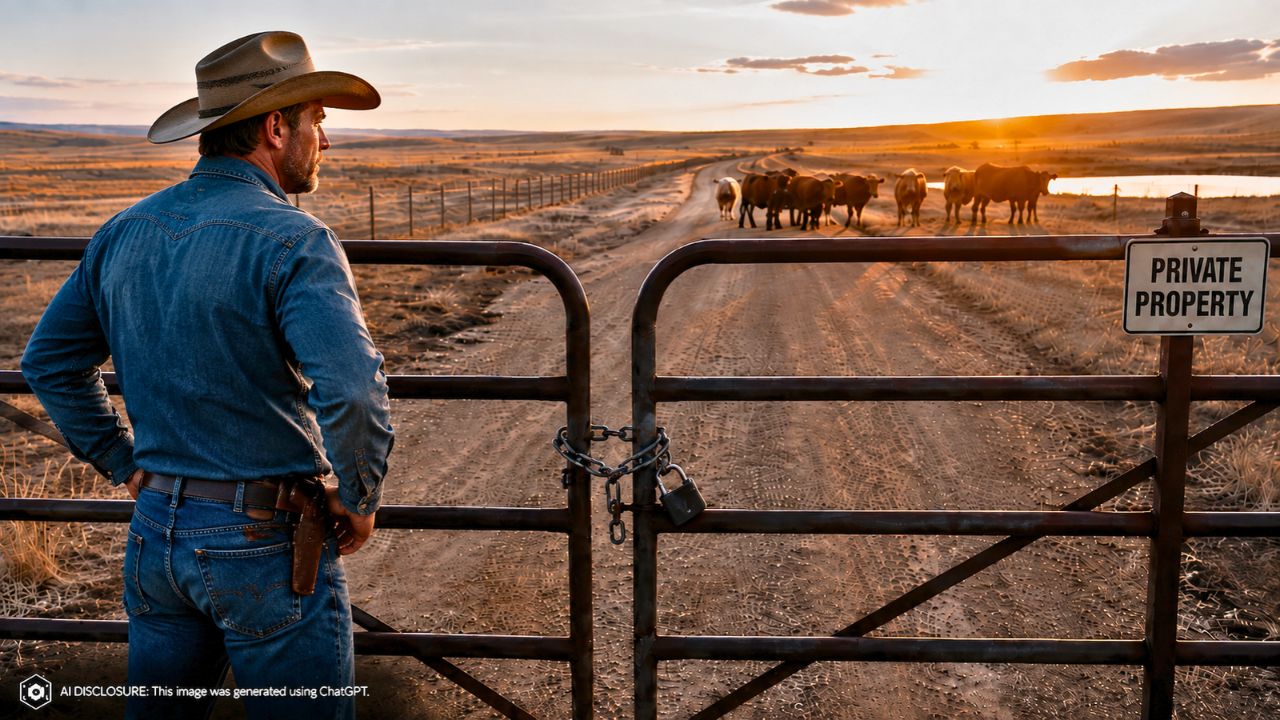
Photo credit: AI-generated image created using ChatGPT. Illustrative only.
The kind of rural access problem most people only read about became very real in Shafter, Texas: a rancher says the road he relies on to reach livestock suddenly turned into a dead end—because the gates were locked.
The details come from the original post about a lawsuit and the behind-the-scenes conversations happening in Presidio County. At the center is La Morita Road, a route that cuts through big, remote country where “take the long way around” can mean hours, not minutes.
The day the “normal route” wasn’t normal anymore
John Poindexter, owner of Cibolo Creek Ranch, says La Morita Road is crucial for reaching a tract of his land known as the Harper Ranch, where livestock are kept. It’s the kind of place where access isn’t a convenience—it’s part of basic animal care, like checking water, moving feed, or fixing a broken trough before the heat does what it does.
That’s why locked gates hit differently out here. According to the lawsuit filed in June, Poindexter’s side argues that without access, livestock could starve or die of thirst. That line isn’t courtroom poetry in West Texas. It’s a practical warning: if you can’t physically get in, you can’t keep living things alive.
A 66,000-acre sale, and then the locks showed up
The change came after Johnny Weisman bought the 66,000-acre Lely Ranch (now called Flying W) in fall 2024. After the purchase, the gates on La Morita Road were eventually locked, cutting off the route that also serves several ranch properties besides the Flying W, including Poindexter’s.
In property disputes, timing is everything, and this one has that classic “we’ve always done it this way” versus “it’s my land now” energy. Poindexter’s attorneys argued that employees tied to the Cibolo Creek Ranch resort used La Morita Road as the primary route to the Harper tract and also to another resort fort at Cienega. The source notes that the Cienega location can also be accessed by Tinaja Road northeast of Shafter, but the fight here is over what was treated as the main route and whether that use created rights.
Permission road or public road? That’s the whole fight
Weisman’s attorneys argue that Poindexter still has access to the Harper Ranch—just not via La Morita Road. They say access is possible from Casa Piedra and Big Bend Ranch State Park, and that any use of La Morita Road was by permission, not by easement or some kind of continual use that could turn into a legal right.
Poindexter’s side points to long-term use with open gates—what county officials described as “common use,” meaning various landowners and even the public routinely traveled through it. That phrase matters because it hints at something bigger than two neighbors squabbling. If a road was historically treated as public, or was once a county road, the “you need my permission” argument gets a lot shakier.
In other words, this isn’t just a lock on a gate. It’s a battle over the history of a road—who used it, how openly, and for how long.
Affidavits vs. affidavits: the paper war behind the gate
Both sides have been building their version of reality with sworn statements. The source reports affidavits from several Shafter residents supporting Flying W’s position, while affidavits from Cibolo Creek Ranch employees support Poindexter’s claim of continual use with open gates.
This is the part that will feel familiar to anyone who’s ever had a property-line argument turn into a documentation contest. People stop talking in generalities and start talking in specifics: which gate, which year, who had keys (or didn’t), whether anyone ever asked permission, whether anyone ever said no, and whether maintenance was done like an owner would do it or like a guest would do it.
And it’s not a small-stakes case where one side will get tired and quit. The source notes that both Poindexter and Weisman have made fortunes—Poindexter in heavy trucks and equipment, Weisman in state highway construction—so both have the resources to withstand a long legal grind. The case is currently in discovery, with no new hearings set.
County officials get pulled toward the blast zone
Once the “maybe it’s a public road” idea gets mentioned, county government can’t entirely ignore it. Presidio County Judge Joe Portillo said there were discussions about historical use that might make the road public, but nothing has been put on a Commissioners Court agenda.
That matters because, as described in the source, the court could theoretically vote to make the road public. But that step could also put the county directly in the path of a lawsuit—or get the county enjoined in the current one.
County Commissioner Deirdre Hisler made it plain she doesn’t want Presidio County stepping into a fight between private landowners. “This is Texas, and this seems to be an issue between two private landowners, and I, as a commissioner, have no interest in enjoining Presidio County into any potential lawsuits,” she said.
Hisler also said she met with Poindexter in Shafter, at his invitation, and told him her position. She said Poindexter told her that County Commissioners Franky Ortiz and Margarito Hernandez were scheduled to meet with him afterwards. But Cibolo Creek Ranch Manager Tom Davis said those meetings never happened, and Ortiz and Hernandez did not respond to requests for comment. Another commissioner, Frank “Buddy” Knight, said he hasn’t discussed the road and only knows about the lawsuit from reading about it.
One more detail feels very “rural property dispute”: Hisler said Poindexter told her that if the road were made public, he would maintain it—something his lawsuit said his employees had always done during years of use. In places like this, road maintenance isn’t abstract. It’s blade work, washouts, and whether an ambulance (or a feed truck) can make it through when the weather turns.
What people latch onto in disputes like this
When stories like this circulate, the reactions tend to split into two practical camps. One group focuses on the “use and history” angle: if the gates were historically unlocked and many landowners used the road routinely, they see the lock as a sudden rewrite of local practice.
The other group focuses on the “clean title” angle: if there’s no recorded easement and the access was by permission, they see locking a gate as an expected move after a major ranch sale—especially when liability, trespassing, and control over a massive property are at stake.
Either way, the part that sticks with most rural homeowners is the vulnerability: you can own land and still get squeezed if your access depends on someone else’s goodwill. It’s not theoretical when animals, water, and distance are involved.
For now, La Morita Road remains the pressure point. Poindexter is reportedly exploring ways beyond the current lawsuit to regain access, including pressing the “common use” history and the possibility it was once a county road. Weisman’s side says alternate access exists and that La Morita Road use was never a right. Between the locked gates and the paperwork stacking up, the road itself has become the battlefield—and the livestock out on the Harper tract are the reason this isn’t just a neighbor gripe that can be ignored until next weekend.
Like Fix It Homestead’s content? Be sure to follow us.