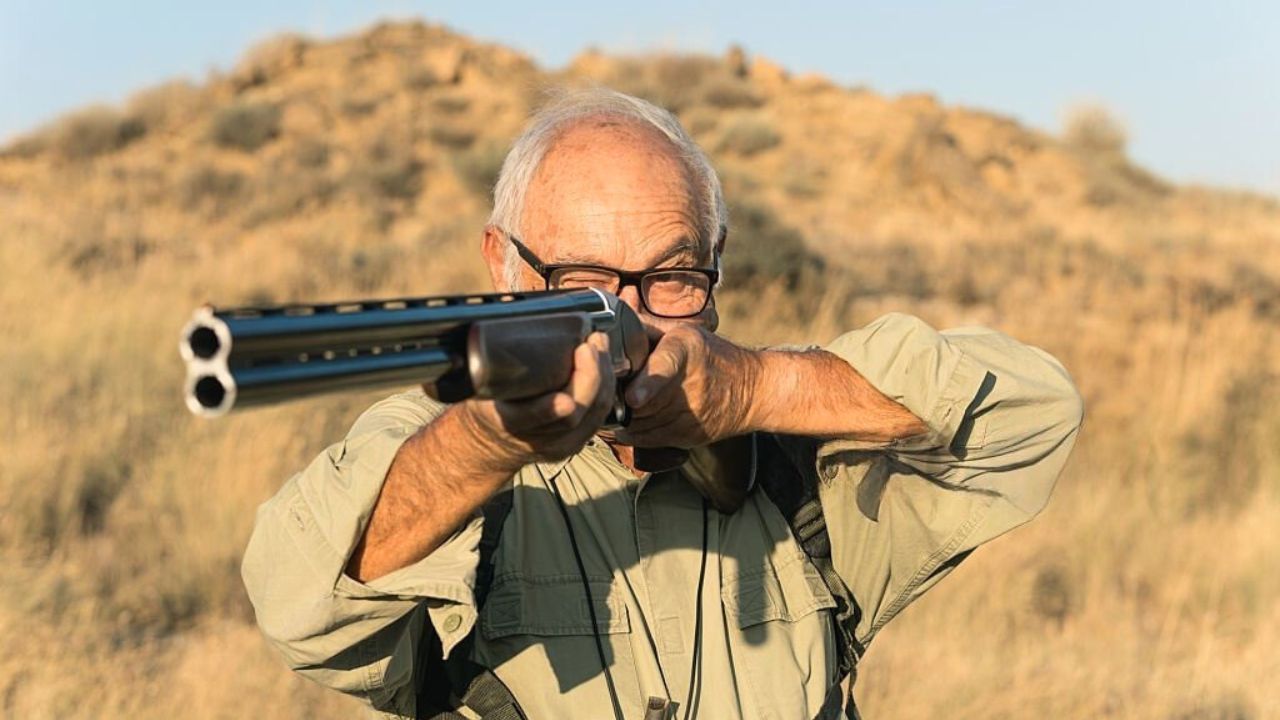
Rifles old-timers keep because they work when everything’s wet and cold
When the sky turns to sleet and your fingers stop listening to your brain, you discover very quickly which rifles are worth carrying and which should have stayed in the safe. Old-timers tend to keep the same battered guns season after season because those rifles cycle, fire, and hit where they should even when everything is wet and cold. If you want that kind of trust, you need to understand why certain designs, materials, and chamberings keep working long after the weather has driven everyone else back to the truck.
What “wet and cold reliable” really means
You are not just looking for a rifle that groups well on a sunny range day, you are looking for a system that still functions when snow packs into the action, rain soaks the stock, and metal is cold enough to burn bare skin. In those conditions, reliability is less about benchrest precision and more about generous clearances, simple controls, and materials that shrug off moisture. Rifles that keep running in this environment usually have forgiving feed geometry, robust extractors, and finishes that resist rust even when you cannot wipe them down for hours.
Modern designers build some rifles explicitly to keep cycling in foul weather, with actions that tolerate grit and ice and with coatings that shed water instead of holding it. One detailed look at rifles that run dirty, wet, and cold notes how design intent shows up in features like robust bolt lugs and materials chosen to keep working through the winter for both military snipers and long range hunters, highlighting how a purpose built cold weather rifle is engineered from the ground up to survive the winter. When you evaluate your own setup, you should be thinking in the same terms: not just whether it shoots, but whether it keeps shooting after a long, wet hike and a night in a cold truck bed.
Why veterans cling to proven classics
Seasoned hunters often stick with one rifle for decades because it has already passed the worst possible tests in the field. Many grew up in families where a single centerfire did everything, from whitetails to elk, and that continuity builds deep confidence. One writer describing the debate around the .30 06 points out that in his hunting family, his grandpa had one rifle, his dad had one rifle, and they relied on that single tool for virtually all big game, a pattern that explains why so many older hunters still reach for a familiar .30 06 when the weather turns ugly.
That loyalty is not nostalgia, it is data. If you have watched a rifle ride in a scabbard through freezing rain, get leaned against a spruce while you dress an animal, and then still chamber and fire cleanly at last light, you are reluctant to trade it for the latest catalog darling. Old timers know that a rifle that has already survived years of abuse in the cold is worth more than a brand new model that has only proven itself on paper, which is why so many of the guns they keep are simple, overbuilt, and chambered in cartridges that feed reliably even when everything is stiff and dirty.
Lever actions and the Marlin 336 tradition
If you grew up in deer country, you have probably seen a scuffed lever gun in the hands of the most successful hunter in camp. The Marlin 336 in .30 30 Winchester is one of the most mainstream deer hunting rifles in North America, and that is not an accident. Hunters prize it because the compact lever action carries easily with gloves, cycles smoothly from the shoulder, and keeps working when snow and brush would foul a more delicate design, which is why many still consider the 336 one of the most vigorous lever action instruments available.
In wet and cold conditions, the virtues of a lever action become obvious. You can keep the rifle tucked under your arm or inside a coat while still being ready to cycle the action, and the tubular magazine avoids some of the feeding issues that can plague box magazines clogged with ice. The Marlin pattern also offers solid side ejection and a closed top that sheds sleet instead of catching it, which helps explain why so many old timers in thick woods and steep country keep a lever gun as their foul weather insurance policy.
Stainless bolts, synthetic stocks, and the Savage 110 Storm mindset
While classic blued steel and walnut have their charm, many experienced hunters quietly switch to stainless and synthetic once the forecast turns to freezing rain. Rifles built with corrosion resistant actions and plastic or composite stocks do not swell, warp, or rust when they ride in a wet scabbard all week. A good example is The Savage 110 Storm, a bolt action built as an all weather tool with stainless construction and an adjustable system that lets you tune the rifle to your own needs and preferences, which is why so many see the 110 Storm as a smart choice when you expect days of sleet.
Old timers who have watched walnut stocks swell and shift point of impact in the rain appreciate how a synthetic stock simply ignores moisture. Stainless barrels and actions also buy you time when you cannot strip and oil the rifle every night, which is often the reality in a wall tent or cramped cabin. When you combine those materials with a straightforward bolt action that has plenty of clearance to keep cycling even when grit and ice get inside, you end up with the kind of rifle that quietly earns a permanent place in the truck during late season.
Mountain rifles that do not quit
High country hunts punish rifles in ways that flatland shooters rarely see. You are climbing through wet brush, sliding across shale, and exposing the gun to rapid swings between sweat and freezing wind, all of which can condense moisture into the action. Lightweight mountain rifles that still hold zero and cycle smoothly in those conditions are rare, which is why dedicated backcountry hunters pay attention to purpose built models like the Proof Glacier Ti Lightweight Mountain Hunter, a design from Proof Research that pairs excellent barrels with weather resistant construction to keep working when you are days from the trailhead and cannot afford a failure in mountain hunting.
In that environment, shaving weight is only half the equation. You also need stocks and finishes that do not absorb water, actions that do not freeze after a night on a saddle, and barrels that maintain accuracy despite temperature swings. Old timers who still chase sheep or late season elk often choose these modern mountain rifles not because they are trendy, but because they combine the reliability of a traditional bolt action with the corrosion resistance and stiffness that harsh alpine weather demands.
Forum wisdom and the Sako, Remington, and Lee Enfield pattern
If you listen to the way experienced shooters talk among themselves, you hear the same names come up whenever the topic turns to bad weather rifles. On one long running discussion about rifles for wet weather, a contributor using the handle Ammo Smith lists a Sako L691 35 Whelen with a blued action that has been teflon coated, a stainless barrel, and a Brown precision stock, alongside a Rem 700 with similar upgrades and, perhaps unsurprisingly, a McMillan stock, as examples of setups that hold up when everything is soaked, showing how combinations of Sako, Whelen, Brown, and Rem parts are trusted in wet weather.
That same grassroots experience explains the enduring respect for older service rifles in the cold. Shooters discussing extreme cold reliability often point out that the old Lee Enfield is, by modern standards, a clunker, but it excels in harsh conditions partly because it is so forgiving and simple to run, which is why some still reach for a Lee Enfield as a bad weather rifle. When you combine that kind of field proven action with modern coatings and stocks, you get a hybrid that old timers trust because it blends the ruggedness of military design with the corrosion resistance of contemporary materials.
Purpose built all weather hunting rifles
Not every reliable cold weather rifle is a hand tuned classic. Manufacturers now sell purpose built models that are explicitly marketed for extreme conditions, and many veterans of wet seasons have quietly adopted them. One overview of rifles for harsh conditions highlights how a modern Bergara is outfitted with a Bergara curved adjustable trigger designed to guarantee a crisp, clean pull every time you fire, and how the company builds feature packed rifles to guarantee performance and endurance in rough environments, which is why a weatherized Bergara has become a go to choice for many guides.
Other brands have taken a similar path, building entire lines around durability. One catalog of advanced durability rifles notes that the summer months, with their long days and unpredictable weather, highlight the importance of a rifle that can withstand environmental challenges, and that these rifles are built to meet these challenges head on, a philosophy that carries over directly to cold rain and sleet in the fall for shooters who choose such advanced durability rifles. When you pick from this category, you are essentially buying the same peace of mind that old timers earned by trial and error, but with modern engineering baked in from the start.
Deer rifles that shine in sleet and freezing rain
For many hunters, the real test of a rifle comes during late season deer, when freezing drizzle soaks everything and temperatures hover just below freezing. In that setting, rifles with corrosion resistant finishes and sealed stocks stand out. One survey of new deer rifles for extreme conditions points to models like the Mossberg Patriot Black with a Cerakote finish, noting that The Patriot has become one of the best values in bolt action rifles in recent years, and that specialized variants like the Tikka T3X Arctic are built to handle severe cold, giving you confidence that a Tikka T3X Arctic will still cycle when your breath is freezing on the bolt.
Independent testing of deer rifles reinforces the same pattern. A detailed rundown of top picks for deer rifles highlights a Best Overall choice in the Wilson Combat NULA Model 20 Bolt Action Centerfire Rifle, available through outlets such as Palmetto State Armoryse, and emphasizes how these designs balance accuracy with reliability in rough weather, which is why a Top Picks list for deer often doubles as a short list of rifles that will not quit in sleet. When you combine that with practical advice on hunting in the rain that stresses preparation, understanding how wildlife responds to weather changes, and having a rifle that performs no matter how wet it gets, you start to see why so many experienced hunters now prioritize durability and weather resistance as much as raw accuracy.
Weatherby, Christensen, Bergara, and the modern “old timer” rifle
Some of the rifles that older hunters now rely on did not exist when they started hunting, but they have earned a place in the same mental category as the classics because they keep working in bad weather. One overview of a major brand notes that from the iconic Weatherby Mark V series to the innovative Weatherby Vanguard, each rifle is engineered for superior accuracy, smooth operation, and the ability to perform in the most demanding conditions, which is why a Weatherby Mark or Weatherby Vanguard often ends up as the one rifle that never gets left behind when the forecast turns ugly.
Other makers have built similar reputations by focusing specifically on winter performance. One detailed explanation of how a particular company builds for harsh winter conditions describes how How Christensen Arms Builds the Best Rifles for Harsh Winter Conditions, emphasizing that when the temperature drops and the elements close in, their carbon barrels and weather resistant stocks keep functioning, which is why many guides now trust How Christensen Arms Builds the Best Rifles for Harsh Winter Conditions as a blueprint for their own gear. Independent testers echo that confidence, with one reviewer noting that Don does not get them wrong when he says he likes the Bergara B 14 Ridge a lot, calling it one of the best 3 out of 8 rifles he tested and suggesting that the results were statistically significant, which helps explain why a well built Bergara has quickly become a modern classic among serious hunters.
Maintenance, semi autos, and even air rifles when it is miserable
No rifle will survive endless neglect in bad weather, and old timers know that the way you maintain a gun between hunts matters as much as the brand on the barrel. A cautionary review of the Remington Model 742 and 7400 notes that Nimrods of this stripe go home from the hunt and put their rifles away without cleaning them, and that If the guns have been rained on or snowed on, rust and gunk soon follow, which is why so many semi autos earn an undeserved reputation for unreliability when the real culprit is Nimrods of poor maintenance. Old hands strip and dry their rifles at the end of each day, even if it is just a quick wipe down and a pass with an oiled cloth, because they know that a little attention now prevents a frozen firing pin or rusted extractor later.
Reliability in wet and cold conditions is not limited to centerfire hunting rifles either. Some shooters turn to simple spring powered air rifles for pest control and practice in miserable weather, because they have very few moving parts and do not rely on temperature sensitive propellants. One guide to these guns explains Why You Would Buy a Spring Powered Air Rifle The allure lies in the blend of mechanical simplicity and low maintenance, noting that the design has relatively few moving parts, making them rugged and low maintenance, which is why a Spring Powered Air Rifle The can keep working when gas systems and electronics are struggling. Whether you are carrying a semi auto, a bolt gun, or a humble springer, the same rule applies: choose simple, proven mechanisms, protect them from the worst of the weather, and give them just enough care that they can return the favor when the shot finally appears.
Reading the weather and choosing the right tool
Even the best rifle will struggle if you ignore how weather affects both equipment and animals. Experienced hunters plan their gear around the forecast, picking rifles and loads that will function in the specific mix of temperature, precipitation, and terrain they expect. One detailed look at rifles for cold, wet conditions notes that cold, wet weather exposes every weakness in your setup and can mean the difference between a clean shot and a missed chance, a reminder that your choice of rifle in Cold rain is as critical as your choice of stand or stalk.
That is why many old timers now blend tradition with modern insight when they pack for a wet, cold hunt. They might carry a battered lever gun or .30 06 that has been in the family for decades, but they pair it with a synthetic stock, a corrosion resistant finish, and a disciplined maintenance routine learned from years of watching what fails in the field. When you follow their lead, you are not just copying nostalgia, you are adopting a hard won set of standards about what a rifle must do when everything is wet and cold, and giving yourself the best possible chance of making that one shot count when the weather is at its worst.
Like Fix It Homestead’s content? Be sure to follow us.
Here’s more from us:
- I made Joanna Gaines’s Friendsgiving casserole and here is what I would keep
- Pump Shotguns That Jam the Moment You Actually Need Them
- The First 5 Things Guests Notice About Your Living Room at Christmas
- What Caliber Works Best for Groundhogs, Armadillos, and Other Digging Pests?
- Rifles worth keeping by the back door on any rural property
*This article was developed with AI-powered tools and has been carefully reviewed by our editors.