Shotguns that blow giant holes in everything except the target
Photo credit: Archetype of Man/YouTube
There’s a big difference between “stopping power” and “I now need to fix that wall.” Around the barn, too much shotgun in the wrong setup means shredded doors, broken siding, and splintered posts. Most of the time, the issue isn’t the gun itself—it’s the barrel, choke, and load combo you’re using way too close to buildings.
Here are the shotgun choices that tend to blow giant holes in everything around the critter.
Magnum 12-gauge pumps with 3½” waterfowl loads
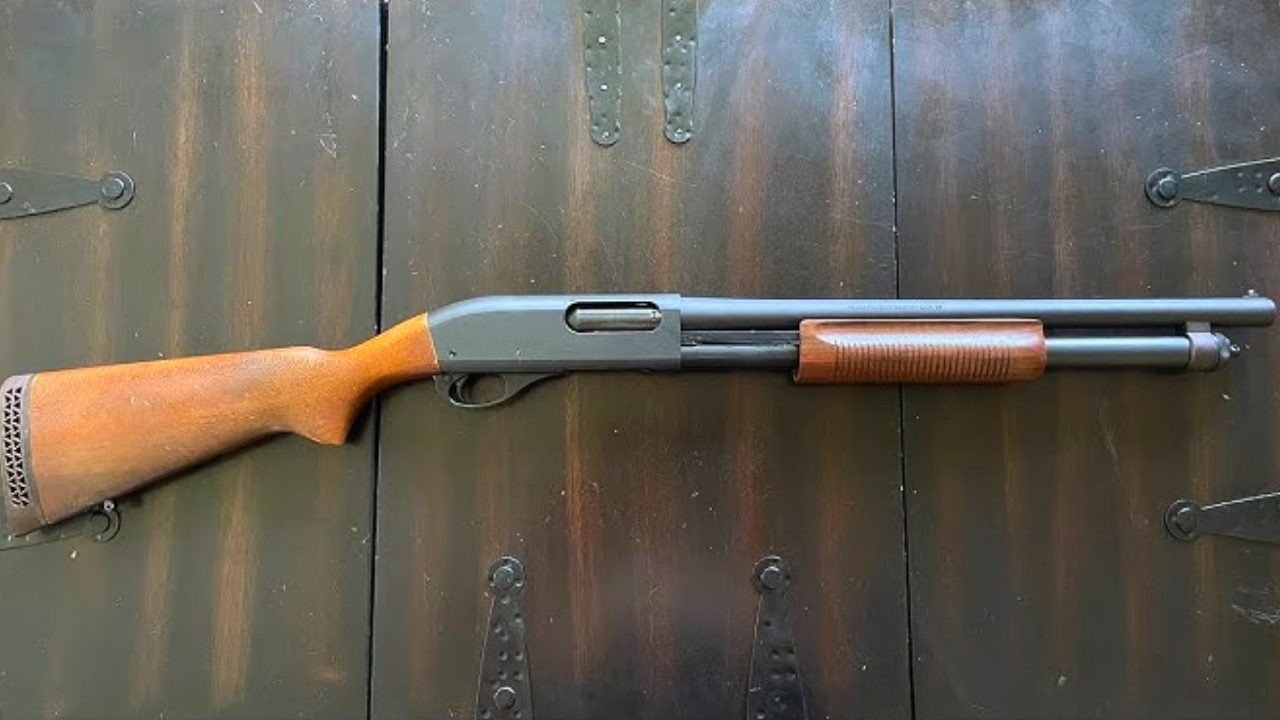
Guns like the Mossberg 835 Ulti-Mag or Remington 870 Super Magnum in 12 gauge are built to throw heavy 3½” loads at geese and turkeys. At 40 yards in a field, that’s great. At 10 yards by the coop, that tight, heavy pattern hits like a sledgehammer.
If you’re shooting those big shells toward doors, siding, or a fence post, you’ll absolutely stop the raccoon—and possibly knock a fist-sized chunk out of whatever’s behind it. For barnyard distances, 2¾” field loads are more than enough.
Turkey guns with extra-full chokes at coop distance
Dedicated turkey setups—think Benelli SuperNova or Winchester SX4 turkey models with extra-full chokes—are designed to keep patterns tight at 40+ yards. At 8–15 yards, that pattern is a basically a slug-sized clump.
A slight miss on a small animal means that dense ball of shot is going straight into wood, wire, or metal behind it. Swapping down to a more open choke (improved cylinder or modified) for around-the-house use saves you a lot of unnecessary damage.
Rifled slug barrels used in tight quarters
Some 12-gauge pumps like the Mossberg 500 Slugster or Remington 870 rifled barrel variants are meant for shooting slugs at deer. A 1 oz slug at close range around barns is serious overkill.
Miss by an inch and you’re driving a big hunk of lead through doors, studs, or equipment. Slugs have their place, but for pests by the coop, they’re one of the quickest ways to blow holes in everything except the target.
10-gauge and 3½” waterfowl semi-autos near buildings
Big waterfowl guns like the Browning BPS 10 gauge or older 3½” 12-gauge semi-autos throw a lot of shot at high velocity. In a marsh, that’s what you want. In a small barnyard, that extra payload and energy is more liability than benefit.
If you’re shooting them toward metal gates, plywood doors, or thin siding, expect real damage when patterns hit just a few inches off.
Tight chokes on short defensive barrels
Short 18.5″ barrels on 12-gauge pumps like a Mossberg 500 Tactical or Remington 870 Tactical often get paired with tighter chokes for “pattern control.” At close pest distances, a tight choke concentrates the blast into a small area and chews up whatever it hits.
An improved cylinder choke opens things up enough to hit critters cleanly without turning every miss into a major repair project.
Buckshot where light birdshot would be enough
00 buckshot in a 12 gauge—through a Maverick 88, Mossberg 590, or Remington 870—is meant for larger, tougher targets. On raccoons and opossums at 10–15 yards, it will absolutely do the job, but it’ll also penetrate deeply and tear up anything beyond them.
For small pests around buildings, #4 or #6 shot in a 2¾” field load is usually plenty and easier on gates, siding, and lumber.
High-velocity steel loads on hard surfaces
Waterfowl steel loads, like 3″ #2 or BB steel shot, used close to concrete, rock, or metal around barns, can ricochet and chew up unexpected spots. Fired from any 12-gauge (Mossberg 500, Beretta A300, etc.), they hit hard and don’t deform like lead.
They’re great over water for ducks, but around hard surfaces, they’re another recipe for extra dings and holes you didn’t intend.
Shorty “mini” shotguns with unpredictable patterns
Very compact 12-gauge guns with pistol grips and very short barrels can pattern unpredictably, especially with non-standard loads. Even if they look “less powerful,” those short barrels can still send tight clusters of shot into doors, frames, or posts when you’re up close.
If you haven’t patterned it on paper at real distances, you don’t really know where that cluster is going—until you see what it did to your coop.
Like Fix It Homestead’s content? Be sure to follow us.