Roofline red flags you can spot from the sidewalk
Most of us don’t climb up and inspect our roof very often, and that’s fair. But you can learn a lot just by standing in the yard and paying attention to how things look from the ground. The goal isn’t to diagnose every problem—just to spot early warning signs before they turn into leaks or expensive repairs.
A slow lap around the house a few times a year tells you more than you’d think.
Shingles that look wavy, buckled, or uneven
Look at the main slopes of your roof. The lines of shingles should look fairly flat and uniform. If you see wavy sections, shingles that seem to buckle, or areas that look like something is pushing from underneath, that’s worth noting.
Buckling can mean moisture in the decking, an aging layer underneath, or shingles that weren’t installed properly. Whatever the cause, it’s a sign that part of the roof isn’t doing its job as well as it used to and might need a closer look.
Spots that look darker, bald, or patchy
From the sidewalk, you might notice darker streaks, “bald” patches, or spots where the texture looks different. Dark streaks can be algae, which is more cosmetic than urgent. Bald spots or areas where the granules are clearly worn off are more serious.
Those granules protect the shingle from sun and weather. Once they’re missing, shingles age faster and are more likely to crack or curl. If one small area looks worn out compared to the rest, it might be from pooling water or a past repair that didn’t fully fix the problem.
Missing, slipped, or crooked shingles

This one is obvious but easy to overlook: scan for any shingles that are missing, shifted out of place, or sitting crooked. High winds and old nails can loosen them over time. One missing shingle doesn’t mean the whole roof is done, but it does expose the layer beneath to rain and ice.
If you spot changes after a storm, take a photo from the ground so you can compare over time. Then either patch that spot yourself (if you’re experienced and it’s safe) or get someone out to handle it before water has a chance to sneak in.
Sagging lines along the ridge or eaves
Look at the ridge line—the very top of your roof. It should be fairly straight. If you see a dip or sag in one section, that can be a sign of a deeper structural issue, like weakened decking or framing. The same goes for the eaves; the edge of the roof shouldn’t bow downward or tilt strangely.
A slight wave on an older home might just be age. A new or worsening sag is something you want checked sooner rather than later. This is one area where a professional opinion is worth it.
Flashing that looks exposed or out of place
Anywhere the roof meets a wall, chimney, or vent, there should be metal flashing helping steer water away. From the ground, you might see shiny strips where flashing is more visible than it used to be, or gaps where shingles no longer sit cleanly against it.
Exposed or lifted flashing can let water sneak behind siding or into the attic. If you notice new “shiny spots” along your roofline or around chimneys, it’s a signal that something has shifted.
Gutters pulling away or dipping
Sometimes the roof itself looks fine, but the gutters tell on it. Step back and check the gutter line. It should run parallel to the roof edge. If you see dips, sections pulling away, or spots where water stains are running down the fascia, that can point to overflow or trapped moisture at the edge of your roof.
Gutters full of debris hold water against the roof and fascia, which can eventually rot the wood and affect the first row of shingles. Fixing the gutter issue early protects both the roof and the structure behind it.
Uneven snow melt or frost patterns in winter
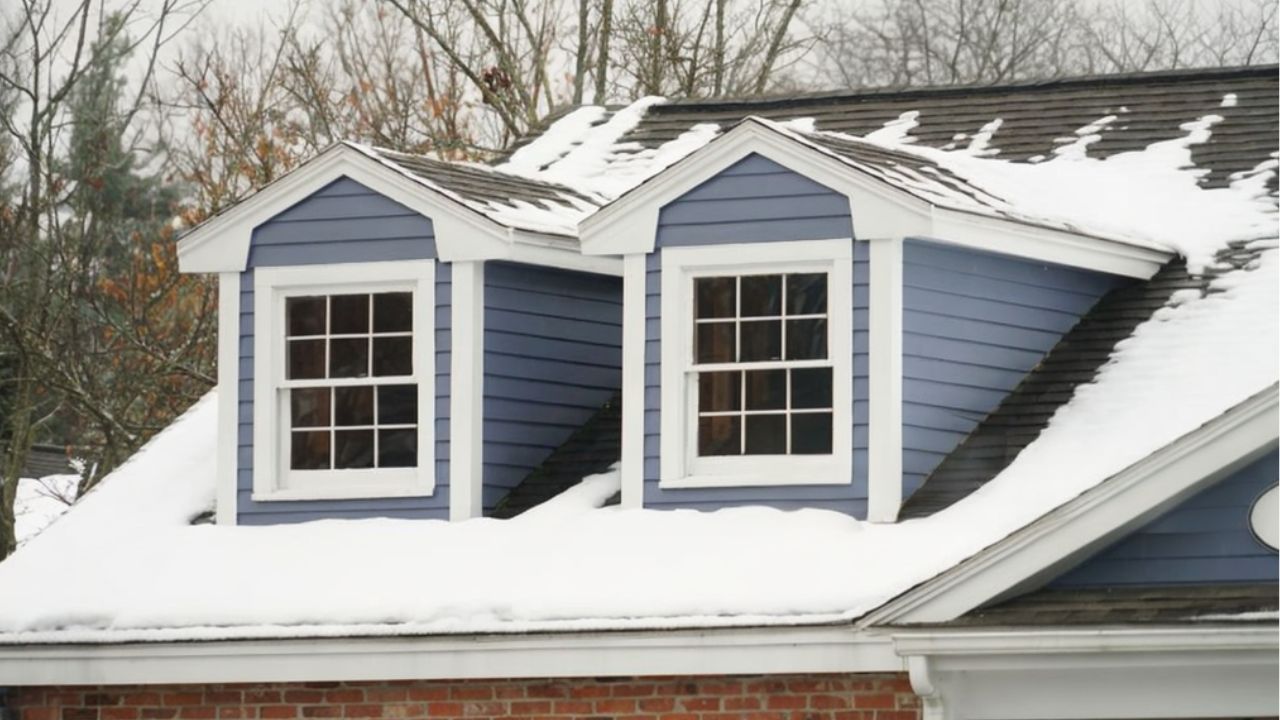
If you live where it snows, pay attention to how it melts. Roofs that lose snow quickly in one spot may be losing heat from inside the house there—think poor insulation, air leaks, or even moisture problems. Areas that keep ice or snow much longer than the rest can mean poor drainage or shading.
You don’t need to panic over every little patch, but obvious patterns—like one bare stripe over an attic or an ice dam forming in the same corner every year—are clues worth following up on.
Turn “that’s weird” into a spring checklist
You don’t have to fix everything the second you notice it. Snap photos, jot down what you’re seeing, and bring it all together when you’re making your spring or fall project list.
Any time you find yourself thinking, “Huh, that looks new,” about your roofline, treat it as a gentle nudge. The earlier you listen, the more likely you are to catch small issues while they’re still easy to handle from the ground.