Rural Landowner Finds the Neighbor Extended a Board Fence Across the Deeded Right-of-Way to the Back Pasture — Then the Neighbor Says the Fence Was Installed for Security and Anyone Who Needs Through Can Just Request a Key
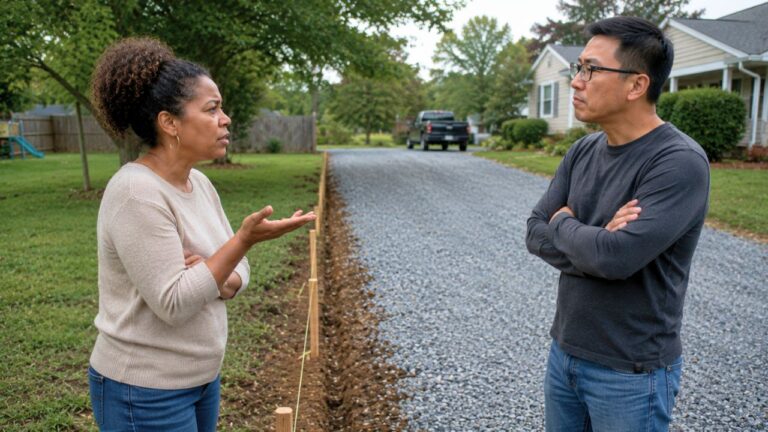
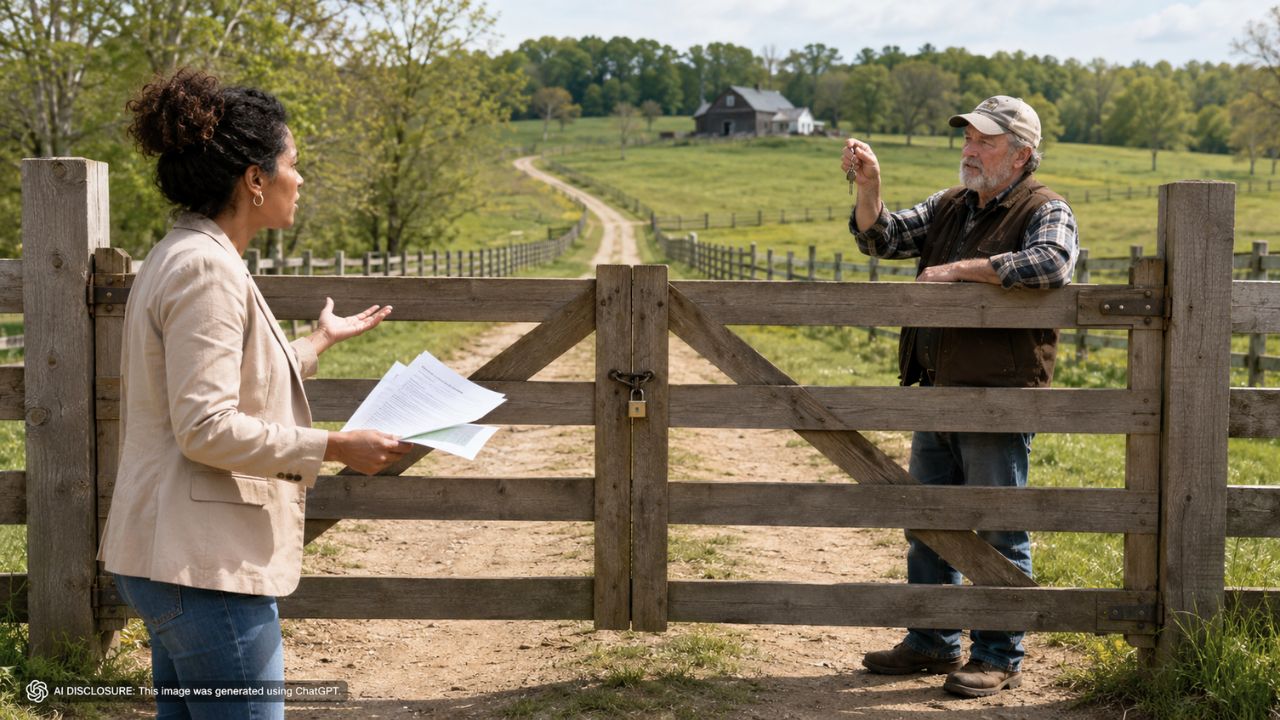
Photo credit: AI-generated image created using ChatGPT. Illustrative only.
It starts as a normal trip back to the pasture: check the fence line, look for storm damage, maybe haul a little feed. Except this time the access lane ends in fresh boards and a locked gate—right where the deed says you have a right-of-way.
The neighbor’s explanation doesn’t soften it. The fence, they say, is “for security.” If you need to get through, you can just request a key. That sounds reasonable until you picture it in real life: cattle out, a tree down, a brush fire, a surveyor trying to flag corners, or a buyer wanting to see the back acreage. And now your access depends on someone else answering the phone.
A North Carolina legal Q&A lays out what landowners can do when the only practical way to reach their property is across a neighbor’s land and the neighbor starts blocking it—along with the four main legal pathways that typically come up in these fights. That breakdown is in the source post, and it reads like it was written for exactly this kind of “locked gate over the lane” homestead drama.
The access lane wasn’t optional—it was the whole point
On rural land, “back pasture” isn’t a cute phrase. It’s where you keep animals, store equipment, cut a trail, or just get to the part of the property that makes the taxes worth it. If the only way in is across the neighbor’s parcel, that route becomes as essential as a well pump or a driveway.
The twist is that long-time use can feel permanent even when it’s not legally nailed down. Families use the same track for decades. Folks wave as they pass. Then land changes hands, tempers change, or someone decides they want to control who comes and goes. Suddenly the “route everyone uses” gets treated like a favor that can be revoked.
And it’s not just about convenience. Once that access is blocked, everything gets more expensive. Maintenance is delayed. Survey work stalls. Showings and inspections turn into awkward negotiations. Even hauling supplies can become a logistical puzzle.
A locked gate turns “neighborly” into “prove it”
The Q&A’s first big point is simple but brutal: North Carolina courts care whether you have a legal right to cross, not whether you’ve been doing it forever. That’s the line between an easement and permission.
A neighbor offering a key sounds like a compromise, but it also quietly reframes the relationship. If you accept the key arrangement, you may be acting like the access is theirs to control. And if you’re trying to sell, lenders and buyers usually don’t love “just text the neighbor for access” as a plan.
The source material notes that these disputes often spike when co-owners are trying to market or sell family land. Access that’s “practical” needs to become access that’s “legal” so it can be relied on at closing. Otherwise, the sale can slow down or fall apart before anyone even gets to price.
The best-case fix is boring: a recorded easement in the deeds
If there’s a recorded easement in the chain of title, that’s the cleanest path. The Q&A emphasizes that a recorded document is the best-case scenario because it’s already a recognized right-of-way, not a story you have to convince a court to believe.
When a landowner discovers a fence cutting across a deeded right-of-way, the immediate “fix it” instinct is to focus on the fence itself—move it, cut it, go around it. But the practical next step is paperwork: pull the deeds, look for prior plats and surveys, and identify exactly where the easement runs.
That “exactly where” part matters more than most folks expect. The source material flags a common pitfall: even when an easement exists, fights erupt because the route shifted over time, got widened, or started being used for something different than what was historically allowed.
If it was never written down, the fight turns into history lessons
No recorded easement? The source lays out other routes that can still create enforceable access rights in North Carolina, but they’re not magic words—you need facts and proof.
One option discussed is a prescriptive easement, built on long-term use that meets North Carolina’s requirements. The Q&A points to the 20-year adverse period courts generally apply (tied to N.C. Gen. Stat. § 1-40). In plain terms: you’d be trying to show you used the route long enough, openly enough, and in a way that wasn’t just the neighbor doing you a favor.
Another is an implied easement by necessity—often coming from how property was originally divided. Think of older tracts that were split up in a way that left one portion without a direct route to a public road. If the land is truly landlocked and the history supports it, necessity can matter.
But the Q&A also calls out the trap door in many rural feuds: permission versus right. If your use started because someone said “sure, go ahead,” and it stayed that way, long use may not convert into an easement. In a fence-and-gate showdown, that one detail—whether the route was used under permission—can decide everything.
The “cartway” option is real, but it’s not a free pass
North Carolina has a statutory tool that surprises a lot of landowners: a “cartway” special proceeding under N.C. Gen. Stat. § 136-68 and § 136-69. It’s a process to establish a private way to a public road in limited situations.
But the source material is clear that it’s not a universal solution. It has limits tied to the land’s access needs and requires procedure—file with the Clerk of Superior Court, go through the process (including a “jury of view”), and pay assessed damages and costs before the right attaches.
That last part is what makes the neighbor’s “just request a key” offer feel so loaded. The law’s tools exist, but they take time. Meanwhile, the day-to-day reality is that your back acreage is behind someone else’s lock.
Most people wanted documentation first, not a showdown at the fence line
When these disputes get discussed among property owners, the practical voices tend to land in the same place as the Q&A: gather documents, define the route, and get it surveyed. Not because anyone enjoys paperwork, but because the neighbor with the new fence is essentially forcing the issue into “prove it” territory.
The source outlines early steps that sound unglamorous but matter: collect deeds for both parcels, track down prior plats/surveys, document the blockage, and get a current survey showing the claimed route. It also notes that lawyers often start with a formal demand letter and propose a recorded access agreement as a faster off-ramp than litigation.
There’s also a timing pressure that people who don’t live out in the country underestimate. It’s not about pride. It’s about the next time you need access for maintenance, inspections, surveying, showings, or an actual closing date. Waiting turns a solvable access problem into a schedule problem—and schedule problems bleed money.
In the end, the fence isn’t just boards. It’s leverage. And once a neighbor learns that a locked gate can control the flow of work, sales, and even basic upkeep, the only thing that really changes the balance is turning “we’ve always used this lane” into a legally recognized right that can’t be conditioned on borrowing a key.