Rural Landowner Orders a Survey and Finds the Neighbor’s Barbed Wire Field Fence Has Shifted Forty Feet Into the Property — Then the Neighbor Says the Fence Has Always Followed the Natural Ridgeline and the Surveyor Must Be Wrong
Photo credit: AI-generated image created using ChatGPT. Illustrative only.
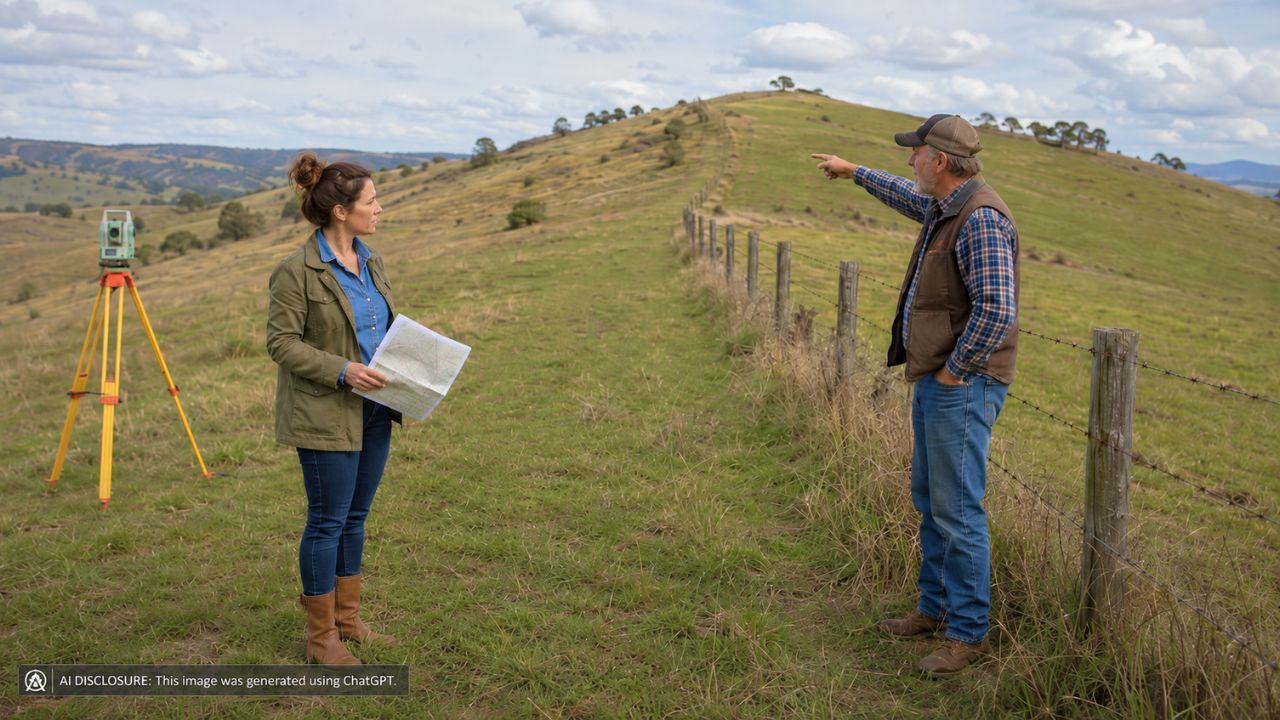
It started the way these rural boundary fights often do: a fence line that “felt” off, then a nagging question you couldn’t unsee. The landowner finally paid for a proper boundary survey, expecting a small correction—maybe a few feet here or there. Instead, the stakes jumped fast when the survey showed the neighbor’s old barbed-wire field fence wasn’t just drifting. It was sitting roughly forty feet inside the landowner’s side.
When confronted, the neighbor didn’t back down. The fence, they insisted, had always followed the natural ridgeline, and the surveyor must have it wrong. That’s the moment a practical homestead problem turns into a paperwork problem—because once someone starts using your ground like it’s theirs, time stops being your friend. A solicitor from Thrings lays out why in the source post, especially around boundaries that “blur over time” and how quickly an encroachment can harden into something more permanent.
The fence wasn’t just a line—it was how the farm worked
Out in the country, fences aren’t decoration. They control grazing, keep equipment routes predictable, and tell everyone—including hired help—where you can and can’t go. Once a barbed-wire fence is up, it becomes the “truth on the ground,” even when it doesn’t match what’s on paper.
That’s why a forty-foot shift hits like a punch. It can swallow a strip of arable land, change how you access a field edge, and force you to rework mowing, spraying, planting, or whatever routine you’ve built around that line. Even if nobody intended to start a feud, the physical fence becomes a daily reminder that someone’s using something they may not own.
The neighbor’s ridgeline argument sounded simple—until it wasn’t
The neighbor’s defense was basically: “Nature decided the boundary.” A ridgeline feels like a common-sense divider, and plenty of old timers treat natural features like they’re the original survey pins. The problem is that “common-sense” boundaries can drift, especially when fences get rebuilt, trees fall, or a new stretch is stapled in after a storm.
Thrings’ guidance points to why this gets messy: physical markers like “longstanding walls, fences and hedgerows might also help” show where ownership begins and ends, but they aren’t always definitive. Over years, boundaries can blur. The ridgeline might match the legal line—or it might just be where someone once found it easiest to run wire.
And once a neighbor believes they’re right, it’s not just disagreement. It’s a competing version of reality: the paper trail versus the fence line everyone’s been driving past for a decade.
Survey in hand, the landowner realized the real risk wasn’t pride—it was time
The frightening part isn’t only losing use of the strip today. It’s what happens if the neighbor has been treating that strip like theirs long enough that they start looking less like a mistaken neighbor and more like a long-term occupier.
Thrings warns that neighbors can “almost become ‘squatters’” if they’re using land without permission, raising the specter of adverse possession—where someone can acquire title to land they don’t legally own by physically possessing it for the required period. For a claim to work, three things have to be shown: factual possession, intention to possess, and use without the owner’s permission.
The time period matters too. The post notes that if land is registered, the typical period is 10 years; if unregistered, 12 years. Ten years sounds long in town. In farming time, it can be two owners and three lease arrangements ago.
And the detail that makes landowners sit up straighter: the Supreme Court has ruled that for registered land, an applicant need only have a “reasonable belief” the land belonged to them for any 10-year period before applying. That means letting a bad fence line sit “because it’s awkward” can turn into a serious legal problem faster than people expect.
Proof became the battleground: deeds, old photos, and what the ground shows
Once the neighbor said the surveyor was wrong, this stopped being a handshake dispute. It became a documentation contest. Thrings’ advice is blunt about the first move: build up your defense by gathering the earliest historical evidence you can find.
That can mean deeds or first transfer documents (often the best starting point for where a boundary was intended to be). It can also mean old surveys, reports, Ordnance Survey mapping, and photographs that show the boundary “historically.” In rural areas, even decades-old photos can become surprisingly important if they show where a fence or hedgerow used to run.
Then there’s the “boots on the ground” piece. Thrings points to getting a high-quality boundary survey, ideally by a specialist chartered land surveyor, who can assess physical features and help interpret where the boundary should be. Because if the neighbor’s whole argument is “the ridgeline is the line,” you need someone qualified to explain whether that’s consistent with the title documents and what’s visible on the land.
People kept coming back to one idea: don’t let “polite” turn into permission
When these stories get discussed, the most common reaction is surprisingly practical: document everything and be careful what you say. Not because you’re trying to be cruel, but because casual tolerance can get misread later as consent—or worse, as you giving up the fight.
Thrings makes a big point that if you allow someone to use your land, you should give permission in writing. That written permission is important because it shows the use isn’t “adverse” and that both parties acknowledge who owns the land. Without that clarity, the landowner is stuck in a gray zone: the neighbor acts like it’s theirs, and the owner hesitates because escalating feels extreme.
Another theme people push in these disputes: keep inspecting your property. The post advises continuing to check boundaries and watching for signs of occupation, use, or “attempts to create a boundary feature such as fences.” That’s the unglamorous reality of rural ownership—if you don’t walk it, someone else will start treating it like it’s theirs.
The next move was either a calm fix—or formal escalation
In a perfect world, two neighbors walk the line together, compare records, and move the fence back without turning it into a blood feud. But once someone calls the survey wrong, “perfect world” is usually gone.
Thrings suggests swift action when there’s occupation without permission. It might begin with a polite request to leave or remove the encroachment. If the neighbor refuses, the next steps can include serving a formal notice requiring them to vacate, or sending a “Letter Before Action.” None of that is fun, and it’s not why anyone buys rural land. But letting it slide can be worse.
The landowner’s problem now isn’t just wire and posts. It’s preventing a bad fence line from becoming the new normal. And the neighbor’s ridgeline story—whether it’s genuine belief or stubborn positioning—means this won’t be solved by another chat over the gate. It’ll be solved by records, a credible survey, and a decision about how hard to push before the seasons change and that fence starts feeling “permanent” to everyone who drives by.