Rural Property Owner Finds a Neighbor Threatening an Adverse Possession Claim Over a Six-Foot Mowed Strip — Then the Neighbor Cites Twenty Years of Use as Proof
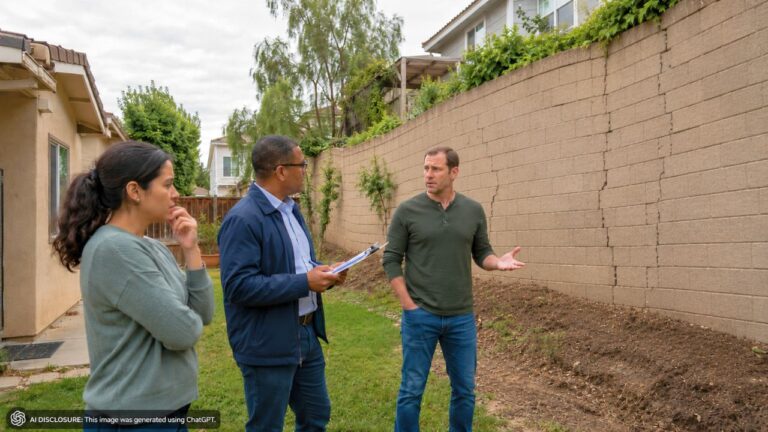
Photo credit: AI-generated image created using ChatGPT. Illustrative only.
It started the way a lot of rural property-line problems do: a brand-new owner, a fresh survey, and a neighbor who suddenly “realizes” the fence line isn’t where he thought it was. Only this time, the neighbor didn’t just grumble. He walked over about a week after the sale and told the new owner he was disputing ownership of a small slice of land—roughly 0.03 acres.
In the original post, the Colorado landowner says they had a survey done during due diligence, and the markers appear to have triggered the confrontation. The neighbor’s argument wasn’t subtle: he believes he has a claim to the area based on years of “use,” and he’s now threatening adverse possession.
A tiny strip of land, with outsized consequences
On paper, 0.03 acres doesn’t sound like much. In the real world—especially on a vacant rural parcel with setbacks and building envelopes—it can be everything. The owner says this isn’t a piece they can casually give away, because losing it would “severely affect the build zone” by pushing setbacks into the area where a house would go.
That’s the part people who haven’t built in the country often miss. A six-foot mowed strip or a narrow triangle by a fence might be meaningless until the county tells you where you’re allowed to put a foundation, septic, driveway approach, or utilities. Then it becomes the most expensive “little” patch of dirt you’ve ever seen.
The neighbor points to an old land swap—and “twenty years” of use
The neighbor’s story goes back to 2008, when he and the former owner completed a small land swap using a quit claim deed. According to the new owner, there’s a survey attached to that deed that “clearly outlines the boundaries” of what was swapped.
But the neighbor claims he was told he received more than what the documents show, and that he’s believed that version for 16 years. In the meantime, he says he’s been maintaining a fence (one he says the county put up) and putting Christmas decorations in the contested area.
The new owner isn’t buying it. They suspect the neighbor knew the boundary all along and was trying to “start the clock” on adverse possession. Either way, the threat is now out in the open, and the neighbor is treating that sliver of land like it’s his.
Why the “clock” matters when you’re the new owner
Colorado’s adverse possession timeline is long, and the landowner highlights that state law requires 18 years of possession. That’s why the 2008 paperwork matters so much. If the land swap was 16 years ago, the owner wants to know whether that’s effectively the earliest the neighbor could even begin to claim he possessed this piece in the way the law requires.
The owner is also trying to untangle what happened before 2008—because “it’s unclear what the status of the land was prior to the swap.” And when you’re dealing with rural parcels that may have passed informally between neighbors for years, it’s easy to see how stories start filling in gaps that deeds and surveys don’t support.
The quit claim deed detail adds a sharp edge to the dispute. The neighbor signed something with a boundary survey attached, yet says he “thought” the swap included more. For the owner, that raises a common-sense question: if the boundary was spelled out then, how can the neighbor now act surprised?
Trying to “stop the clock” without pouring gasoline on it
Once the neighbor raised the issue, the owner didn’t just shrug and hope it went away. They started doing the practical, physical-owner stuff that says, “This is mine.” They posted a private property sign on the fence around that section, did some fence maintenance, and planted a couple things in the area.
That’s the homestead reality of property disputes: paperwork is important, but the day-to-day markers matter too. People mow, plant, hang decorations, and repair fences—then later treat those routines like proof of ownership. The owner is clearly trying to avoid letting the neighbor be the only person visibly “using” the space.
But there’s another complication: the owner says they may be selling the property and moving away because of family circumstances. And the neighbor knows it.
The real escalation: approaching prospective buyers on the property
Nothing chills a property showing like a hostile neighbor popping up uninvited. The owner says the neighbor has “driven onto my property” to approach and question people who are looking at the land.
That’s not just awkward—it can directly affect a sale. Even if a buyer loves the parcel, the idea of inheriting a boundary fight (and a neighbor who will confront visitors) can be enough to walk away. Rural properties already have hurdles: access, utilities, fire mitigation, building restrictions. Add a brewing adverse possession threat, and suddenly you’re negotiating from a weaker position.
The owner frames it plainly: “This strikes me as a big problem.” It’s hard to read that any other way. A neighbor who will challenge your guests may not stop at questions if he thinks the land is about to change hands again.
Safety is part of the property problem now
There’s a personal safety layer here that makes the whole thing feel less like a boring survey dispute and more like a “watch your back at the fence line” problem. The owner describes the neighbor as “somewhat volatile,” and says an online search turned up a news-covered incident from about 10 years ago where the neighbor pulled a gun on a car that cut him off—with children inside.
The owner doesn’t say what the legal outcome was, only that there was coverage and they’re unsure if he was charged. But as a piece of context, it changes how you’d handle every interaction. It’s one thing to tell a reasonable neighbor, “Let’s compare surveys.” It’s another to manage a boundary challenge from someone you believe could escalate.
In disputes like this, the fence stops being a simple line. It becomes a place you avoid, a place you don’t visit alone, and a place where you start thinking about how to keep contractors, surveyors, and potential buyers from getting cornered.
What people pushed: documentation and not playing defense alone
The post centers on the owner’s key question—whether the earliest adverse-possession timeline would start at the 2008 swap, given the signed deed and attached survey. But the underlying theme is what experienced property owners tend to emphasize whenever a neighbor starts claiming land: don’t let it stay a casual argument between two people.
When someone is already invoking adverse possession and inserting himself into your potential sale by approaching visitors, it stops being a “talk it out over the fence” issue. It becomes a documentation issue, a boundary-record issue, and potentially a safety issue. The owner has already begun leaving visible signs of ownership on the ground, but the pressure point is obvious: a sale is coming, and the neighbor is acting like he can influence it.
The owner isn’t trying to win a philosophical debate about who feels like the land belongs to them. They’re trying to protect a buildable parcel from being functionally devalued by a six-foot strip and a neighbor who won’t stay in his lane—literally or figuratively.
For now, it’s still a sliver of dirt and an argument about dates, fences, and an old quit claim deed. But with showings happening and the neighbor driving onto the property to confront people, it’s also the kind of rural headache that can follow a landowner right up to the closing table.
Like Fix It Homestead’s content? Be sure to follow us.
- Man Says He Found Out the Fence He Paid For Wasn’t Actually on His Property
- Woman Says Her Neighbor Started Taking Mulch From Her Delivery Pile Before She Could Even Spread It
- I made Joanna Gaines’s Friendsgiving casserole and here is what I would keep
- What Caliber Works Best for Groundhogs, Armadillos, and Other Digging Pests?