Rural Property Owner Finds the Neighbor Is Claiming Full Ownership of the Shared Well — Then the Attorney Says There Is No Recorded Easement Protecting the Water Rights
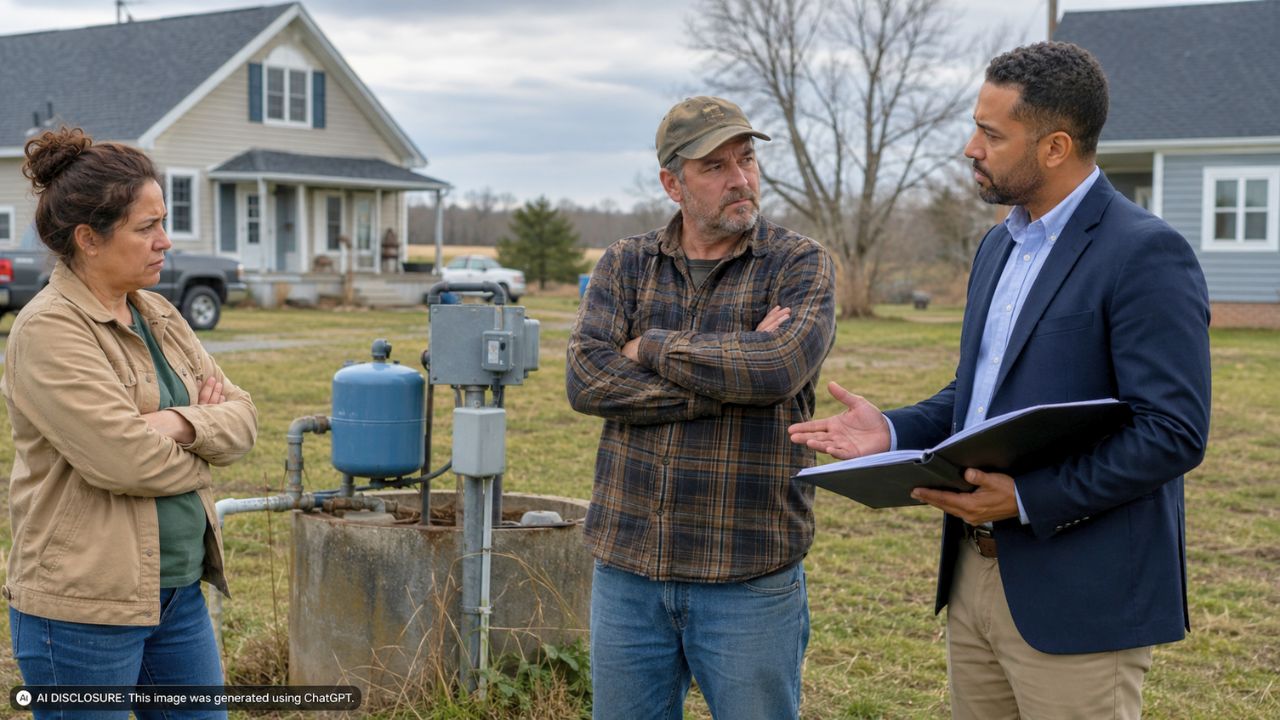
Photo credit: AI-generated image created using ChatGPT. Illustrative only.
The well is the kind of thing you don’t think about much—until someone else says it isn’t yours. One rural homeowner thought they had a straightforward setup: a state-permitted well and a house that depends on it for every drop of water. Then a neighbor showed up with a land survey and a blunt message: the well is a couple feet over the property line, and the neighbor says that means he can cap it whenever he wants.
In the original post, the homeowner described how fast the tone changed once the survey entered the picture. The well is the home’s only water source, and the homeowner also has a permit from the state engineer indicating the well was installed on their lot. But the neighbor is treating the survey like a deed to the water itself—full control, immediate action, no waiting.
The survey turned a routine utility into a property-line fight
This wasn’t a dispute about loud music or a fence that drifted six inches. It was a hard boundary issue with a vital utility sitting right on it. According to the homeowner, the neighbor commissioned a survey and then used it as leverage, claiming the wellhead being a couple feet on his side means the neighbor can do “anything he wants” with it.
That kind of threat lands differently in the country. In town, losing water can mean calling the city. Out on rural property, it can mean your house is instantly unlivable, your animals can’t be watered, and a “simple” disagreement becomes an emergency.
The homeowner’s question was basic but urgent: does a neighbor get to “immediately cap” a well based on a single survey, or is there a legal process first?
When the well is your only water source, the stakes get personal
A shared driveway can be annoying. A shared fence line can be expensive. But a threatened well is a different category of problem—because it’s not just about land, it’s about whether you can shower, flush, cook, wash clothes, or even safely stay in your home.
The homeowner emphasized that this well is the only source of water into the home. That detail turns the neighbor’s claim into more than bluster. Capping a functioning well isn’t like moving a boundary marker. It can shut down a household overnight.
And even if the neighbor never touches it, the threat alone forces decisions fast: calling professionals, pulling records, possibly paying for another survey, and trying to avoid a confrontation that can spiral into something uglier than a disagreement over “a couple of feet.”
The paperwork problem: permits aren’t always the same as property rights
The homeowner said the well has a permit from the state engineer showing it was installed on their lot. To a normal person, that sounds like the end of the argument: the state approved it, the state has it on record, done.
But property-line disputes have a nasty habit of separating “permission to drill” from “right to occupy this exact patch of ground.” A permit can show what was represented at the time of installation. A survey can claim what the boundary is today—or what it always was, depending on how clean the chain of title is and how accurate previous markers were.
This is the moment homeowners dread: two pieces of official-looking documentation pointing in different directions, while the thing everyone cares about is sitting in the dirt, humming along, keeping the house alive.
The neighbor’s “I can cap it today” claim raises practical alarms
Even before lawyers get involved, the practical side is messy. If a neighbor caps a well that supplies an occupied home, it can trigger immediate health and safety issues. It can also lead to damaged equipment—pumps, pressure tanks, plumbing—depending on how it’s done and whether the system is left open to contamination or physical damage.
There’s also the question of access. A well needs maintenance. If the wellhead is over the line, even by feet, the homeowner may need to step onto the neighbor’s property just to service the system. That’s where these fights often get sharper: one party says “trespassing,” the other says “I’m keeping my family’s water running.”
And then there’s the escalation factor. Once someone starts talking about taking action “immediately,” it stops being a neighborly disagreement and starts sounding like a self-help remedy—one person trying to enforce what they believe they own by force, not process.
What people zeroed in on: proof, process, and preventing a sudden shutoff
While the post itself focused on the homeowner’s question, the most common practical reaction to stories like this is predictable: don’t rely on a single document and don’t wait for the first hostile move. When water is at stake, people tend to push for verification—another survey, the well permit file, and whatever property records exist that might show an easement, an agreement, or prior acknowledgment of where the well sits.
In these kinds of standoffs, a paper trail matters because it slows down the “I can do anything I want” energy. It turns the argument from a driveway shouting match into something that can be addressed through professionals—surveyors, title companies, and attorneys who deal in boundaries and access rights instead of threats.
Another theme that usually comes up is documenting everything. When one neighbor starts making aggressive claims, homeowners often start thinking like risk managers: save messages, write down dates, take photos of the well location, and keep records of any statements about capping or interfering with the water supply.
And yes—people tend to talk about prevention. Not in a DIY sense, but in a “don’t get caught without water” sense: figure out what an emergency water plan looks like if the neighbor actually follows through, because the time to plan a workaround is not after the cap goes on.
The unresolved tension: a few feet of dirt that could decide whether the house can function
What makes this story stick is how small the physical gap is compared to the consequences. “A couple of feet” doesn’t sound like much until you realize it can separate “my well” from “your well,” at least in the neighbor’s mind. And once someone decides that survey paper gives them immediate authority, the homeowner is forced into defense mode—fast.
The homeowner isn’t arguing about adding a shed or trimming a tree. They’re trying to protect the only water supply to their home while two forms of “official” proof appear to be in conflict. Whether the answer ends up being a corrected boundary, a recorded easement, a negotiated agreement, or something else entirely, the pressure comes from the same place: you can’t live in a house without water.
For now, the well is still the well—buried pipe, a wellhead, and a system that keeps a rural home running. But once a neighbor starts talking about capping it “immediately,” every day feels like borrowed time until the homeowner can turn paperwork and process into protection.