Rural Property Owner Hires a Surveyor Who Confirms the Neighbor’s Fence Sits Four Feet Into the Land — Then the Neighbor Says the Fence Has “Always Been There”
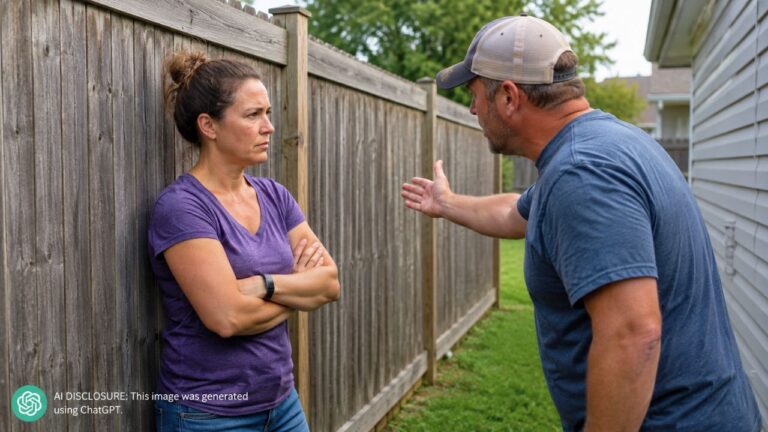
Photo credit: AI-generated image created using ChatGPT. Illustrative only.
It started the way a lot of property-line headaches do: a new homeowner trying to do the right thing. Right after closing on a rural-adjacent lot in Tennessee, the owner hired a surveyor to mark everything clearly before putting up a backyard fence. That’s when the surveyor delivered the kind of news that makes your stomach drop.
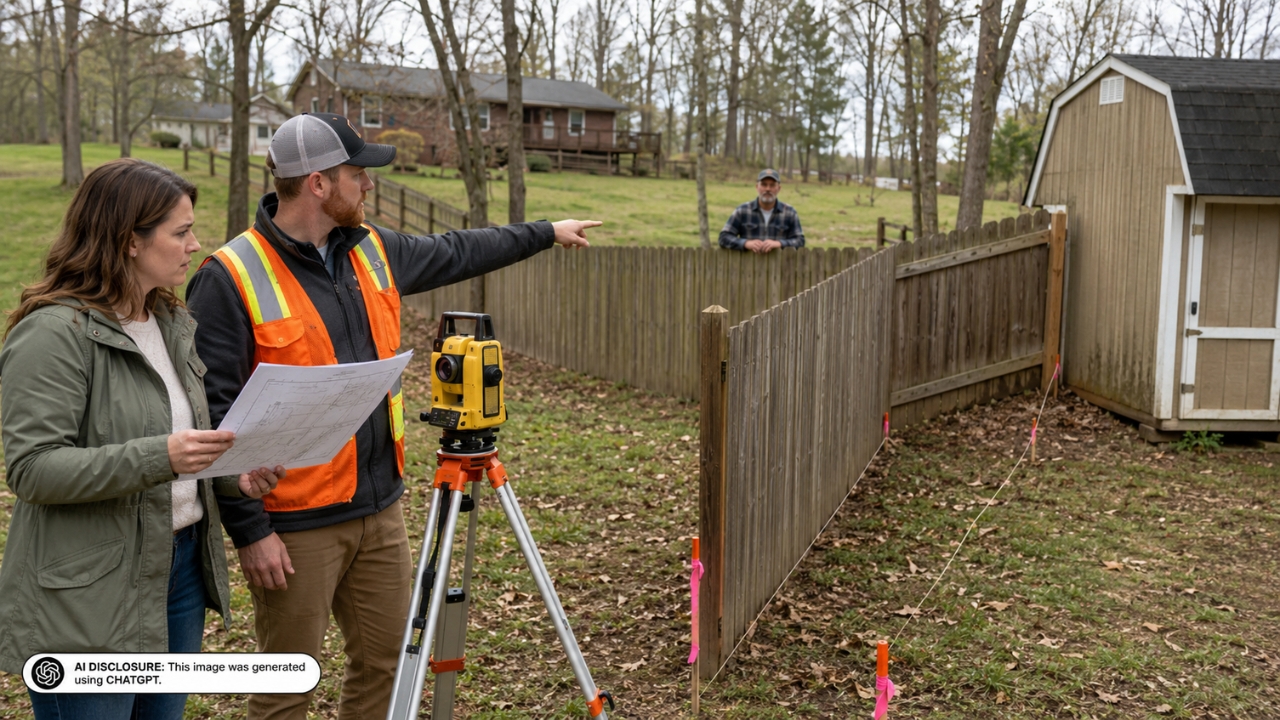
When the crew tried to reach the back right pin, they couldn’t get to it—because the neighbor’s existing fence was in the way, sitting inside the new owner’s yard. In the original post, the homeowner explained that the fence appears to cut into a corner of the property at an angle, creating a wedge-shaped bite out of the yard.
The survey didn’t just show a mistake—it showed a wedge
This wasn’t a case of “maybe it’s an inch over” or “could be the old marker is off.” The surveyor estimated the fence was about nine feet into the property at its deepest point. Because it was angled, it didn’t take a neat rectangle—more like a slice that ran about 10 to 15 feet before crossing back out.
By the homeowner’s math, that worked out to roughly 80 square feet. On a quarter-acre lot, that’s not the whole yard, but it’s not nothing either—especially when it’s in the exact corner where a future fence line would naturally run.
And the details made it more complicated: a portion of the neighbor’s shed also appeared to be inside that same encroached area. Fences can move. Sheds are another story.
It wasn’t the size of the land—it was the fear of losing it
The homeowner was candid about the emotional tug-of-war. On one hand, fighting over a small wedge of land sounded exhausting. On the other, letting it slide felt risky, like quietly signing away ownership without meaning to.
The big worry was adverse possession—especially since the owner is located in Tennessee. Even if the land is only “about 2%” of the yard they want fenced, it’s still part of the deeded property. And once you know something is off, it’s hard to ignore it and still sleep well at night.
There was also a practical angle: this new owner wasn’t trying to start a feud on day one. They wanted a smooth conversation, if possible, and floated the idea of a formal easement agreement—something that would keep the neighbor’s use of the wedge from turning into a claim of ownership later.
The neighbor’s fence had become “normal” over time
If you’ve lived in the country or on older lots, you’ve seen it: a fence goes up, everyone gets used to it, and after a few years it feels like a natural boundary—even if it isn’t. That’s what made this so tense. The neighbor’s fence wasn’t just placed wrong; it had effectively rewritten the landscape.
To make things trickier, the surveyor couldn’t even access the back pin because the neighbor’s fence blocked it. That detail matters, because pins and marked corners are what stop property disputes from turning into he-said-she-said. Without that last pin located, everything feels a little more negotiable than it should.
And for the homeowner planning to install their own fence, the encroachment wasn’t abstract. If they followed the “fence line” everyone sees, they’d be fencing inside their own property and giving up usable space. If they followed the deed line, they’d be fencing right through a neighbor’s established setup.
People focused on documentation before any friendly handshake
When homeowners run into boundary problems, the knee-jerk reaction is often confrontation. But the smarter instinct—especially early—is to slow down and gather paperwork. In the post, the owner made it clear they wanted to walk into the conversation prepared, with “ammo” ready if it got testy.
That word choice tells you how these things usually go. It’s not that the homeowner wanted a fight. It’s that property lines have a way of turning reasonable people into hardliners once a fence and a shed are involved.
Even without a blow-by-blow of comment replies, the thread’s tone is familiar: verify the pins, keep things in writing, and don’t accidentally accept a false boundary by treating it like the real one. In real life, the smallest corner can become the most expensive argument, because it affects resale, future fencing, and whether you can use the yard the way you planned.
The first conversation went better than expected—until the shed came up
The homeowner later posted an update after talking with the neighbor. The initial meeting didn’t turn into a shouting match. The neighbor was “generally agreeable and open to working” with them, which is about the best start you can hope for in a boundary dispute.
But then came the limiting factor: “it is not within my means to move the shed right now.” That sentence changes the whole negotiation. A neighbor may be willing in principle, but if the fix requires equipment, labor, or dismantling a structure, willingness can turn into delay—weeks, months, sometimes years.
The neighbor did offer a partial step: he could “maybe move my fence back to the shed.” That would at least reduce the encroachment if the shed is the real obstacle. But it also locks in a new problem: if the shed remains on the wrong side of the line, the issue doesn’t disappear. It just gets harder to see behind a neatly moved fence.
Friday’s pin search could decide how messy this gets
The next move was to bring the surveyor back out on Friday to locate the last pin. That’s not just a technical detail—it’s the moment that turns a “surveyor estimates” conversation into a firm map you can point to.
Once that last pin is found, everyone’s options narrow. If the neighbor’s fence and shed truly sit inside the property, the homeowner has to decide how far to push: accept a formal agreement, demand removal, or allow a temporary arrangement that doesn’t compromise ownership. The neighbor, meanwhile, has to weigh the cost and disruption of moving structures against the risk of being asked again later—possibly during a refinance, sale, or another survey.
The homeowner’s final line said it all: they’re going to “try my best to make him move everything.” That’s the tension this kind of dispute leaves behind. It’s not just about 80 square feet. It’s about whether a brand-new homeowner can start life on a new property with clear lines—or whether they’re inheriting an old mistake that’s about to become their problem to untangle.